NOVEMBER 2025
Editorial
Dear Friends, It is my great pleasure to introduce you to a relatively new citizen of Sackville. Ontario-born Christian Corbet comes from a long line of notable ancestry hailing from Guernsey, Channel Islands. He moved to Sackville in 2014. In this issue of The White Fence we are grateful to Christian for sharing his research on one of Sackville’s fine older homes, Broadmoor Manor, 382 Main Street. Christian is an independent creative, a sculptor, painter, and portraitist, who has worked in several media, including oils, watercolour, bronze, clay, and textiles. He has received commissions for his work since the mid-1990s from bodies as diverse as the Royal Canadian Navy and, as he informed me, “the person next door.” Commissioned pieces include a coronation portrait of HRH King Charles III and a portrait of Dame Jane Goodall. His work can be found in private, public, and corporate collections in Canada, Great Britain, and Europe, examples being The Canadian Museum of History and the Crown Collection. In many of these collections he is the first and only Canadian to be so honoured. As well, he has published in numerous arts journals. In Part 1 of this issue he discusses the architecture of Broadmoor Manor and in Part 2 he will provide an account of the people who have lived in this venerable house over the years. I met Christian Corbet by chance on one of my regular “exercise walks” from our house to the Campbell Carriage Factory. We introduced ourselves and when I learned he was researching Broadmoor Manor you can imagine how happy I was to learn that he would share his efforts with The White Fence. I jumped at the chance to inform him that the results of his work on this historic home would be of great interest to the readership of this newsletter. Without hesitation, he mentioned that he would be most happy to forward the results of his work to us for The White Fence. What follows is a detailed account of a special home in Middle Sackville dating back to the early twentieth century.
Enjoy!
—Peter Hicklin
Broadmoor Manor, Part 1
Edmund Burke’s Queen Anne Revival in Sackville, New Brunswick, Canada: Form, Finish, and a 1913 Reinvention
by Christian Corbet
Introduction
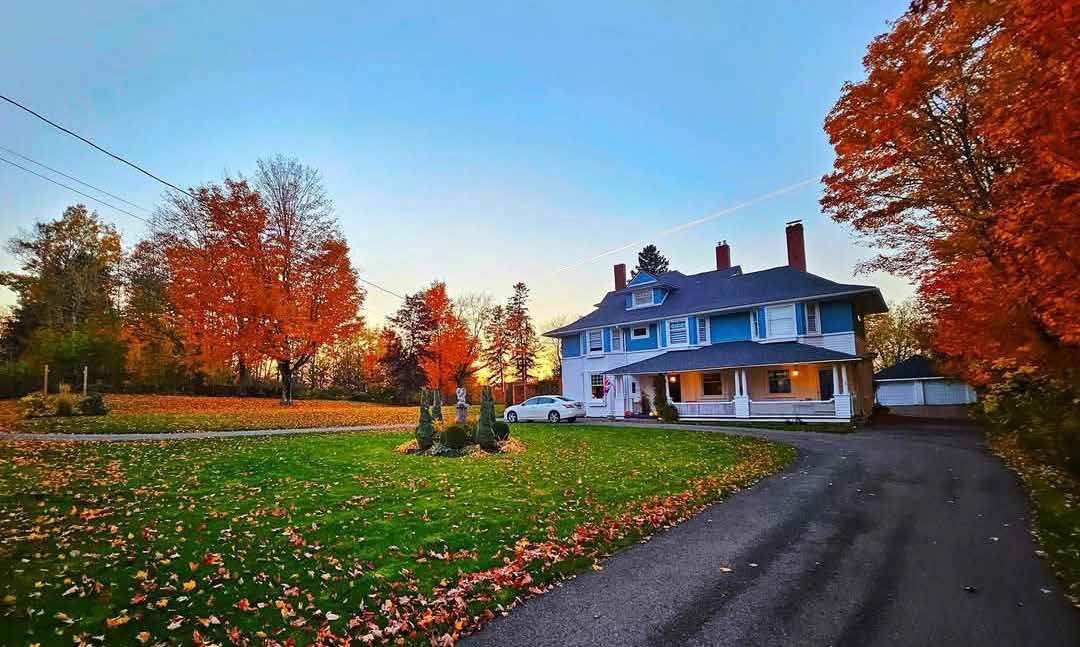
Broadmoor Manor in Sackville, New Brunswick, occupies a singular position within Atlantic Canada’s domestic architecture. Commissioned in 1907 and built in 1907-08 by J. W. S. Black and designed by his brother-in-law, the eminent Toronto architect Edmund Burke, the house exemplifies late Victorian Queen Anne Revival sensibility translated to an Edwardian Maritime context: richly textural surfaces, asymmetrical massing, animated rooflines, and a social program that displays privilege and hospitality. The building’s 1913 expansion—adding an enlarged dining room, a dedicated library, and an advanced principal bedroom suite with ensuite and balcony, as well as an uncommon bomb shelter— registers an early-twentieth-century shift toward privacy, hygiene, and modern convenience without sacrif icing Burke’s picturesque exterior language. The property’s remarkable fenestration (50+ windows) and circulation (30+ doors), and the period note that the fish scale wall shingles were originally painted red, further index an architecture of light, air, and theatrical presence.1
What follows is a close architectural reading of Broadmoor Manor’s exterior and interior, a reconstruction (from description and typo- logical precedent) of its spatial organization, and a consideration of the 1913 alterations as both a stylistic and social modernization. The essay situates the house against Queen Anne domestic design across Canada—especially in Toronto and the Maritimes—and outlines how Burke’s authorial hand negotiates regional materials and climate. It is intended as a scholarly account for historians and preservationists.
Sackville, the Black Family, and the Cultural Program of a House
Sackville’s late nineteenth century prosperity, linked to regional trade, education, and transport routes across the Tantramar marshlands, created a milieu in which ambitious houses served not merely as shelter but as social instruments. Commissioning a house from Edmund Burke—best known for his Toronto practice and, later, the firm Burke, Horwood & White—signaled cosmopolitan aspiration. In this light, Broadmoor Manor is legible as an architectural calling card: its exuberant silhouette and expansive front verandah cultivate visibility and hospitality; its differentiated interiors choreograph gradations of publicness, from formal reception to family retreat typically to the second and third floors.2
Edmund Burke and the Canadian Queen Anne
In Canada, Queen Anne Revival is less a medievalist reconstruction than a flexible palette: irregular massing, steeply pitched and intersecting roofs, gables and dormers of varying scales, projecting bays, textural shingle patterns, and porches with turned posts or classical hybrids. Burke was adept at modulating these ingredients to local climate and social habit. His houses are typically kinetic in silhouette yet careful in proportion: elevations break into planes without losing composure; fenestration varies in rhythm but remains anchored by a few steady verticals (chimneys, stair windows).3 Broadmoor Manor, read in this register, shows Burke orchestrating asymmetry as a composed collage: each protrusion has a counterweight; dormers answer gables; the verandah unifies otherwise busy façades.
Site, Orientation, and Environmental Fitness
The house’s position in Sackville’s breezy, maritime environment favors cross-ventilation and considerable daylighting. The quantity and diversity of windows—well over fifty—suggest a deliberate environ- mental strategy consistent with pre-mechanical comfort: tall double- hung sash for stack effect; bay windows to capture lateral light; dormer lights admitting sun deep into third floor rooms; and two formal doors along verandah and side porch promoting summer airflow.4 The over 400 square foot veranda doubles as environmental device—deep shade at ground level and a rain buffer at wall surfaces— and social stage, mediating between parlour and garden and over two season social space.
Exterior Language: Massing, Roofscape, and Surface
Asymmetrical Massing and Roofline
Broadmoor’s massing reads as additive rather than monolithic: a principal block enlivened by side ells, canted bays, and gable-fronted projections. The roofscape is a virtuoso exercise in Victorian/ Edwardian plasticity: rare 5 intersecting gables with variable pitches, shed and gable dormers, and cricketed valleys that cast a play of shadow across the third floor walls. The composition is intentionally irregular, but because Burke calibrates ridge heights and dormer alignments, the overall silhouette remains controlled rather than chaotic.5
Chimneys as Vertical Counterpoints
The prominent three red brick chimneys —several and emphatically scaled— function as visual pilasters against a restless roofline. They pin the eye, punctuate the long roof planes, and proclaim the status of the hearth as center of domestic life. Their corbelled caps (as typical in the period) project a modest, articulate profile above the ridge, a punctuation mark at each firebox cluster.6 Red bricks were imported from Scotland; the 1913 extension chimney was fully replaced in 2010.
Shingles, Siding, and the Polychrome Tradition
Queen Anne practice luxuriates in surface variety. At Broadmoor, decorative gable shingles—exist in both fish-scale and hexagonal patterns—register as a lacework above the flatter wall fields. The historically noted finish—shingles originally painted red—aligns with a broader Victorian polychromy that used strong hue to unify busy textures and increase legibility at distance.7 In later eras, a light over dark or two-tone scheme (for example, white lower story, blue upper story) would read as a simplified, twentieth-century reinterpretation; but in the nineteenth century, saturated colour helped organize the eye across multiple materials and shadow lines. Note, original colour scheme on cedar shingles was red and replaced to colour blue in 2017.
Windows and Doors: Articulation and Number
The abundance of windows is not merely quantitative. Their variety of type (tall sash, oriels, faceted bays, dormers) sets up alternating registers of narrow/wide, projecting/recessed, transparent/opaque. This produces a lively facade while maintaining a useful interior logic: high-ceilinged reception rooms require tall sash; bays enlarge dining or sitting rooms; dormers enable staff or children’s rooms in the roof. The 30+ doors indicate a complex circulation network— paired parlours, service passage, verandah access points, and sleeping porch/balcony egress— typical of houses where movement between public and private realms was carefully managed.8
The Verandah as Social Threshold
Broadmoor’s wrap-around verandah with turned columns with spindle slats frieze in keeping with the style is a social diaphragm: it offers controlled visibility, hospitality, and climatic respite. It binds disparate projections into a continuous horizontal—a datum—from which the gables rise like sails fitting a design suitable of the Maritime lifestyle.
Interior Organization: Hierarchies, Processions, and Finishes
The Arrival Sequence and Hall
Queen Anne interiors frequently turn on an axial hall offset by a staircase that sponsors ceremonial movement without enforcing strict symmetry. At Broadmoor, its intimate entry vestibule checks drafts, opening to a lobby that fans circulation to parlour, library, kitchen, and dining room. The stairs, placed to catch a moderate window at the half-landing (with sitting bench), would distribute light down the well and dramatize ascent.9
Public vs. Family Realms
The plan negotiates front-of-house display and rear family life through subtle thresholds: wide doors, cased openings, and changes in ceiling height, and coffered ceilings, and finish. Front rooms carry rich finishes—birch hardwood floors, subtle decorative plaster, three mantelpieces of wood surrounds, arched doorways—while rear rooms shift to painted trim, simpler cornices, and pragmatic built-ins in service areas.
Fireplaces, Built-ins, and Material Grammar
With multiple chimneys, four f ireplaces anchor the principal rooms. Period practice supports grate-type fireboxes with Doulton Lambeth tiled surrounds with the interiors possessing cast iron friezes of social life-giving depth and warmth. Nook by window shelving and bookcases in the library articulate the house’s social rituals— reading, dining, visiting.
The 1913 Expansion: Modern Comfort within a Edwardian Envelope
Enlarged Dining Room
The extended dining room speaks to formality and entertainment. By 1913, service choreography was increasingly hidden: a butler’s pantry with pass-through to the dining room, improved serving surfaces, and discrete bell systems or call buttons. A larger room allowed a refectory or extension table, additional seating, and buffet/sideboard walls for service.10 Butler’s pantry originally was located in the now thrice-renovated kitchen.
A Purpose Built Library
The addition of a library underscores rising middle-class and professional emphasis on self-cultivation. Bookcases to ceiling height grace the exterior wall; a substantial elevated fireplace—with wall safe—provides winter comfort, northeast light and avoids glare. Reading chairs cluster near bays; a business desk once occupied the room’s center, its placement rationalized by window orientation and hearth. Note, today the former library now houses a forensic studio.
The Modern Suite: Bedroom, Ensuite, Balcony
The new principal bedroom with ensuite bath and balcony exemplifies early twentieth-century domestic modernity: running water, sanitary tile, ventilation through windows, and outdoor access for health— part of a contemporary discourse in which sunlight and fresh air were thought prophylactic. The balcony also serves as a private belvedere overlooking grounds, separating the owners’ leisure from veranda sociability below.11 Note, before the rise of treelines and housing, a clear vista was had of Silver Lake and surrounding farming and residential lands.
The Bomb Shelter
A bomb shelter in 1913 is notably atypical in Canadian domestic architecture. Whether conceived as fortified cellar, storm refuge, or anticipatory defense in an era of geopolitical anxiety, it suggests an owner attentive to emerging modern risks. Architecturally, such a space implies reinforced masonry, interior placement below grade, and limited openings; its presence adds a rare layer of security programming to a high-style house.12 Note, in the early 1960s an additional bomb shelter was added to the opposite side of the residence.
Integration with Burke’s Exterior
Despite programmatic change, the expansion respects the original lexicon: matching shingle coursing, compatible window proportions, and roof tie-ins that extend rather than contradict the picturesque roof silhouette. The result is less a visible annex and more a seamless phase two of the initial idea.
Interior Organization Back Wing: Practicality and Finishes
The plan negotiates a back wing of house display and practicality through subtle thresholds: small doors, cased openings, and 7-foot ceiling height, painted tongue-in-groove panelling and paint finish. A summer kitchen once carried an additional wood stove, pantry, and resident drive door (for access to carriages and cars). A full eat-in service kitchen and butler’s service areas. Outside the summer kitchen resided a washer room with access to outdoor clothesline and coal room with delivery door. On the second floor, accessible by an open staircase, additional servants quarters and storage.
Colour, Finish, and Maintenance: Reading the Red
The note that the shingles were originally painted red is more than anecdotal; it helps decode the intended visual unity. In a façade of competing textures—shingles, clapboards or drop siding, bracketry —monochrome or near-monochrome fields stabilize the eye. Red, in particular, registers at distance and in fog—an advantage in coastal climates—and produces a warm base under the cool Maritime light. Should conservators later conduct paint analysis (microscopy of paint stratigraphy), one would expect to find an early iron-oxide-rich red.13
Comparative Position: Broadmoor among Canadian Queen Anne Houses
Compared to Toronto exemplars— where Burke refined picturesque massing in prosperous neighborhoods—Broadmoor is both faithful to and locally inflected from that idiom. In the Maritimes, where salt air and winter storms are sterner, the verandah becomes more substantial, the roof pitches a touch steeper, and shingle use more protective than merely ornamental. In Halifax and Saint John, late-Victorian houses exhibit similarly animated rooflines, but Broadmoor’s combination of window abundance, door count, and the 1913 programmatic leap (library + modern suite + shelter) distinguishes it as unusually forward-leaning.14 Note: with over 9,000 square footage Broadmoor competes with the average size of Queen Anne style houses ranging from 1800-3000 square feet.
Conservation and Fabric Integrity
Maintaining the house’s character followed by these actions has been exercised:
1. Envelope and Joinery. The multiplicity of openings increases vulnerability to moisture and air leakage. Conservation measures included weather-stripping, window sash repair with original wavy glass when available (as most windows have been replaced), window replacement, and verandah decking maintenance to prevent splash back at the base walls.
2. Shingle Fields and Colour. Over 95% of the original wood shingles are still present. A semi-heritage repaint took place in 2017 to a lighter colour causing greater tonal values to accentuate the fish scale patterning.
3. 1913 Interiors. The library and ensuite represent high-value heritage spaces. Tile, built-in book shelving and full restoration of fireplace mantle have undergone careful conservation.
4. Waterboarding. Replaced with replica cut moldings.
5. Roof Shingles. Once slate tile, later replaced by cedar shingles and later by asphalt shingles.
6. Kitchen. Expanded by removing doorway to summer kitchen with added powder room and laundry.
7. Side Door Closet. Door removed and made into pantry.
8. Double Horseshoe Driveway. Front visitor section remains intact and asphalt applied 1970s. Back residential section removed circa 1965 and made into partial patio gardens.
Reconstructed Floor Plans (Analytical Narrative)
Ground (First) Floor
• Entry/Vestibule at a slightly recessed bay under the veranda roof, buffering winter air.
• Main Hall running laterally, with the stair rising along an interior wall to catch a landing window; cased openings lead to front Parlour (east) and Sitting Room (south).
• Dining Room (Extended, 1913). The extension produces a longer table axis and incorporates a bay for sideboard or serving alcove.
• Library (1913) originally set to benefit from steady morning light (north/east), with fireplace on an interior wall for flue efficiency, built-in cases on the perimeter.
• Service Entry discreetly located off the kitchen with secondary stair to former third floor servant rooms. Note: though it once housed two bedrooms, it now is one full studio space.
• Verandah Doors (two or more) distributing flow to outdoor rooms; 30+ doors overall reflect redundancies across parlour pairs, service routes, verandah egress, and French door partitions.
Second Floor
• One Principal Bedroom Suite (1908) oriented to front garden parterre views; with ensuite dressing room and shoe closet and separate suite closet.
• Four Secondary Bedrooms (children/guests) accessed from a central corridor off the stair hall; bathroom added in 1913 to extension. Also, servants’ bedroom recessed off corridor off principal bedroom accessed by narrow hallway with half cylindrical wall adjacent to doorway and built in seating.
• Walk-in Linen Press (closet) nested in the central corridor.
Studio/Third Floor
• Four Dormer-lit rooms once for staff, storage; the consistent dormer sizes suitable for former habitable bedroom spaces.
• Flues consolidated toward ridge lines; one knee-wall storage along eaves.
Cellar
• Bomb Shelter (1913) consolidated near interior, enclosed by thicker masonry; adjacency to former furnace room typical but separated by fire-rated partitions; root cellar or larder rooms at cooler corners. Note: basement has been opened up and completed as habitable studio space.
Stylistic Continuity Across the 1913 Work
The 1913 alterations could easily have betrayed the original Queen Anne envelope; instead, they appear to extend its logic. The enlarged dining room does not read as a graft because window proportions mirror earlier bays; the library’s hearth lines up with existing flues; the bedroom suite’s balcony is scaled to the verandah language below. This continuity implies a designer sensitive to Burke’s authorship— possibly under his guidance or by a competent hand conversant with his grammar.15 Note, JWS Black worked closely with his brother-in-law Edmund Burke on the design of Broadmoor.
Conclusion
Broadmoor as Artifact and Living House
Broadmoor Manor demonstrates how a high-style Victorian/Edwardian house can absorb early modern domestic innovations without losing its identity. The 1913 expansion recognizes new ideals of privacy, hygiene, and study while maintaining he picturesque massing and surface complexity characteristic of Burke’s Queen Anne. Its extraordinary windows and doors are not extravagances but instruments of climate mediation and social choreography. The original red- shingle campaign (later overpainted) tells a story of polychrome unity in a textural façade. For scholars, the maintenance of envelope, verandas, and historic interior, and for Sackville, New Brunswick, and over all Canada it remains a cultural landmark that bridges local tradition and national architectural currents.
FOOTNOTES
1. Specific details concerning Broadmoor Manor’s commission by J. W. S. Black, its design by Edmund Burke, the 1913 expansion (dining room, library, bedroom with ensuite and balcony, and bomb shelter), the count of 50+ windows and 30+ doors, and the original, red-painted shingles are drawn from former and current owner-supplied description (conversation, 1971- August 2025).
2. On the social role of late-Victorian domestic architecture in Atlantic Canada, see Harold Kalman, A History of Canadian Architecture, vol. 2 (Oxford University Press, 1994), 774-788.
3. For Queen Anne Revival characteristics in Canada and Burke’s practice, see Leslie Maitland, Neoclassical to Postmodern: Styles of the Canadian House (Ottawa: Parks Canada, 1990), 64-77; Kalman, History, 730-736, 772-782.
4. On pre-mechanical environmental strategies (windows, cross-ventilation, porches), see G.J. Keys, “Climate and Domestic Form in 19th-Century Canada,” Journal of the Society for the Study of Architecture in Canada 14, no. 2 (1989): pages 27-41.
5. For asymmetrical massing and roof composition in Queen Anne houses, see Maitland, Styles of the Canadian House, pages 66-71.
6. On chimney design, brick corbelling, and the hearth’s social symbolism, see Witold Rybczynski, Home: A Short History of an Idea (New York: Penguin, 1987), 76-93.
7. On Victorian polychromy and painted shingle fields, see Owen Jones, The Grammar of Ornament (London: Day & Son, 1856), plates on polychrome principles; and Patrick Baty, The Anatomy of Colour (London: Thames & Hudson, 2017), 166-179.
8. For door and window counts as indices of plan complexity and social choreography, see Bill Bryson (ed.), At Home: A Short History of Private Life (New York: Doubleday, 2010), 112-128 (discussion of circulation in Victorian houses).
9. On stair halls and ceremonial movement, see Mark Girouard, The Victorian Country House (New Haven: Yale University Press, 1979), 129-147.
10. Victorian/Edwardian dining ritual and service spaces: Judith Flanders, Inside the Victorian Home: A Portrait of Domestic Life in Victorian England (New York: W. W. Norton, 2003), 205-229.
11. On the emergence of the hygienic bathroom and bedroom suite, see Barbara Penner, Bathroom (London: Reaktion Books, 2013), pages 54-77.
12. Domestic shelters in the early twentieth century are rare; the functional description here draws on general principles from structural masonry practice and period civil- defense prototypes. See J. B. White, “Domestic Shelters and Early 20th-Century Security,” Architectural History Review 22 (2002): pages 45-59.
13. On historic paint analysis methods, see Kelly Streeter and Frank Welsh, “Microscopical Analysis of Architectural Finishes,” in The Paint Detective (Philadelphia: APT Bulletin, 2001), pages 23-34.
14. For Maritimes Queen Anne comparisons, see Peter Pacey, Victorian Architecture in Halifax (Halifax: Formac, 1987), 88-103; and Gregory Marquis, “Late Victorian Housing in Saint John,” SSAC Bulletin 15, no. 3 (1990): pages 2-11.
15. On continuity between original campaigns and later phases, see Steven W. Semes, The Future of the Past: A Conservation Ethic for Architecture, Urbanism, and Historic Preservation (New York: W. W. Norton, 2009), pages 104-21.
BIBLIOGRAPHY
Baty, Patrick, The Anatomy of Colour. London: Thames & Hudson, 2017.
Bryson, Bill (ed.), At Home: A Short History of Private Life. New York: Doubleday, 2010.
Flanders, Judith. Inside the Victorian Home: A Portrait of Domestic Life in Victorian England. New York: W. W. Norton, 2003.
Girouard, Mark, The Victorian Country House. New Haven: Yale University Press, 1979.
Jones, Owen, The Grammar of Ornament. London: Day & Son, 1856.
Kalman, Harold, A History of Canadian Architecture. 2 vols. Oxford: Oxford University Press, 1994.
Keys, G. J., “Climate and Domestic Form in 19th-Century Canada.” Journal of the Society for the Study of Architecture in Canada 14, no. 2 (1989): 27–41.
Maitland, Leslie, Neoclassical to Postmodern: Styles of the Canadian House. Ottawa: Parks Canada, 1990.
Marquis, Gregory, “Late Victorian Housing in Saint John.” SSAC Bulletin 15, no. 3 (1990): pages 2-11.
Pacey, Peter, Victorian Architecture in Halifax. Halifax: Formac, 1987.
Penner, Barbara, Bathroom. London: Reaktion Books, 2013.
Semes, Steven W, The Future of the Past: A Conservation Ethic for Architecture, Urbanism, and Historic Preservation. New York: W. W. Norton, 2009.
Streeter, Kelly, and Frank Welsh. “Microscopical Analysis of Architectural Finishes.” In: The Paint Detective. Philadelphia: APT Bulletin, 2001.
White, J. B. “Domestic Shelters and Early 20th-Century Security.” Architectural History Review 22 (2002): 45–59.
Announcements
New Publications from the Tantramar Heritage Trust
Great Gifts for Christmas 2025
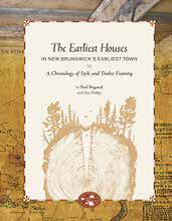
The Earliest Houses In New Brunswick’s Earliest Town
Written by Paul Bogaard, with Ben Phillips, and launched in September, 2025. The book details the results of over 20 years of research into Sackville and area’s oldest houses. The 315-page publication details in depth the structural and aging investigations that were researched on several dozen local houses. The book is a treasure trove of information, all assembled into a chronological sequence of styles that established the early settlement of the Township of Sackville. Price: $35
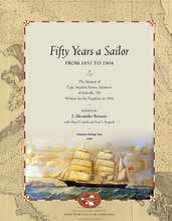
Fifty Years a Sailor
Edited by Sandy Burnett, with Al Smith and Paul Bogaard, and launched in December, 2024. The 136-page publication covers 50 years (1853-1904) of adventures at sea by Sackville sea captain Stephen Barnes Atkinson. At the request of his daughter Caroline, Stephen Atkinson wrote his memoirs in 1904. His memoir has been lightly edited and organized into chapters, with ships’ portraits and photographs added and accompanied with maps and informative appendices. Price $25
Both books are available from the Tantramar Heritage Trust office, 29B Queens Road, Sackville, or at Tidewater Books.


