White Fence #111 PDF
NOVEMBER 2024
Editorial
Dear Friends,
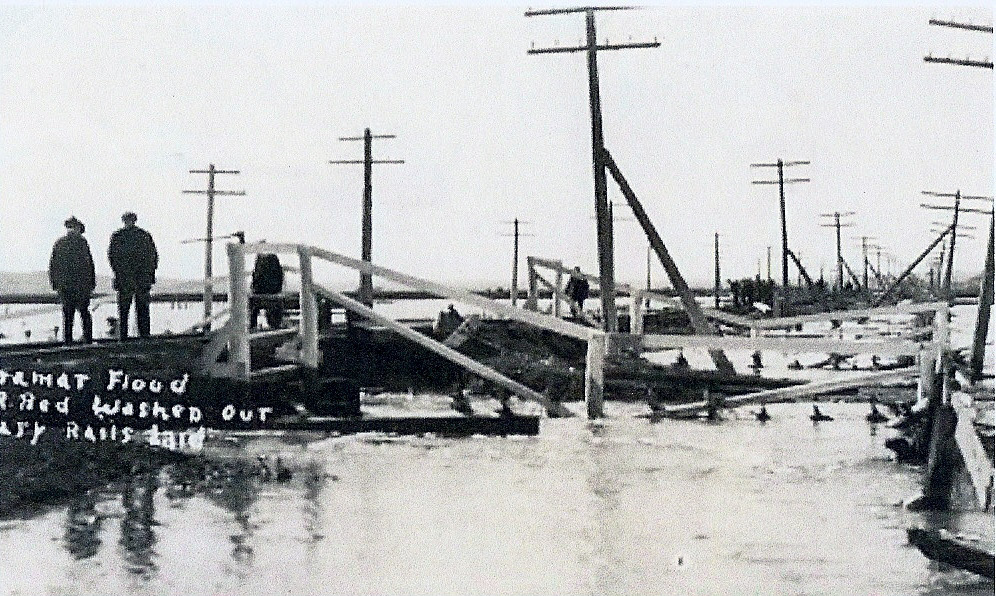
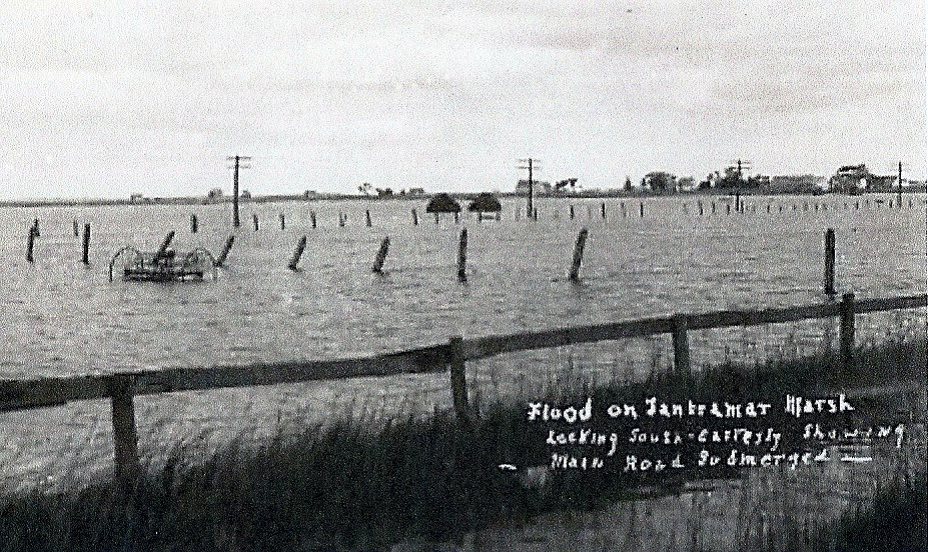
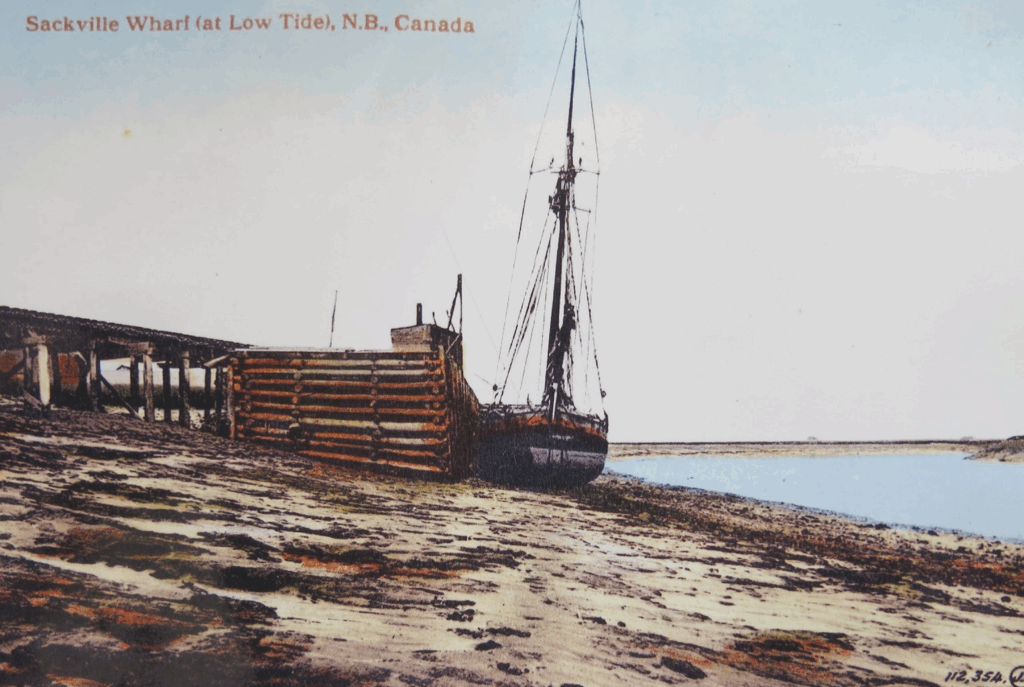
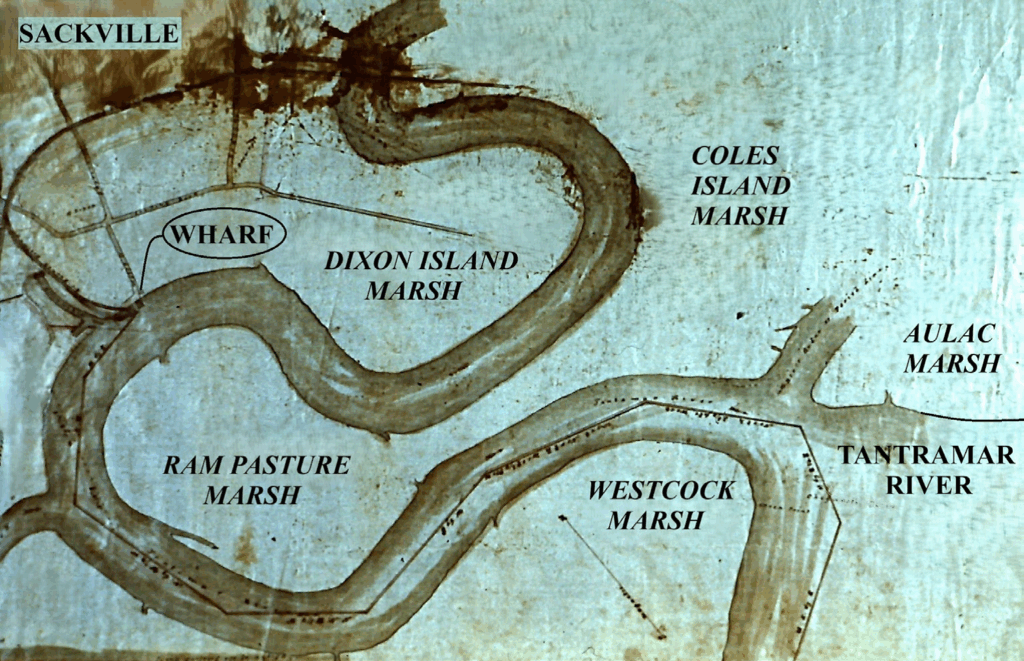
The grindstone industry is one of the earliest industries in the Tantramar region. In 1686, the Intendant des Meulles, accompanied by cartographer Franquelin, travelled to Acadia and produced a map of La Baye Françoise (Bay of Fundy). This detailed illustration showed the presence of a small island named I. aux Meules (translation: Grindstone Island; see Bogaard, 2022, p. 60). The most authoritative study on the subject of grindstones in our area remains that of Jim Snowdon (Cumberland Basin Grindstone Industry, B.A. Thesis, Mount Allison University, 1972). A recent compendium of sources and illustrations of the local grindstone industry is The Cumberland Basin Grindstone Industry compiled and edited by Paul Bogaard (Tantramar Heritage Trust, 2022). In this issue of The White Fence, Paul looks more closely at one of our local quarries and reveals plans to make the old Sackville quarry into a park to be enjoyed by us all. The “Quarry Park” will commemorate and celebrate several centuries of grindstones and quarrying in Tantramar.
Enjoy the adventure!
—Peter Hicklin

Courtesy of the NB Museum
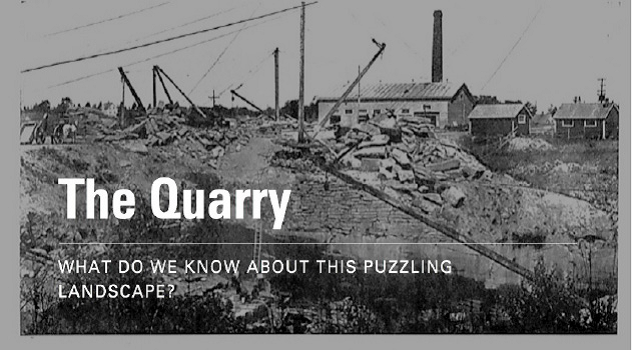
The Quarry
Sackville’s Only Quarry Was Opened Three Times
by Paul Bogaard
“The Quarry” to become our newest park
Work has recently begun to develop the quarry area at the top of Quarry Lane as Tantramar’s newest Town park. “The Quarry” was acquired from Mount Allison; community partners have added their own support, plans have been made, grant money has been added to the Town’s own investment and this Fall work has begun on what will be its Charlotte Street entrance.
Part of this project is to provide interpretation, and this will require clarification of the past use of this site when it was an operating quarry. The hope is that this will enable us to read, and then interpret, the quarry landscape we now see. From an open pasture with a brook meandering through it, through the harvesting of tens of thousands of tons of fine red sandstone, followed by the re-growth of trees, shrubs and vigorous wild roses, Sackville’s only quarry presents us with a delightful if deeply puzzling landscape.
The challenge, as it turns out, is not only to appreciate how much the Charles Pickard era of quarry operations changed over its decades of activity but also to confirm, if possible, whether this quarry had already been opened by his father many years earlier. Then there is the later use of the quarry once it was owned by Mount Allison, which was extensive enough to change the face of the quarry all over again. It took all three eras of quarry operations, each of them handled quite differently, to produce the landscape we now enjoy, plus decades of Nature reclaiming her own.

Figure 1. Town’s new Quarry Park with entrances from Quarry Lane and Charlotte Street. From Google Maps
The quarry located up Quarry Lane is the only one within what was, until recently, the incorporated Town of Sackville, although I should probably begin by clarifying that claim. The boundaries of the “Township of Sackville” long ago, like the new municipality of “Tantramar,” extended all the way over to Dorchester and Shepody Bay and all the way down to Rockport and Cape Maringouin. This larger area encompassed many smaller quarries and at least two major ones – I’m thinking of the Westmoreland Olive Freestone Company in Lower Rockport and the Wood Point Quarry – both of which will figure in this story. Those two quarries were both opened up because of the commercial value of grindstones, beginning in the early 1800s,1 and only later shifted to producing building-stone when the market for huge grindstones went into decline. The quarry we associate with the Pickards at the top of Quarry Lane was only opened up after grindstones were no longer in demand and the motive was entirely focused on building-stones. But can we determine which buildings required the stone this quarry could provide? And for that matter, which Pickard opened it up?
The Pickard’s and Mt A’s first stone building
These two questions have been on my own mind for many years. My colleague at Mount Allison, Bill Hamilton, addressed these issues in the Flashback he published in the Sackville Tribune back in 2002.2 And let me say that Bill’s “An Overlooked Sackville Landmark” remains one of the best pieces written about this quarry, and one I recommend to you all. However, I remain unsatisfied with his answers to the two questions I have posed. He knew that because we discussed these two questions both before 2002 and thereafter. I urged him to consider that this quarry might have been opened to provide stone for Mount Allison’s first stone building constructed in 1883, and he resolutely maintained that it had not been opened before Charles Pickard discovered and opened it in 1898.

Figure 2. The 50 acres, approximately, purchased by Thomas Pickard from J.B. Bowser in 1869, From the GeoNB Map Viewer website.
Bill Hamilton was clearly right that Charles began the commercial operation that became the Sackville Freestone Company. After all, Charles Pickard had only been in his early twenties (and had just begun working at a dry goods store downtown) when the Stone College was built just down the hill from his father’s farm along York Street. Thomas Pickard purchased these 50 acres from the Bowser family in 1869,3 the same year he resigned as Mathematics Professor from Mount Allison. That was also the year his brother, Humphrey, resigned from being its first President. Humphrey Pickard had helped launch the Men’s Wesleyan Academy at Mount Allison thirty years before, and Thomas had served alongside him for much of that time.
Thomas was only fifty when he resigned and bought the farm, and both he and his brother had many years to develop further careers. His son, Charles, born in 1860, would have been nine years old at the time. It was the early 1880s before the leadership of the then College (and two academies) decided they would need an additional academic building, which for both practical reasons as well as the stature it should convey, they felt should, this time, be built of stone.4 But where to get the stone? Unfortunately, while Mount Allison’s Archives still retains the record of their decision to build their first stone building,5 the details of that plan had been handed over to a newly appointed Building Committee, and all records of this key committee seem to have been lost. Those records were kept inside the Stone College (or what came to be called Centennial Hall) which burned in 1933 destroying, ironically, most of the documents about its own construction.

Figure 3. Centennial Hall in the 1890s, and in the background on the right is the first University Men’s Residence. Courtesy Mount Allison University Archives

Figure 4. Thomas Pickard. Photo courtesy of Mary Baycroft

Figure 5. Thomas’s son Charles Pickard, pictures in about the years mentioned in the article. Photo thanks to Mary Baycroft.
Even more frustrating, the key issues of the local newspapers that normally carried stories about the erection of such an important new building have also not survived. While the St. John Telegraph made mention of it, the detail needed to clarify the source of building stone was not provided.6 Only the Argosy, the student journal on campus, carried more detailed accounts of the work at several stages of its progress. From those student journalists we learn that Mr. Donald of Moncton was given the overall contract for the work, and that “It is built of red sand-stone, trimmed with free-stone of a light olive or buff color.”7 That turns out to be an important clue because sandstone of different colour meant the stone came from two different quarries.8 And in this region, buff coloured sandstone all came from the Westmorland Olive Freestone Company.9
It is less clear where the red sandstone came from. The only quarry outside of Sackville that might be a plausible source is the one at Wood Point, but the timing for stone being excavated does not seem to fit with what survives of those company records, and ownership was changing right at that time. More importantly, the darker colour and coarseness of Wood Point stone does not match that of Centennial Hall.10 On the other hand, Bill Hamilton had recounted the story of the owner of the Pickard farm stubbing his toe in the back field and thereby discovering the family’s resource in red sandstone, which Bill assumed had happened to Charles fifteen years later.11 But there is an alternative story that seems to be relevant here.
Winthrop Bell, one member of the Bell family closely associated with Mount Allison, wrote up a detailed genealogy of his family, which included the Pickards with whom they had intermarried. He was himself too young to recall the building of the Stone College or to have much direct memory of Thomas Pickard, but he remembered Charles Pickard and stories from that family. One story in particular Charles told him was that when Winthrop first arrived at Mount Allison around 1900, “an experienced quarryman told him [Charles] he felt sure, from the sandstone outcrop in the brook at the foot of the old Thomas Pickard pasture, that he had there an exploitable supply of fine brown freestone.” The brook is known as Bowser Brook, which ran down through the middle of their farm, and, of course, the fine “freestone” came to be recognized as red. And this story clearly fits with Charles arranging to open up the quarry in the late 1890s. It is not, however, so much a story of Charles stubbing his toe as it is his assessing the prospects of beginning a commercial operation quarrying the sandstone already exposed along Bowser Brook. This seems just as likely to have been the stone still exposed from a one-time quarry operation some fifteen years earlier.12
There is more direct documentary evidence that a quarry had been opened and produced building stone at this earlier date. The Geological Survey of Canada sent down an experienced geologist to report on geological formations in our area in 1885, and he noted where they were being quarried.13 That date is, of course, crucial to sorting out this puzzle, because Mr. Ells reported that there was already one quarry operation within Sackville, about a mile from the centre. The centre at that point in time would have been where today we have our one central stoplight, and the quarry at the top of Quarry Lane is just about the right distance away. It was (and remains) the only quarry within the early bounds of Sackville, at a time when the “North Ward” used to end at the top of York Street right where the “rural” cemetery begins.14
So, it seems to me there can be little doubt that a quarry – “The Quarry” – was opened and provided red sandstone in the years prior to 1885. At that point Charles was just into his twenties and had just begun working for the Bowsers at their dry goods store on Bridge Street, while his father, Thomas, was actively engaged on the farm he had purchased from the Bowser family in 1869. So, while we may not have found either official Mount Allison documents nor specific newspaper accounts that name Thomas Pickard and his quarry as the source of the sandstone used to build Centennial Hall, the evidence we do have all points to this being not only plausible, but the only likely source for Mount Alison’s first stone building.
And there are other interesting bits of information, none of them definitive, but all suggestively pointing in the same direction. In the years immediately following the construction of Centennial Hall:
(1) 1884 was the year Thomas (now 65) invested in setting up the Sackville Spring Water Company to sell “spring” water from Bowser Brook to the Academies and others in town (as quarrying likely opened up even more springs, so abundant in this area);15
(2) 1884 was the year Charles (now 24) who had begun working in C. A. Bowser dry goods down in the Wood Block was already able to buy them out and run the store himself;
(3) 1885 was the year Thomas sold the farm that includes the quarry to Charles his son.16
Good fortune seems to have come the Pickard’s way, all at the same time, in the early 1880s.
Another consideration that has made the identification of Sackville’s only quarry as the source of red sandstone for Centennial Hall somewhat difficult is that this building burned down in 1933. Much of the stone façade remained and seems to have been retained; the upper portions were rebuilt using the existing stone, but the resulting discoloration made it more difficult to distinguish even the lighter buff stone from the red stone, especially on the south face. The east end still shows this difference in colour and makes it is easier to determine that the red could only be from the Pickard Quarry. This was what Gwen Martin, a geologist with the NB Dept of Natural Resources, concluded when she and I examined the building in the 1980s, and is what she wove into her account in For Love of Stone in 1990.17
That was Mount Allison’s first stone building. The second was the Owens Art Gallery built in 1894-95 entirely of the buff stone from Rockport. A year or two earlier a large men’s dormitory had been added to the campus at the corner of York and Salem, but as best we can tell it was constructed primarily of brick, with stone trimming at corners and around windows and doorways using, once again, the buff stone from Rockport. This residence burned down after only a few years but was immediately replaced in 1898-1900 by a dormitory of the same dimensions. And this time it is well documented to have been constructed using the red sandstone from the Pickard Quarry just up the hill.18 By this time, however, it was no longer Thomas Pickard’s quarry.
Charles Pickard and the Sackville Freestone Company
In 1885, Thomas sold his farm to his son Charles. And within a few years, as Winthrop Bell recalled, Charles had consulted with a well-respected local quarryman to determine if the red sandstone under the back field, right along Bowser Brook, was of sufficient quality and quantity to make its extraction commercially viable. Bill Hamilton, you will recall, thought that Charles Pickard began his operation in 1898. But there has been some confusion about the timing of this opening.

Figure 6. Plaque placed on Ontario Parliamentary Building constructed in 1892. From The Record, 1974
If we glance ahead to the early 1970s, records show19 that the folks responsible for the repair and reconstruction of the Ontario Parliament Building had reached out to Sackville to acquire the right kind of stone for their work. The stone from one quarry rarely matches that from another quarry and they were determined to make use of matching red sandstone. The plaque they mounted on this refurbished government building in Queen’s Park, Toronto says: To match the sandstone used in the construction of this building in 1892 Mount Allison University of Sackville, New Brunswick has made available additional stone from the university quarry for the building restoration in 1971/72. (See above.)
As we shall see, there is no reason to doubt that the “University Quarry” mentioned was the quarry operated by Charles Pickard. But could he have provided the original Ontario Parliament Building with stone in 1892 as this plaque seems to imply? Charles certainly owned the quarry ground by this time. However, it was one thing for his father, Thomas, just up the hill, to offer Mount Allison the stone they would need for their first stone building, but how would the Ontario folks even know about the stone being from Sackville’s only quarry? Did Charles open the quarry early enough for this significant project?
This mystery has been solved only recently by digging a bit deeper to find that Sackville stone was used “in the extension,” and historians of Queens Park list these additions as being added more than ten years after the Ontario’s legislative building was originally constructed. So, it clearly was a feather in Charles’ cap, and well within the time frame his operation could have provided the sandstone used. Many sources describing the Sackville Freestone Company list this project as an especially noteworthy achievement.20
The 1902 Special Edition of the Sackville Tribune confirms it was in the spring of 1898 that Charles Pickard began his operations and provided red sandstone for the Men’s Residence being rebuilt on campus, plus shipping stone by rail to St. John, N.B. By 1901 Charles had drawn in a few other investors and formed the Sackville Freestone Company.
The story of the quarry can be picked up at this point through a long string of articles, not only in Sackville’s Tribune but also in the “Sackville News” feature of the St. John Globe.21 Through the first decade of the 1900s, there survive at least two dozen in the St. John paper and a dozen from Sackville’s Tribune Post. I will endeavour to combine a selection of details from these overlapping articles under a few headings:
SEASONS: We learn that the quarry closed down each Fall, often with a supply of stone already excavated for the next year’s orders. It was not just the difficulty of working in winter; after all, Pickard’s own crew would often work for him in the woods lumbering through the winter. But stone excavated in winter – as yet unfrozen, underground, and still “green” with moisture – would then freeze when left above ground and burst or at least crack, ruining the sandstone block as either grindstone or building stone. The newspapers would often report the quarry’s steam whistle was sounding again, signalling its reopening in the Spring, after which stone could be safely excavated since it would have the chance to dry out.

Figure 7. Showing the way hand tools could break out blocks. Courtesy of Tantramar Heritage Trust

Figure 8. How steam powered drills could do the same. Courtesy of Tantramar Heritage Trust
EQUIPMENT: Much of the excavation of sandstone blocks could be accomplished using the same hand tools used in the past with muscle powered derricks-with-cranes lifting and moving the blocks. Horses could displace human muscle, and horse-drawn wagons and carts would move stone around and down to the train station. Within a year of incorporation, however, Pickard had erected a “powerhouse” supplying steam to drive stone saws, and drive drills, and to power the pumps that kept water from flooding ever-deeper cavities. There were short tramways to aid in shifting heavy blocks around the site, and 15 to 20 men employed to carry out this demanding work.
Business was good enough that by 1908 Pickard had constructed a second larger powerhouse with a larger boiler, added electric dynamos, and two “gang” saws for cutting blocks into the sizes required.22 By this time there were at least four derricks, one of them an astounding 82 feet tall, standing near the bottom of the excavation, reaching up through 40′ of good stone, 20′ of overburden, and then soaring another two stories high, its crane able to lift 20 to 30 tons. Orchestrating so many moving parts required one man atop a high platform signalling to workmen throughout the quarry.
Increasing employment for a time to 30 quarrymen (and luring away a seasoned foreman from Wood Point) they were able to excavate 5,000 to 8,000 tons in a season. In one year alone they shipped 50 railway cars filled with block stone all the way to Fort William (now Thunder Bay on Lake Superior). Diverse sources all concur that it was due to Pickard keeping his enterprise so well equipped, along with the high quality of the sandstone they offered, that led to the Sackville Freestone Company’s success.

Figure 9. The second Powerhouse and derricks that facilitated quarry operations. The dark diagonal from the lower right was the largest crane. From Company Prospectus, courtesy of the NB Museum

Figure 10. The well-known photo of Pickard’s steam locomotive backs up to the quarry. All the men in suits suggests this was a special occasion, perhaps the opening. Courtesy of Tantramar Heritage Trust


Figures 11 & 12. Showing the machinery required to drive gang saws that sliced down through blocks of sandstone. Courtesy of Tantramar Heritage Trust
THE RAILWAY SPUR: Speaking of railway cars, we’ve long known from the photo so many have seen that there was a spur line serving to transport heavy stone from the quarry. But it has never been clear just when that handsome steam engine began making this run. It turns out it must have been a frustrating challenge for Pickard, as there are reports he had in mind such an addition to his enterprise from the very outset. As it happens, it was many years that the output of the quarry had to be trundled down to the train station (or directly to building projects in town) by horse-drawn wagon and loaded onto flatcars near the station for shipment away.
The earliest report implies Pickard was anticipating that the investments made via incorporation would help cover the expense of a spur line. This was still the era when new railway ventures were often a private business. The line to PEI was just such a private business until it was later taken over by the Intercolonial Railway. It is not until a newspaper account in 1905 that we learn Pickard’s earlier plans were never realized. He had grown up with Bowser Brook running from the quarry along what would become Quarry Lane, across Salem, and down through open pastures and across Main Street; it is hardly surprising this was the route Pickard had been planning to use. However, in the very years his quarry operation was beginning, these pastures had been acquired by Mount Allison and playing fields were quickly established there,23 the same playing fields we see today although the game is now football and no longer rugby. In addition, by 1902 Sackville had been incorporated as a municipality, and while they could not restrict how a rail line might cross private property, they now controlled what crossed Town streets.

Figure 13. A photo from the ’02 Special Edition of the Tribune capturing blocks of sandstone (cushioned by seaweed?) ready for horses to haul down to the railway station.
Pickard’s alternate plan was to have his spur cross York Street, skirt around the cemetery and work its way downhill to cross at a different stretch of Main Street. This route would take the spur line close to, if not directly through, the Fawcett Foundry, and while this might prove a considerable advantage to Charles Fawcett as well as Charles Pickard (and provide an additional source of financing), these arrangements would all take time.

Figure 14. The rugby field that blocks Pickard’s plan. Photo thanks to Mary Baycroft
It was not until November of 1910 that an early Town Minute Book records the resolution passed, unanimously, to permit crossing these two streets24 at which time Pickard was serving as the Town’s second Mayor (and Fawcett, too, had been an Alderman). The tracks were finally laid sometime thereafter, curving into the PEI & NB line (right about where we enter the Waterfowl Park from Clarence Street) and requiring the engine and flatcars we see in the well-known photograph to back up the hill to the quarry. This not only greatly facilitated the hauling of blocks and cut stone down to the station being shipped to distant parts from there but encouraged Pickard to plan for his little train to chug along to the harbour at Cape Tormentine where they could load stone onto steamers for a much less expensive shipment to the western end of the Great Lakes.

Figure 15. At the quarry end of the new spur line they constructed a trestle right out over their excavation, allowing the derricks with their manoeuverable cranes to left heavy blocks and set them directly onto the flatcar. Courtesy of Tantramar Heritage Trust
SIZE AND SHAPE: Several accounts describe the Sackville Freestone Company as working on 50 acres and Pickard’s own claim that there remained good stone under all of it. That seemed like quite a claim, so a quick check relying on the province’s GeoNB website (with handy measurement tools, see Fig. 2) shows that 50 acres was the size of the full farm purchased originally from the Bowsers, including what became the Pickard homestead. Of this, Pickard’s quarry operation impacted about 11 acres (the amount he actually transferred to the Sackville Freestone Company) while the actual excavation spread out over 4 or 5 acres at most, and the ponds we know covered less area than that.
On the other hand, the shapes these excavations have taken has been more challenging to recapture. The earliest reports suggest that within the first four years the Sackville Freestone Company’s operation was digging north from their initial excavation, and reports over the next ten years repeatedly emphasize that the best materials lay to the west. There are descriptions of spending the fall months clearing off up to 20′ of “overburden” to get down to good stone underneath. But once cleared, they could count on another 40′ of useable sandstone. One report tells us that dynamiting the earth and shale while still frozen in early spring was the most efficient means of clearing it away!
If we trace these descriptions back through several years, it suggests that excavations had begun to the east and to the south, which is to say right along where Bowser Brook ran. After all, it makes sense that over its long life the brook had exposed some of the sandstone bedrock underneath and along its sides, and that this is where they would have begun exploring and excavating, especially back in Thomas’s day, and then again when Charles began operations in 1898. From there, quarrying expanded north, and then, and for many years to come, shifted towards the west.

Figure 16. Based on a later aerial photo, the black line indicated the path of Bowser Brook. What was most likely the location of the earliest excavation was followed by excavating north, and thereafter to the west.

Figure 17. Portrait of Charles Pickard after ten years of growing success. Photo thanks to Mary Baycroft
In addition to these many newspaper reports, there are articles in The Busy East, The Canadian Architect and Builder, and, sometime after 1910, the Company’s own “prospectus,” all praising both the quality of “Sackville Red” and the well-equipped operation that combined to make this quarry the equal of any in Eastern Canada. And then, there is another government report, this time by Wm. Parks in 1914, reporting to the federal Department of Mines, which is easily the most informative and likely the more objective source we have to rely upon.25 Published at what seems to have been the highpoint of quarry output, we should review what he reported at that time.
In large part, Park’s report indulges in what we might regard as “too much information,” unless you are keen to know the crushing strength of “Sackville Red” (which makes it excellent building material), its percentage of Ferrous and Ferric Oxide (which accounts for its reddish colour), and its mineralogical composition (lots of quartz, feldspar and bits of mica).26 More broadly, Parks confirms what Pickard himself had been assuring customers up to the time of his death just prior to Park’s visit:
• That the full 50 acres of property is “almost entirely underlaid by red sandstone.”
• “The quarry itself is about 200 feet square and 60 feet deep. The upper 20 feet is soil, beneath which is 40 feet of red freestone in beds up to 5 feet thick. The various layers are horizontal and are remarkably continuous… the [natural] joints are from 75 to 100 feet apart and are developed with remarkable perfection, forming clean vertical walls of the greatest assistance in quarrying operations.”
• “Rougher stone, with numerous plant remains [the same fossils we see elsewhere in our area] occurs beneath the lowest workings… belongs to the Permo-Carboniferous age, and lies at a much higher level geologically [and therefore younger] than the stone exposed at Wood Point.”
• “The company has installed an up-to-date plant [summarized as follows:] Four derricks. operated by one large engine and boiler and one small engine and boiler, two steam drills, one pump, two gang saws operated by electricity, also used for one of the derricks. Twenty-five men are employed.”
Parks mentions the spur line, and the use of black powder where necessary but that otherwise blocks are worked up by use of picks and “gads,”27 and that the gang saws could cut through a block 5 feet thick in a day of ten hours. “The total output of the quarry is from 8,000 to 10,000 tons per annum.”
And he then concludes: “This quarry must be regarded as one of the most important producers of building-stone in the Maritime Provinces. The red Sackville stone is largely used throughout the eastern part of the country, and notwithstanding freight charges, it is able to compete successfully with other stones for buildings of the best type in Ontario.”
Transition to Mount Allison
Once we move past Charles Pickard’s death in 1912 and the Park’s report of 1914, we have almost no information whatsoever for the remaining years of the Sackville Freestone Company. The last excavation of which we can be quite sure was to provide the stone for Mount Allison’s Memorial Library in 1926. The next project seems to be for the New Science Building (later named the Flemington Building) in 1931. During the transition between these projects, Mount Allison acquired ownership of the quarry, ending the thirty years of the Charles Pickard era and beginning a period during which the quarry would remain comparatively idle for years at a time.
From property records alone we can see that control of the quarry slipped out of the hands of the Sackville Freestone Company by 1927. The Company had dissolved at the latest by that point. Curiously, the property ends up in the hands of Thomas Dwight Pickard who was Charles Pickard’s son. Having inherited some stocks and other holdings at his father’s passing in 1912, Thomas Dwight moved west, becoming a lumberman and did quite well.28 It is he who took ownership of the quarry, the land surrounding it, and all the buildings, engines, equipment and remaining blocks of excavated stone.29 The quarry site and land surrounding it, a total of about 13 acres, he passed along to the Regents of Mount Allison University in 1930, but none of the equipment required for a quarrying operation.30 So, Mount Allison took over the resource in red sandstone that remained, but nothing more.

Figure 18. Thomas Dwight Pickard, the youngest of Charles’ children. Photo thanks to Mary Baycroft
The equipment was likely disposed of by Thomas D., although we have no way of knowing for sure; soon thereafter the spur line tracks and sleepers were taken up, and the main powerhouse left empty for another decade or two. The section of spur line from the Fawcett Foundry down to the ICR line to PEI, however, was kept intact for the Foundry’s continued use. The aerial photo in Fig. 19 just happens to catch the lower spur line still in use! One can make out the newer engine and three box cars, and you can also see from the smoke it leaves behind that it still has to back up to its destination. All this begs the question: how did Mount Allison manage to continue to add buildings on campus – the New Science Building already mentioned in 1931, the fourth Male Academy (later known as Palmer Hall) in 1934, and, after ten years of inactivity, Trueman House beginning in 1944? After all, Mount Allison may have owned the quarry, but it no longer retained the equipment required nor employed the quarrymen needed to extract and cut the stone their buildings each required.
The Argosy Weekly for 9 March 1946 wonders, rather wistfully, “Could it be spring? “I haven’t seen a crocus, or a rosebud; or a robin on the wing”—but there is certainly something in the air these days which is putting a come-hither look in the girls’ eyes, and which is causing the young men to think fond thoughts of love, the co-eds, and the quarry.”
The answer is that they contracted with the Smith Cut-Stone & Quarry in Shediac. While this company had been quarrying stone of its own for many years, by the 1930s it seems to have shifted its strategy to excavating sandstone, under contract, for the owners of other quarries.31 This is a story to which we’ll return.

Figure 19. Aerial from the 50s that catches three boxcars being pushed back toward the Fawcett Foundry. The quarry’s spur line had been taken up twenty years earlier, but Fawcett held on to the lower portion. Thanks to Mike Cullam’s “The CNB Sackville Spur in O Scale Trains, Nov/Dec 2015

Figure 20. The very top corner of a 1931 McCully aerial reveals the quarry when still active, above Bowser Brook and amidst farm land. Excavation seems all to be at the north and nearest the power house. Courtesy of Mount Allison University Archives
The later 1920s and even the early 1930s must already have seemed a quieter period at the quarry, leaving weeds and shrubs the opportunity to work their way up through stone rubble, and attracting non-quarry-folk to explore. In the decade between mid-30s and mid-40s there was no quarrying activity at all. After the stone needed for Trueman House was extracted, there was a period of fifteen or more years when Mount Allison had no call on its resource of “Sackville Red”. These quieter periods allowed the quarry to become a destination for generations of Mount Allison students, as a venue for art classes, as well as to become a playground for so many who lived in the neighbourhood. In short, “The Quarry” took on a very different persona, coming to be thought of as a public resource for recreation… much as the Town is hoping to regain today.
Among those who retain local memories of the quarry area from those years, however, they don’t quite match what we find there today. Despite the substantial growth of trees, shrubs and multi-flora rose tangles, there are clearly two ponds of water echoing earlier quarry operations, but no remains of buildings or derricks, and hardly any remnants of excavated sandstone at all. But the stories I’ve been told over and over are of only one pond and substantial mounds of huge and heavy blocks of sandstone.

Figure 21. From the 1939 Yearbook.

Figure 22. One of three photos of an art class taken in 1950 or thereabouts. Courtesy of Mount Allison Archives
These stories agree with the handful of photographs that remain from these periods of inactivity. The students, in the rather poor photo from the yearbook of 1939, are skating around an island in the middle of a pond substantially larger than what we see today. In part, that can be accounted for by a much higher level of water at that time filling an excavated cavity. The three photos of the art class from 1950 also reveal only one quarry pond and depending on the direction from which the photo was snapped, it also shows substantial piles of sandstone building blocks that we simply don’t find today. Finally, we have a couple views of the larger powerhouse constructed in 1908, one from the rear but after operations had likely ceased (in the 1920s or 30s, perhaps?), and then one of that building in ruins behind the portrait of a young woman (from about 1951). When did that powerhouse finally come down? Today, it takes careful examination on the ground to even find where it once stood!
The answers to many of these lingering questions can be sorted out by examining a series of aerial photographs. Beginning with the very earliest aerials we know of for our area, taken in the 1930s by McCully (like the 1931 aerial in Fig. 20) we can compare aerials taken by the government on a regular basis and still preserved in government offices. From these I have selected samples that just happen to include Sackville’s only quarry, from the 1940s, and through each decade until 1971.
From these we can note some startling changes. While the 1945 aerial photo still hints at where stone for Trueman House came out on the north side, from 1953 through 1962 there is hardly any change at all in the outline of the quarry itself. Until the rapid growth of Mount Allison’s campus beginning in the mid 1960s there was no need for further excavation of “Sackville red.” These three aerials all reveal a single large pond, with an island in the middle, and perhaps a small change in water level. They also hint at substantial piles of building blocks (as seen in Fig. 22) and give us a better idea when the powerhouse finally collapsed.

Figure 23. Photo of powerhouse from 1920s or 30s. Courtesy Mount Allison Archives

Figure 24. Photo of powerhouse from 1951. Courtesy Mount Allison Archives
But there are the more significant changes these aerials reveal: just outside of the quarry in the 1950s we see Quarry Lane appearing for the first time, in the 1960s we see Pickard Place has replaced the lane that had long served the quarry site, and only in the 1971 aerial do we see the development of West Avenue. But perhaps most dramatic of all is the new excavation the 1971 aerial reveals. Those building blocks that had been piled around since the 1930s seem to have been the first to be harvested for new building projects on campus, and substantial further excavation has created a completely new crater, which becomes the northernmost pond we find today. Moreover, the digging out of this new area primarily to the north has created around its perimeter a roadway for trucks (with no need for old-style derricks and trams let alone the spur line) and elbowing material over into the earlier quarry pond to the south, explaining why we no longer find a southern pond as large as images and stories suggested from the 1930s through the 1950s.
As mentioned earlier, Mount Allison’s solution for extracting the resource it owned was to hire the Smith Cut Stone and Quarry Company to do the work. This amounted to their bringing in experienced quarry workers and their more modern digging and hauling equipment to excavate what was needed, trucking large blocks of “Sackville Red” over to its facilities in Shediac, where the blocks were cut down to the sizes needed by masons and then hauled back to Mount Allison’s campus. For many years one could see stacks of building stone waiting for the next building project, stored at the end of Rectory Lane next to the playing field and the Sackville Waterfowl Park.
This new arrangement was in place when the request came from the Ontario legislative buildings’ refurbishers to once again use “Sackville Red” to restore those buildings in Queen’s Park in Toronto. That was likely at the very time the flyover photographed the quarry in 1971. Mount Allison had just completed its new Library when it agreed to this one final shipment of building stone for an off-campus project. They likely had in mind other possible projects on campus but having themselves encouraged the development of the West Avenue area just beyond the western edge of the quarry, Mount Allison should not have been too surprised at the outcry, from the owners of new homes right next door, that blasting and digging was doing damage to their foundations. Mount Allison’s response was to have Smith Cut Stone secure enough additional sandstone from the quarry for the anticipated Crabtree building and then shut the operation down. At the end, the University quarry produced the building stone for one further Mount Allison building plus the one off-campus, just as Charles Pickard had done at the outset of his operation by supplying the stone for one off and one on campus some eighty years earlier.

Figure 25. From 1945: shows quite dramatically how the spur line approached the quarry, and the powerhouse still casting a shadow. York St. crosses tot he north and Charlotte St. to the south. Courtesy the NB Dept of Natural Resources

Figure 26. From 1953: shows only the footprint of the powerhouse, and Quarry Lane has appeared to the east. Courtesy the NB Dept of Natural Resources

Figure 27. From 1963: still little change in the quarry pond, but Pickard Place has replaced the old lane to the quarry. Courtesy the NB Dept of Natural Resources

Figure 28. From 1971: West Ave. is now there, and a big change in the quarry, the birth of 2 ponds! Thanks to a donation to the Tantramar Heritage Trust
The quarry has lain dormant since 1979. Nature, however, will never simply lie dormant, so the quarry area has seen substantial re-growth in these last forty-five years, obscuring much of what there is to see. And human nature, too, has not simply left it alone, but has continued to find ways (as both locals and students have done for many decades) to enjoy the extraordinary landscape bequeathed to us by three eras of quarry operation. What could be better than for the Town to have gained ownership, and begun the modest steps needed to make “The Quarry” into a park for our continued enjoyment.
Buildings known to have been built from “Sackville Red”
Sackville
• Centennial Hall
• Second Man’s Residence
• Royal Bank
• Ladies College ell 1903
• 9′ pillars for Hammond studio
• Hart Hall 1909
• Memorial Library 1926
• New Science Building 1931
• Fourth Male Academy 1933
• Trueman House 1944-1946
• (others from mid-1960s)
Saint John
• Carnegie Library
St Andrews
• Wm van Horne’s large fireplace
Moncton
• Bank of Montreal
• First United Baptist Church
• Central United Church
• Higgins Block
• Sumner Building
Fredericton
• People’s Bank
Halifax
• Customs House
Maccan
• RR Station
Digby
• (unnamed)
Truro
• Bank of Nova Scotia
Ottawa
• Dominion Observatory
Toronto
• New Wing of Parliament Buildings
• (several others, unnamed)
Fort William
• Customs House
Waterloo
• Customs House
• (also in Hamilton, London, Chatham, and St. Thomas)

Figure 29. Pickard’s train around 1913, this time with quarrymen busy loading stone. Photo thanks to Mary Baycroft
Acknowledgements
This kind of research would be lonely indeed without the generous assistance of friends and colleagues and would not get half so far. I need particularly to thank David Mawhinney, University Archivist at Mount Allison, and his colleagues Jane Heys and Alex Nay. I have benefitted from fruitful discussions, recently, with Donna Sullivan, contacts arranged by David Stewart, with Richard Elliot, and with Mary Baycroft (a direct descendant of Thomas D., Charles and Thomas Pickard); and then more distant discussions with Bill Hamilton and Gwen Martin. And finally, from more distant sources: Jennifer Longon, Archivist at the New Brunswick Museum, Keith MacKnight, Photo Archivist with the Provincial Archives of New Brunswick, and Sharlene Raymond, NB Department of Natural Resources and Energy Development.
Endnotes
1. Actually, the extraction of grindstones began even earlier, a story that is already told in The Cumberland Basin Grindstone Industry: A Compendium of Sources & Illustrations, (Tantramar Heritage Trust, 2022).
2. I owe a debt of gratitude for all the discussions I had with Bill and for this Flashback as my starting point. He would have been glad to learn that the dream of its transformation into a park for the Town is finally being realized. Find at: https://tantramarheritage.ca/ 2002/11/an-overlooked-sackville-landmark/
3. Westmorland County Registry of Deeds: entry #28096, Aug. 28, 1869.
4. See John Reid’s Mount Allison University: A History, to 1963, (University of Toronto Press, 1984), Vol. I, p. 161.
5. Mount Allison University Board of Regents minutes, 13 December 1882 (Vol. 1, p. 245, 246).
6. The St. John Telegraph, 7 June 1883 and 2 Oct. 1884.
7. The Argosy Weekly, Vol. X, No. 1, Oct. 1883, p. 6; they report that the foundations had been dug in June 1882, the cornerstones laid in June 1883, and by October all stonework was complete except the tower.
8. A good example would be CN’s Train Station using buff-coloured sandstone from Rockport and in this case the somewhat coarser, browner sandstone from Wood Point. While Cranewood shows the two colours of stone both available from along Mary’s Point, two closely linked quarries that happened to be owned in part by Wm. Crane.
9. More olive in colour when first excavated, it was known that building stone from Rockport turned to buff as it cured. This is the same source that provided sandstone for the Owens Art Gallery and for the University Men’s Residence.
10. Relying here on Gwen Martin’s For Love of Stone, Vol. I: The Story of New Brunswick’s Building Stone Industry. NB Dept. Natural Resources, Mineral Resources Div. Misc. Report No. 8, pp. 60-62.
11. Indeed, this is the story told widely within the Pickard family and repeated over many years. It could, of course, have begun as easily with Thomas.
12. Winthrop Pickard Bell, A Genealogical Study, (Tribune Press, 1962), p. 195. Bell went on to say how much he admired Charles, “a man with a young and increasing family to give up a business he was used to and venture his small capital in the development of an undertaking of which he had no experience whatever.”
13. R. W. Ells, Report on the Geological Formations of Eastern Albert and Westmorland Counties, New Brunswick, and of Portions of Cumberland and Colchester Counties, Nova Scotia, Geological Survey of Canada, Annual Report (1885) Volume I, Section E, p.9.
14. By the early 1900s that western boundary of the North Ward had been shifted out beyond Kirk Street, which means by that time the “rural” cemetery, the quarry and the spur line that served it, were all inside the Town boundaries.
15. Westmorland County Registry of Deeds: Book V4, p. 59.
16. Westmorland County Registry of Deeds: Book X4, p. 389, 391.
17. For Love of Stone, 1990, p. 61.
18. A Vision in Wood and Stone: The Architecture of Mount Allison University by John Leroux and Thaddeus Holownia, (Gaspereau Press, 2016).
19. The Mount Allison Record, Vol. 58, no. 2/8, Spring/Summer 1974, pp. 12-13.
20. Sources such as the Record and For Love of Stone, already cited above, and articles in The Busy East, vol. 5, Oct. 1914, p 12; The Contract Record, Toronto, Oct 5, 1910 (cited in the Company’s own Prospectus, held by the NB Museum), The Canadian Architect and Builder (quoted in Bill Hamilton’s “Flashback”), the Parks Report of 1914 (cited later), and the NB Department of Natural Resources and Energy Development – Industrial Minerals Summary Data 2024 (available online).
21. Mount Allison University’s Library holds microfilm for back issues of The Sackville Tribune, and I am drawing from 1902: 15 May, 10 July, 25 Sept., 18 Dec.; 1903: 11 May, 2 July; 1904: 24 Nov.; 1908: 11 June, 21 Dec.. They also contain back issues of the St. John Globe, and I am drawing from 1901: 8 April, 10 June, 24 June, 22 July, 14 October; 1902: 12 May: 1903: 27 April, 9 Nov.; 1904: 29 Aug., 19 Sept, 3 Oct.; 1905: 10 July; 1906: 29 Oct.; 1907: 13 May, 10 June; 1908: 30 March, 20 April, 8 June, 16 Nov.; 1909: 15 March, 12 April, 19 July.
22. These saws, as show in Fig. 9, did not have “teeth” as we might expect, but simply wore slots through the stone with a slurry of water and gritty sand.
23. The Argosy Weekly, Vol. XXVII, No. 1, Oct. 1900, p. 33.
24. Town of Sackville Minute Book, 1909-1914, pp. 107-109.
25. Wm. Parks, Report on the Building and Ornamental Stones of Canada, Vol. II, Maritimes Provinces, (for the Canadian Department of Mines) Ottawa: 1914; pp. 64-67.
26. For those who would indulge in such detail, the Parks Report is available through Internet Archives, online, or https://publications.gc.ca/collections/collection_2019/rncan-nrcan/M34-41-1912-2-eng.pdf
27. “Gads” were a standard quarryman’s tool consisting of a wedge and two “feathers” (steel pieces that were fitted on either side) so that when driven into a crevice, to crack the stone, the wedge would not get jammed.
28. Winthrop Bell’s Genealogical Study states Thomas D. was a Civil Engineer, whereas the Registry documents list him as a lumberman.
29. Westmorland County Registry of Deeds: Book R10, pp. 566-569.
20. Westmorland County Registry of Deeds: Book C11, pp. 599-601.
31. This much is made clear in Martin’s For Love of Stone, vol. I, pp. 149-153, including her story of the important role of the LeBlanc family of quarrymen from Memramcook.
Announcements
2025 Memberships
Renew your THT Membership for 2025 now
Your membership gives you free admission to our museums, research centre, and archives, a vote at our Annual General Meeting and copies of The White Fence sent directly to you. Plus you get the satisfaction of knowing you’re playing an important role in preserving the heritage of the Tantramar region.
The cost is: $20 for individuals, $30 for families/businesses, and $5 for students. Visit our website, www.tantramarheritage.ca/join, to pay your membership dues online.
The easiest way to renew is to send an e-transfer to tantramarheritage@gmail.com and email Karen to let her know you’ve done so, with any changes to your contact information. You can also print and mail the form with a cheque or credit card number or drop by the Boultenhouse Heritage Centre in Sackville.
Do you know someone interested in local history? A membership can make a great gift, so please consider purchasing one for someone else.
Thank you for your support!
Interested in Historical Photographs?
Did you know the Trust maintains a database of over 400 historical photographs? This database is available on our website, tantramarheritage.ca. Just go to the Resources tab and click on the Research Centre link. The link to the database is there.
Seeking Photographs for Exhibits
We’re in the final stages of a big exhibits renewal project at the Boultenhouse Heritage Centre.
We’ve had tremendous help from many people in our community already (Thank You!), but we’re still seeking photographs of the following:
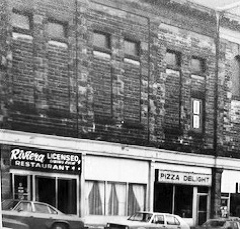
• exterior and interior photos of Vienna Coffeehouse;
• nurses at the old hospital;
• interior photos of the bowling alley (preferably with bowlers in action);
• Deware’s Grocery Store;
• Vogue Cinema and Imperial Theatre interiors;
• and any other restaurant photographs or menus.
If you can help, please contact Karen at tantramarheritage@gmail.com or (506) 536-2541.