A Yorkshire 2000 Legacy Committee, under the direction of the board of the Tantramar Heritage Trust, worked on a series of projects as a legacy to the Yorkshire 2000 gathering. One of these was the publication of Yorkshire Immigrants to Atlantic Canada, papers from the Yorkshire 2000 Conference, edited by Paul Bogaard. This book is still in print and can be ordered from the Tantramar Heritage Trust.
The White Fence, issue #105
May 2023
Editorial
Dear Friends,
The Tantramar Heritage Trust has embarked on an exciting new phase of heritage conservation: we’re physically growing! We have added a new building to the Campbell Carriage Factory Museum – a Carriage Shed which will allow us to better conserve and display creations made many years ago by the workers in this very special historic industrial site but that until now have been hidden from view for lack of space in the museum. A very supportive member of the Trust (to be identified at a later time) has come to our assistance in assuring that these hidden heritage treasures get a home where they will be protected from the elements and serve to further educate the general public about our past. Of extra significance, this new construction has allowed us to fulfill the wishes of a beloved and respected former Director of the Trust, the late Peter Bowman. Peter knew that this site was unique, required conservation assistance and was of great historic and educational importance. We on the Board of Directors fully agree with Peter’s sentiments and are aware that old wagons and carriages built at the Campbell Carriage Factory that were hidden away and protected in barns (for which we paid a nominal fee) needed to be viewed by the public. After all, that’s what museums are for!
The following article was not only written by Paul Bogaard but also includes photos taken by Paul throughout the construction process. In this issue of your newsletter you will not only read of the progress made between summer and fall 2022 into early winter 2023 but also view the progress of this effort from readying the ground for construction right through to roofing, installing windows and preparing inside spaces for wagons, carriages and carts, a space large enough to allow visitors to mill around and to look and learn about the early days of transportation. I happily and diligently followed the work of Seamus, John, Al and Mike throughout this period and looked forward to preparing this issue of The White Fence. I enjoyed every minute of the process of construction and I look forward to announcing the date of an official opening in the coming months. Once an opening date is announced, I hope that you will all come and visit this new effort to further conserve the heritage of the Tantramar area.
—Peter Hicklin
The Campbell Carriage Factory finally gains a Carriage Shed
by Paul Bogaard
It was fifteen years ago in May, 2007, that we planted a Red Oak at the corner of the Campbell Carriage Factory property in memory of our friend and fellow Board member, Peter Bowman. During his years on the Board Peter came to love the Carriage Factory and was the first to suggest we should add a viewing shed for wagons, sleighs and carriages that we cannot fit into our other buildings.
We said goodbye to Peter but we did not say goodbye to his idea. By 2003 we had largely restored the old factory building and opened it as our first museum. In 2008-09 we restored the addition to the factory that now serves as our entrance and made major repairs to the warehouse. In 2011 we restored the Blacksmith Shop and created a fully operational forge. So, the complex of buildings that make up the Campbell Carriage Factory Museum has seen major additions and renovations although not including Peter’s dream of a viewing shed.
When Al Smith and I were approached by a prospective donor in December of 2021 (whose name will be revealed with some fanfare when we officially open the new building) and were asked what projects the Trust had in mind, one possibility quickly came to the top of the list: a Carriage Shed to be raised up between the existing factory buildings, just where Peter had imagined it should go.

Fig. 1. Location of shed proposed by Peter Bowman (see white arrow) and rendered by Peter Manchester many years ago prior to construction. Innovator and former board member of the Tantramar Heritage Trust, the late Peter Bowman was a major influence in the creation of the Campbell Carriage Factory as a public museum.

Fig. 2. By way of example, we had seen the style of storage shed used for viewing at the King’s Landing historic settlement, though it now looks a little time worn.
PLANNING
Excited by this possibility, the THT Board established a committee, which over the winter months, settled on plans based on advice received from Mike Keech and Drew Fraser at Can-Tech. They would assist us in many ways over the coming months but as this construction company was in the process of closing down, it was clear that they would not actually be able to put up the building. This task would go to EnerGreen Builders Cooperative who we have engaged on most of our heritage reconstructions. The materials needed, and other steps taken through Plan360, however, we would manage ourselves. Following the disruption of the pandemic, 2022 was a tough year to engage in new construction with materials in short supply and contractors facing a backlog of jobs. EnerGreen warned us it would be late in the year before they could possibly begin, which was just as well since it took us through summer and fall before we were able to assemble what was needed.

Fig. 3 & 4. THT has been offered carts and wagons for which we need more space
GROUND PREPARATION
By late summer Brett Beal of Beal & Inch was able to begin ground preparations so that by early September a concrete pad could be poured. This early work was greatly assisted by our own Mike Keech and our friend Allan Pooley who was on site almost every day.

Fig. 5. Drew Fraser helped render the committee’s ideas as construction drawings.

Fig. 8 & 9. With gravel properly impacted, the concrete pad was poured.

Fig. 10. Retired from his many years as an electrician, how does Allan Pooley spend his time? Laying out the electricity needed for this project.

Fig. 11. The rough lumber we ordered finally arrived with the first snow.

Fig. 12 & 13. The concrete pad provided a useful working surface to construct and then raise the rear and two end walls.

Fig. 14. The front wall, designed both to hold up the higher end of the roof and to provide two large doorways, had to be constructed in place.
FRAMING BEGINS
It took another month before rough lumber was milled by Nova Tree in Nova Scotia; windows were brought over from Richards & Son in Amherst; and a steel I-beam and roofing was purchased out of Moncton… and winter was coming on. Even so, EnerGreen Builders Co-op decided they would attempt to construct the shed as weather permitted and that turned out to work remarkably well. They were able to complete much of the framing before taking a well-earned Christmas break.

Fig. 15. Extra bracing (the diagonal pieces) being added to strengthen the span over the large doorways.

Fig. 16. (at right) Horizontal diagonal bracing can be seen above the soffit boards being installed to stiffen the front wall.
EXTRA STRENGTH
With warnings from the Building Inspector and advice from a structural engineer and with no wintry blasts at the beginning of 1923 that would keep them from working, the EnerGreen builders set about bracing the building’s frame to give it extra strength. Once that was added in, a central post was erected to carry steel I-beams from end to end, which in turn provided the support needed for roof-rafters.

Fig. 17 & 18. A substantial central post was erected (with temporary bracing, above) to carry the steel I-beam that runs from end to end (on the right) supporting rafters for the roof. Also seen are “collar ties” connecting the centre of the roof structure with the front wall for additional strength.
SIDING & ROOFING
Even the cold and snow that came in mid-January allowed work to continue and before the end of the month vertical siding was added to the rear and end walls and the steel roofing was installed. Eventually, the “fascia” boards (at the edge of the roof) and the vertical corner boards will be painted red, as elsewhere on the museum buildings in this compound.

Fig. 19. The rear wall was sided first. Board-and-batten siding usually involves mounting vertical boards followed by narrower pieces to cover the gaps. We had decided instead to mount vertical boards lapped over with another series of boards of the same size (often seen on local marsh barns).

Fig. 20. Siding on the two end walls required matching the vertical siding to old-style wooden windows and on the end facing the Blacksmith Shop, fitting in an entry door. That door will be of an old style (as used elsewhere on museum buildings) and feature hand-forged hinges & pintles.

Fig. 21. Strapping was first laid down across the rafters, trapping a special protective membrane, and then the long strips of steel roofing overlap each other all the way across and on the front smaller roof as well.
ROLLER DOORS & INTERIOR
That allowed the two large roller doors to be installed by Gagnon Brothers in early February and, by the end of that month, interior work boxing-in the I-beam and building a shelf along the back wall was completed by Allan Pooley and Mike Keech.

Fig. 22. With the first steel roller door already installed on the left, the Gagnon brothers are here lifting into place the second roller door, using a lifting apparatus to raise up the heavy door. These will securely close this new building when the museum is not open and then lift up quite easily and hide above where visitors will not even see them.

Fig. 23. If you look closely, you can see the I-beam above has been boxed in to hide the modern steel. More obvious is the 4-foot shelf built along the back wall which will hold sleighs and other smaller items above and behind the wagons & carts that we anticipate putting on exhibit.
FINAL THOUGHTS
What came to life over this last year is now nearly finished. Soon it will house the carts, wagons, carriages and sleighs for which we simply have not had enough space. This had been the dream of our friend Peter Bowman. Clearly, “His spirit lives on…”
Acknowledgements
The committee which was organized to oversee this project included Paul Bogaard, Al Smith, Logan Atkinson, Bill Snowdon, Mike Keech, and Allan Pooley who met regularly throughout. Bill Snowdon actually put in several days working while Paul mostly supervised from the sidelines. Peter Hicklin was a regular visitor. As indicated above, Mike’s experienced help and advice were indispensable and no one showed up more regularly and worked more tirelessly than Allan Pooley.
What’s in a Name?
Carriage Court
I thought that it was appropriate that since this issue of the The White Fence was devoted to the new Carriage Shed at the Campbell Carriage Factory Museum, that this column should address the naming of Carriage Court. The Sackville street by that name, located at Beech Hill just off Stanley Drive, was developed by Sackville Real Estate agent Grace Nelson in 1999. When asked why she chose that name for the subdivision, Grace replied “because I have a daughter named Carrie and I have always loved carriages.” Indeed she was a lover of horse-drawn carriages and donated a very fine one to the Campbell Carriage Factory Museum around 2008.
Source: Smith, Allan D., Aboushagan to Zwicker – An Historical Guide to Sackville NB Street Nomenclature, 2004. A publication of the Tantramar Heritage Trust.
ANNOUNCEMENTS
Annual General Meeting
Sunday, May 28, 2 pm
Campbell Carriage Factory Museum
Guest speaker: Donna Sullivan,
“If Brooks Could Talk: 3 of Sackville’s Brooks”
Join us for a short business meeting, presentation of the Volunteer of the Year Award, a presentation from our guest speaker, and a first look at our new carriage shed. Reception to follow. All are welcome.
Official Opening of
Campbell Carriage Factory Museum
Sunday, June 18, 12-5 pm
Entertainment, games, blacksmithing demonstrations, and the very popular annual Plant Sale.
Canada Day Social
Saturday, July 1, 2-4 pm
Boultenhouse Heritage Centre
Join us for games, tours, music, and delicious homemade desserts.
Make It Workshops
July and August
Heritage-themed children’s workshops – details TBA.
Under the Sky Events
July and August
Community events at our museums – details TBA.
Heritage Field Day
Sunday, August 13, 12-5 pm
Campbell Carriage Factory Museum
Blacksmithing demonstrations, live music, dancing, snacks, artisan demonstrations, tours, and much more.
Annual Fall Fundraising Dinner
Saturday, October 28, 2023, 6 p.m.
Sackville Legion
Theme: “Halloween Hauntings”
Further details to come!
To keep up with what’s happening at the Trust, follow us on Facebook or Instagram (tantramarheritagetrust) or contact the office at tantramarheritage@gmail.com and ask to be added to our email list.
The White Fence, issue #104
March 2023
Editorial
Dear Friends,
Come walk an historic path with me.
Janet Crawford and Al Smith explore the creation and installation of stone carver Scott Harris’s Yorkshire monument in Sackville. The immigration of Yorkshire settlers to New Brunswick and Nova Scotia in the late eighteenth century was a significant event in this region that represents an important sector of our citizenry (including our two authors!).
Then join Al Smith’s continuing journey in the naming of the streets of Sackville. This time Al explores the convoluted evolution (my choice of words here) of the naming of King Street. Of special interest here to me is the role played by a particular citizen (I’ll say no more!). And on a different journey, Colin MacKinnon explores one of a number of “Lodges” in Sackville around the turn of the twentieth century, focusing here on “Coronation Lodge Number 176.” There was no internet available in the early 1900s; fraternal organizations like the one described here by Colin and which could be termed a “social internet” helped to fill that need. So put on your walking shoes and travel with me on a road of Tantramar milestones.
—Peter Hicklin
Yorkshire Milestone Monument
Installed in Sackville
by Janet Crawford and Al Smith
The year 2022 was a significant one for descendants of Yorkshire families as it marked the 250th year of the commencement of the Yorkshire Immigration to Nova Scotia1. Seeking a better livelihood, over 1000 immigrants left their homes in Yorkshire, England, over the four-year period 1772-1775 and settled in the greater Chignecto region. That very significant early settlement event is now immortalized with the placement of a beautiful stone monument in the centre of the Town of Sackville, NB, in September, 2022.
The concept for the monument, based on the theme of being a milestone, was conceived by Sackville artist and Yorkshire descendant Janet Crawford. The project was realized through Janet’s collaboration with local stone carver Scott Harris.
Milestones and way-markers are very common historical features throughout England with over 1500 having been recorded in the County of Yorkshire2. Milestones were guideposts, often indicating mileage and direction to the next village. They were essential landscape components before there were maps or even roadways. Crossing the North York Moors was especially perilous in foggy or wintry weather and guide stones were essential to avoid getting lost.

Photo by Scott Harris of the monument’s installation, prior to adding the glass images.
Sackville’s “Yorkshire Milestone” is obviously not meant to be a guidepost but rather a monument recognizing a significant event in the Town’s settlement history. The Yorkshire Immigration was the third wave of European settlement in this region. For the most part, settlers arriving from Yorkshire purchased their lands from New England “Planters” who had received land grants a decade earlier. Prior to the Planters, Acadian farmers had occupied much of the Chignecto region dating back to the late 1600s and Indigenous peoples (Mi’kmaq) for circa 3,000 years. Janet says: “I wanted to present a sculpture that would represent some of the important contributions the Yorkshire folks brought to this area. The strong influence of the Yorkshire immigration can be seen throughout the Sackville area. Rather than a simple, flat commemorative plaque— it demanded more. I was so delighted that Scott Harris agreed to work with me on designing and creating this monument. He brought an historical emphasis to the project and his skills as a stone mason and carver added so much to the creativity of the work.”
Scott adds: “The monument-form mimics a Yorkshire milestone of a certain era, one that satisfied the dimensions and shape needed to display glass mosaic images and carvings.”

The barn glass mosaic under construction.
The monument is located along the walking trail around the Town’s flood retention ponds between Lorne and Charles Streets. It records dates of the Immigration and the straight-line distance between Sackville and Yorkshire. It also contains two beautiful vitreous glass panels created by Janet Crawford depicting a marsh barn and an early Methodist chapel, both features attributed to the early Yorkshire settlers. “I chose to use vitreous glass tiles to create these mosaic panels and decided that a precision approach to the imagery would work best in this context. Nipping, shaping, grinding and assembling tiny pieces of glass into a recognizable image were demanding, time consuming and very rewarding.” Scott Harris’ stone carvings are of a White Rose, a symbol of Yorkshire, and a Brigantine, a typical ship used to transport the settlers and their possessions.

Janet Crawford at work in her studio meticulously preparing the glass bits for the Chapel.
A large trilingual (English, French, and Mi’kmaq) panel accompanies the monument giving passersby more detailed information. An interesting fact mentioned in the text of that panel is that the monument is located on lands purchased by Charles Dixon in 1772, one of the first settlers from Yorkshire.

The interpretive panel
Another interesting fact associated with this monument is that the creators, artist Janet (Lowerison) Crawford and stone mason Scott Harris, were unaware at the beginning of the project that they are both descendants of Yorkshire immigrant Richard Lowerison (1741-1825). Richard Lowerison was born in the village of Stainton, Yorkshire North Riding, England. He married Mary Grey (1744-1834) in Yorkshire in 1762. Richard was a passenger on the immigrant ship Albion arriving at Fort Cumberland in 1774. His wife Mary and two children followed him the next year arriving on the vessel Jenny. They initially settled on the Petiticodiac but later purchased a property in Point de Bute; they are both buried in the Methodist Cemetery there.
Funding for the project was provided via a grant from the Town of Sackville that was sourced from New Brunswick Tourism, Heritage, and Culture as well as Canadian Heritage. The Town of Sackville installed both the monument and the information panel; rest benches will be installed in the spring. Janet would like to thank Scott Harris who was a joy to work with, Leslie Van Patter for her assistance in designing the lettering for the sculpture, and especially the Town employees, Matt Pryde and Todd Cole, who were generous and enthusiastic.
Footnotes
1. Nova Scotia at that time included all of present day New Brunswick.
2. Website: https://www.yorkshiremilestones.co.uk/
The “Loyal True Blues”
Coronation Lodge No. 176, Sackville, New Brunswick
by Colin M. MacKinnon

Figure 1. Photograph of the “Loyal True Blues”, Coronation Lodge No. 176, Sackville, New Brunswick. The image was taken at the corner of Main Street and Bridge Street, c1910. (Note: numbers (beginning at top left), corresponding with names, have been faintly written on the hats). The name for number 3 had been intentionally erased and two people, between 14 and 15, are not named or numbered as the image was blurred (author’s collection)
The following short note provides a brief glimpse of some of the past fraternal organizations from our area. The group photograph below, taken around 1910, shows members of Sackville’s “Loyal True Blues”, Coronation Lodge No. 176, wearing their regalia (Figure 1). They are posing in front of the old Merchants Bank (Royal Bank of Canada), at the corner of Main Street and Bridge Street. What is especially fortunate for us is that most of the people were identified on the back of the image with corresponding numbers written on the hat of each gentleman. This picture belonged to Lodge member Seth Mark Campbell Jr. (1873-1945) and has been passed down through the family (Figure 2).

Figure 2. Seth Mark Campbell Jr. (1873-1945) wearing his membership ribbon for Coronation Lodge No. 176, Sackville, New Brunswick (at right, ribbon photograph courtesy Macklem House Antiques, Saint Andrews, New Brunswick).
In times past, prior to the social safety net we enjoy today, people tended to rely more on family, friends and neighbours in the community. The various fraternal organizations of the era fulfilled part of this need. As an example, on the 9th of September, 1909, Rockport lighthouse keeper Edwin Lockhart was granted a Charter from the Grand Lodge of New Brunswick to “hold a Lodge of Loyal Orangemen No. 43” (Figure 3). A rare survivor, a hat belonging to Rockport lodge brother John Arthur “Art” King (1881 1972) is clearly marked “L O L” over “43” (Figure 4). In 1910, the by-laws for the Rockport Royal Orange Benefit Lodge (R.O.B.L.) stipulated how funds would be used to support sick members. The following selected quotes provides some details of the The “Loyal True Blues” Coronation Lodge No. 176, Sackville, New Brunswick organization, ARTICLE III states: “The Initiation Fee shall be Three Dollars: Dues Thirty cents a month, all to go in as a General and Benefit Fund.” ARTICLE VIII specifies how some of the funds could be spent; “When a brother of this Lodge is taken sick or incapacitated from work, otherwise than by immoral conduct. He shall be entitled to receive benefits for three months, if sickness is that duration, but no longer in any one year to the amount of three dollars per week making allowances in case of extreme necessity”. Should there be a death of a lodge member, this is covered in ARTICLE XXVI: “At the death of a brother in good standing this Lodge shall pay the sum of thirty dollars towards defraying the funeral expenses.” I presume the rules for Sackville’s “Royal True Blues” would have been similar.

Figure 3 (facing page). Charter from the Grand Lodge of New Brunswick for the establishment of Rockport Lodge No. 43; granted on 8 September 1909 to Edwin Lockhart (1860 – 1927). Rupert Delesdernier donated the document to the Orange Lodge Museum in Gagetown, New Brunswick (photograph courtesy Sharon Bainbridge).

Figure 4. Member’s hat for the Loyal Orange Lodge, No. 43, Rockport, New Brunswick. This belonged to lodge brother John Arthur “Art” King (1881-1972) (Heather Stone collection).
There were other groups as well; established on 27 April, 1905, as Branch 392, the Catholic community centered around Middle Sackville had a similar organization. The title of this group was conveniently called the Catholic Mutual Benefit Association (CMBA); the name leaving little doubt of its purpose. This guarantee of mutual assurance and support was further emphasized by a handshake depicted on the clasp that supported the ribbon worn by association members (Figure 5). It is worth noting that the ribbon had printing on both sides, the back portion having a black background that was worn when attending the funeral service of a fellow lodge member.
At one time, Sackville had a number of lodges besides those mentioned above: they were the “Knights of Pythias Tantramar Lodge No. 40”, “Pythian Sisters, Rensforth Temple No. 27”, “Ruby Rebekah Lodge No. 16”, “Leaman Loyal Orange Lodge No. 102”, “Lebanon Lodge No. 28, F and A.M.” and “Myrtle Lodge No. 71, I.O.O.F.”
Acknowledgments: Thanks to Sharon Bainbridge, Heather Stone and Ken Tower for sharing stories, artifacts and photographs. The image for the Coronation Lodge No. 176 ribbon was provided courtesy of Macklem House Antiques, Saint Andrews, NB.

Figure 5. Member’s ribbon for the Catholic Mutual Benefit Association (CMBA), Branch 392, Middle Sackville, New Brunswick. At right, the back of the ribbon has a black background; this was worn when attending the funeral service of a fellow lodge member (author’s collection).
What’s in a Name?
How Foundry Street became King Street
The street now officially known as King Street in Sackville, NB was for over half a century known locally as Foundry Street. “Foundry” was seemingly an appropriate name for the street as it ran past the sprawling manufacturing plant of the Fawcett Foundry (Enamel & Heating Products Limited). However, the evolution of the naming of this street from “Foundry” to “King” is somewhat mysterious.
Following the official incorporation of the Town in 1903 there was a Streets Committee of Town Council appointed to recommend official names to the streets within the incorporated town. The use of the name King Street came initially from that 1903 Committee and was to apply to the easterly end of Main Street – “from Crane’s Corner via Episcopal Church to town line”1. However, it does not appear that recommendation was accepted and the easterly section of Main Street was simply known as East Main Street. The present-day King Street was shown as Foundry Street on the 1899 Stewart & Co. map of the Town as well as on the 1911 Goad Insurance map of Sackville. However, on the Town’s first official map drawn by Land Surveyor Kenneth S. Pickard and issued on May 1, 1922, the street is shown as King Street. Similarly the 1947 and 1954 Goad Insurance maps show it as King Street.
It would seem that possibly the street was officially named King Street, likely after King Edward VII (King of Great Britain and Canada 1901-1910), sometime before 1922 but the older name prevailed in local usage. Street name-plates were not erected in town until 1941 and the name-plate erected for this street was Foundry Street. That name-plate remained until the early 1960s when Grace Wright, wife of then Sackville mayor James G. Wright2 (whose residence was on that street), vehemently objected to the name of the street and wanted it changed to its official designation as King Street. Mrs. Wright was successful and the street name was changed to King Street which at that time only went as far as the old town boundary. The remainder of the street connecting through to the crossroad to Dorchester was still known as the Upper Fairfield Road. With the major expansion of the town boundaries in 1975, the use of King Street was extended to the new town boundary. In 1996-97, with changes made for 911 service, the street name was extended to the full length of the road and the name Upper Fairfield Road was dropped.
Grace Wright was not only instrumental in correcting the naming error but it also seemed to her that it was more appropriate to have the Mayor’s residence address listed as “living on King Street”.
Footnote
1. Crane’s Corner is the intersection of York and Main Streets—the name was to apply from the current downtown traffic light past the Anglican Church out to the Booster Pump which was then the easterly boundary of town.
2. James G. Wright was Mayor of Sackville in 1960-61 and 1963-67.
Source: Smith, Allan D., Aboushagan to Zwicker – An Historical Guide to Sackville NB Street Nomenclature. Publication of the Tantramar Heritage Trust (2004).
The White Fence, Issue #103
January 2023
Editorial
Dear Friends
It is with great pleasure I tell you that the stories keep coming! What a great way to start our New Year and a new season of newsletters. This issue is primarily about people, past and present. On this topic, Colin MacKinnon informs us of the importance of documentation, especially about folks from our distant past. This is a lesson from which we all can learn. As for important people of today, it is with great pride that we announce our gratitude to two significant members of the Trust to whom we owe much. I am sure that you will agree. Lastly, we have the celebration following the publication the 100th issue of The White Fence. The Board of Directors surprised me with a special cake at a Board meeting following the completion of that special issue. How does that famous comment go: “Let them eat cake!” Well, I did and loved every crumb!
Enjoy!
– Peter Hicklin
Jemima (Read) Campbell – Home for Christmas
by Colin M. MacKinnon

Figure 1. Portrait of Jemima (Read) Campbell (1831-1893). Attributed to artist Stephen F. TarBush (1866-?) of Charlottetown, Prince Edward Island.
The following note emphasizes the importance of documentation. Sadly, so many old photograph collections contain images of family members that can no longer be identified as no one took the time to write a name or identifying information on the back. For the benefit of future generations, I encourage readers to pull out those old photos and carefully print the person’s name (and further identification such as date of birth, parents, etc.) on the image where it is legible but in a location that does not damage the picture. The additional information may be critical as later historians may not be able to decipher a label that just says “uncle John”. Also, be careful not to use ink that might bleed through the paper; archivists use pencil.
On 10 November, 2022, I found an interesting note in my mail box from Lise Rand who lives in the Annapolis Valley in Nova Scotia. She wrote: “I walked into Value Village in New Minas, NS, and came across a most beautiful antique portrait. The lady in the photo looked so genuine, and had kindness in her eyes. I turned her around and noticed some writing on the back… Jemima Read, in green ink and what I believe to be her marriage dates, etc. I am wondering if this is the same lady in your family tree.” (Figure 1).
Fortunately, someone had the forethought to write her name and date-of-birth on the back of the frame thus allowing Lise to identify the lady in the portrait as Jemima Read (1831-1893) of Sackville. Jemima was the daughter of “Deacon” Eliphalet Jemima (Read) Campbell – Home for Christmas Read (1798-1889) and his wife Rebecca Outhouse (1799-1876) of Beech Hill. And, more importantly to me, she was my great-great grandmother.
On the 23rd January 1851, Jemima married widower and Master Mariner Seth Mark Campbell (1818-1880) of Wood Point (Figure 2). The wedding was conducted by Willard C. Parker, Baptist Minister, and witnessed by James Read and Mary Lawrence. Captain Campbell’s first wife was Sarah E. Davis (circa 1828-1849) who may have died in childbirth. On the 5th February 1849, Seth M. Campbell purchased a house and land at Wood Point from Henry and Dorcas Purdy for £145 (Deed No. 17680).
The parcel was described as follows:
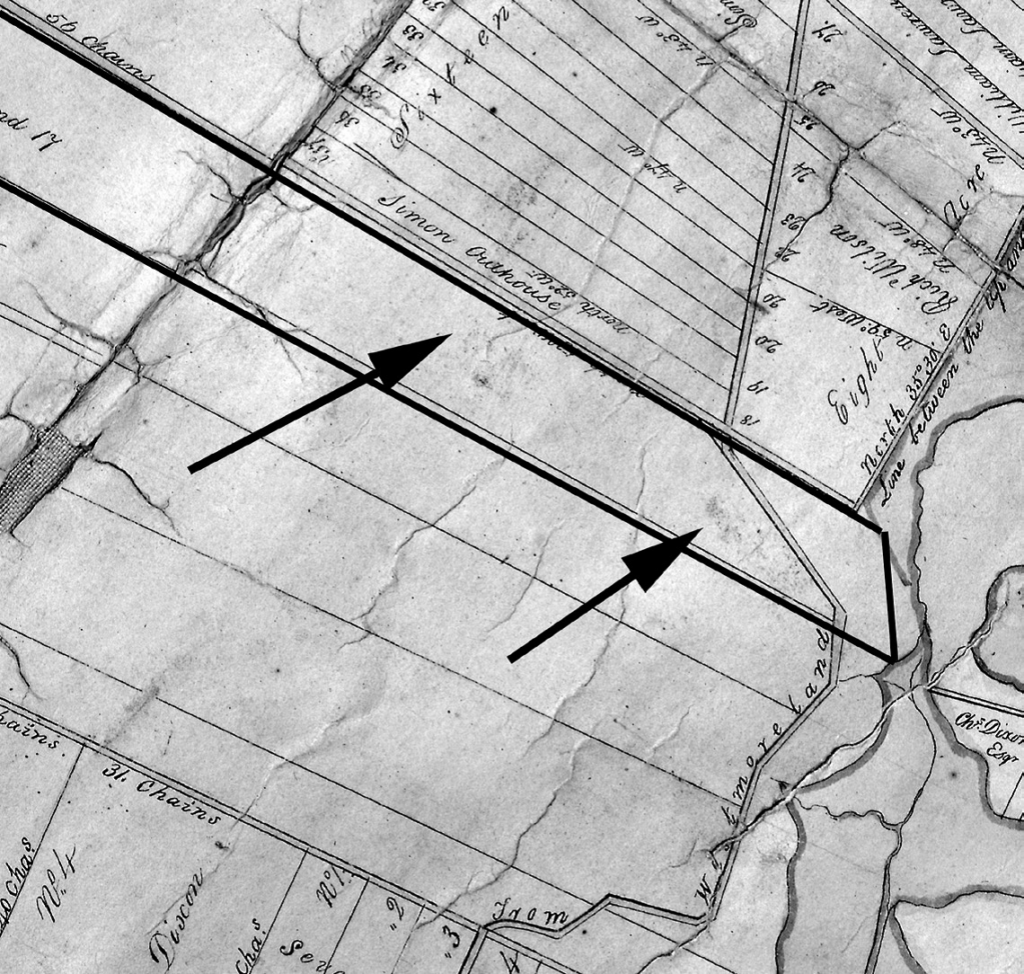
“Southwesterly by the main road and a piece of land fenced off on which a Methodist Meeting house is located, North Easterly by a road two rods wide running nearly Northwest, North Westerly by lands owned by Simon Outhouse and South Westerly by lands owned by Joseph Milner”.
This was to be Jemima’s home until her passing in 1893 (Figure 3).

Figure 2. Captain Seth Mark Campbell (1818-1880), husband of Jemima Read (1831-1893).
The back of the portrait contained one other piece of critical information regarding the creator of the work. Written in bold lettering was the following information: “Recd amt in full / S. F. TarBush / Apl 18th [18]99”. Fortunately, TarBush is not a common name in the Maritimes and a quick search of the 1901 census revealed a Stephen Franklin TarBush, aged 34, and his wife Sarah, 29 years old, living in Charlottetown, Prince Edward Island. The clincher was his occupation being listed as “artist”. Furthermore, Mr. TarBush, who operated the “High Grade Art Parlor” is recorded as working from home with a significant income (for the time) of $1,000/year. As Jemima passed away in 1893 and the date on the back of the image was 1899, it appears that it was drawn after her death. Apparently, this was a specialty of TarBush who advertised that photographs could be sent to him to copy.
Jemima had at least seven siblings and, possibly salient to this story, two of her brothers were Rev. James Loring Read (1830-1905) and Rev. Eliphalet Outhouse Read (1833-1911). Both attended the Baptist Convention in Wolfville in 1869 and served, respectively, for some time at Aylesford and Berwick, Nova Scotia. We have no idea where Jemima’s portrait has been for the past hundred years or who left it at the store in New Minas. However, it is possible it resided with the family of one of these ministers named above. Thanks to the detective work and generosity of Lise Rand and the wishes of her nine-year-old daughter Mearah, Jemima is home for Christmas.

Figure 3. Overlooking Cumberland Basin, the home of Jemima Read and her husband Captain Seth M. Campbell, in Wood Point, New Brunswick.
Barb gets a “Charlie”
Distinguished Service Award presented to Barbara Jardine – May 28, 2022
By Al Smith

Al Smith, presenting the “Charlie” Award to Barb – May 28, 2022 at the 26th annual AGM of the Tantramar Heritage Trust held at the Campbell Carriage Factory Museum. (Elaine Smith photo)
The Trust established a new volunteer recognition award in 2019 known as the Distinguished Service Award, not to be awarded annually but periodically to recognize Trust members who have made highly significant contributions over many, many years. This special award was first given to Charlie Scobie on June 2, 2019, at the Trust’s Annual General Meeting (AGM) that year. Since Charlie Scobie was the motivation for the Trust to create the need for this award, we have come to call it a “Charlie”, the highest level of recognition that the Trust will give out to a very select few members of our dedicated group of volunteers.
The recipient of the Trust’s second “Charlie” award was Barbara Jardine, presented to her at the Trust’s 2022 AGM. A brief summary of her long involvement and extraordinary leadership with the Trust follows.
Barb joined the THT Board on June 10th, 1999. She initially chaired the Trust’s Historical Society Committee and organized five sessions during fiscal year 1999/2000. In June 2000, she joined the Trust’s Executive Committee as Secretary of the Board, a position the she would also serve in fiscal year 2007/08.
Barb served as the Trust’s President for an incredible 11 years. Initially, she was president for a four year stint from 2001 to 2005 and more recently seven consecutive years from June 2015 to December 2021. The Trust is now into its 27th year and Barb has Barb gets a “Charlie” Distinguished Service Award Award presented to Barbara Jardine – May 28, 2022 served as President for 40% of that time. That is truly an outstanding level of commitment to any organization. In the spring of 2020 Barb announced that it was her intention to step down as President but when the Covid curse hit, she very kindly stayed on for another year and a half to shepherd the organization through the complexities of operating within Covid restrictions.
Under Barb’s first four years as President she saw the purchase of the Boultenhouse property (July, 2001), the creation of the Trust’s office in Bulmer House in 2002, the opening of the Campbell Carriage Factory as our first Museum in 2003 and served on the Trust’s Planning Committee in 2004/05 for the restoration of the Boultenhouse mansion to become the Trust’s second museum. Returning to the Board in 2013 she was the chair-person of Membership and Volunteers Committee, a position that she held for the next nine years.
Barb’s second term as President began in June 2015 and she immediately took on the task of organizing the updating of our Strategic Plan which included updating of our many Policies that guide the operations of the Trust. Under her leadership, the Trust has become far stronger in human resource management, communications, strategic planning, focusing on educational programming and in guidance, especially for the several older Directors to think seriously about succession planning. Barb cares deeply about the organization which was well illustrated by her exceptional level of service over many years. It was most fitting that she be the recipient of the Trust’s highest level of volunteer awards.
Since stepping down as THT President she has continued to volunteer with the Trust, joining the Fall Fundraising Dinner Committee, and serving as MC for that event last November. She has also servedas VP of Tantramar Seniors’ College and is the current President of that organization.
Bill Snowdon
THT Volunteer of the Year 2022
Citation by Al Smith

Al Smith presenting Bill Snowdon with a well-deserved Volunteer of the Year Award at the Tantramar Heritage Trust’s Annual General Meeting on May 28, 2022. (Elaine Smith photo)
The Trust’s Governance Committee does not normally single out a current member of the Board of Directors to be the recipient of our Volunteer of the Year award. Our Board is very much a working board with all members expected to take on either leadership or supporting roles in the operations of the Trust. However, this past fiscal year, one of our Directors, Bill Snowdon, went over and above all expectations and his very considerable efforts did not go unnoticed. It was most fitting that he was declared our Volunteer of the Year for 2022.
Bill joined the Board in June, 2014, and immediately took over responsibility for operations at the Boultenhouse Heritage Centre. It was a job that I had done for several years so I stayed on the committee with Bill and have thoroughly enjoyed working with and getting to know him better over the past 8 years. Bill is a “jack of all trades”: painting, plumbing, carpentry, lawn mowing, repairing appliances…he does it all! Yes, a perfect volunteer to be responsible for the care and upkeep of three heritage buildings.

Bill Snowdon hard at work on the bathroom renovation in the Boultenhouse Heritage Centre apartment
During the winter/spring of 2020/21 the Trust embarked on a new Capital Campaign to fund four major projects, mainly at Boultenhouse: replacement of the aging oil furnace with a heat pump, a total retrofit of the apartment bathroom, replacement of all the upper story windows and exterior painting. Bill searched out contractors and suppliers, got price quotes and assisted with organizing the Capital Campaign. Through Bill’s direct involvement, three of those major projects were completed before the end of 2021. Of particular note was the total renovation of the apartment bathroom. Bill spent pretty much the entire month of August, occasionally with a volunteer or two, doing that complete retrofit and, in doing so, saved the Trust several thousands of dollars. The fourth project, exterior painting of the Boultenhouse house and the trim and doors on Bulmer and Anderson houses, was also organized by Bill; he selected a contractor who completed the work in July, 2022.
In addition to the Boultenhouse operations, Bill participates in two ad hoc committees: the Campbell Carriage Factory Museum Special Projects and Boultenhouse Shipyard Property. To this day, he remains very active in both committees.
Barque Antwerp Portrait
Donated to the Trust
by Al Smith
During the Yorkshire 250 Commemoration Weekend in mid-August 2022, a very significant new artifact was added to the collections at the Boultenhouse Heritage Centre. An original ship portrait of the Barque Antwerp was professionally restored, framed, and donated by descendants of the seafaring Anderson family. Representatives of the Anderson family were on hand for the unveiling in the Marine Room at the Boultenhouse Heritage Centre Museum. Joan Grossi of Springfield, Virginia, made the donation on behalf of the family, which was very gratefully accepted by Trust President Logan Atkinson.

Installed Antwerp painting at the BHC
The donors, Joan Grossi and Beverly Papinchak, are the only remaining grandchildren of Captain Rupert Anderson (1859-1922), the eldest son of Captain George Anderson (1830-1873) and Arabella (Bella) Ayer (1838-1880). Joan’s mother, C. Gertrude (Anderson) Angus (1910-1998) traveled to Sackville in the early 1950s to visit with her younger sister Katie Belle (Anderson) Steadman (1907 1982). Katie Belle and her husband Gray Steadman (1904-1971) owned and operated Steadman’s Grocery on Queens Road, Sackville. During the visit to Sackville, Katie Belle gave the painting of the Antwerp (which was rolled up in a tube) to her sister who carried it back home to the States with her. The portrait was framed and hung for many years in the Angus family home in New York, USA. Last spring, the family decided that the painting should be returned to Sackville and contacted the Trust office. Prior to shipping the portrait to Sackville, both Joan and Beverly worked at having it professionally restored and reframed in Florida.
The donation of the portrait is a highly significant one as there are only five known portraits that exist of the 176 vessels built in Sackville, Westcock and Wood Point. The Trust now owns two of those five originals: Barques Cecrops and Antwerp and a beautiful full-size copy of the portrait of Brig Tantramar, painted by Sackville artist Angelica DeBenedetti. In the era before photography, commissioning a Marine Artist to paint a portrait of the vessel was the only way that builders, ship-owners or the vessel’s master could have a tangible reminder of the beauty of these amazing tall ships. In addition to their unique artistic qualities, ship portraits reveal important technical details of the vessels.
The oil on canvas portrait of the Barque Antwerp was painted by Belgian artist John Frederick Loos (1861-1895). Loos was from a family of marine artists as both his father and younger brother Henry painted vessels calling at the port of Antwerp, Belgium. He worked primarily in oils, receiving commissions mostly from British and American vessels that entered Antwerp. The portrait of the William Hickman (Dorchester) built ship J.I. Smith was also painted by John Loos. The Barque Antwerp was a 573-ton vessel, 145 feet long, 32.2 feet wide and 17.6 feet deep, launched August 29, 1874 and registered in Saint John, NB, on September 15, 1874 as ON 66982. Antwerp’s builder was 26-year old Issac Clifford Atkinson of Wood Point, NB. Three Saint John merchants purchased controlling shares to the vessel with the builder holding six shares and the vessel’s first master, Capt. William Atkinson, owning four shares. The barque sailed for 12 years and was abandoned at sea on September 30, 1886, full of water on a voyage from Saint John, NB, to Tralee, Ireland.
The builder, Isaac Clifford Atkinson was a third generation descendant of Yorkshire immigrants Robert and Ann Atkinson who arrived on the vessel Albion in May, 1774, initially settling at Franklin Manor in River Hebert, NS. Isaac Clifford was born on March 11,1848, at Wood Point, Westmorland County, NB, the son of Captain Isaac Campbell Atkinson (1815-1869) and Clarinda Purdy (1822-1905). The 1871 census lists him as a farmer but he must have had considerable experience in shipbuilding as just three years later he is the builder of record for the Barque Antwerp. One possibility is that he worked with his next door neighbor Charles Barnes who built the Brigantine Westmoreland in 1873. Isaac Clifford Atkinson (known as Clifford to avoid confusion with his father) likely built the Antwerp on his home property at Wood Point, a property that had been earlier owned by shipbuilder Christopher Boultenhouse. Isaac Clifford Atkinson moved to Boston around 1877 to work for his cousin Byron Atkinson. He married Emily Clara Petersilia (1854-1884) in Boston on June 27, 1878. Their first child, born on March 13,1888 was named Issac Clifford Atkinson Jr.
The portrait of the Barque Antwerp now hangs prominently above the mantle in the Marine Room at the Boultenhouse Heritage Centre. Painted with full sails set, it is a magnificent reminder of the days when Sackville was a busy seaport and the largest shipbuilding centre in Westmorland County. The Trust is deeply appreciative to the Anderson family for this most significant donation to our Museum.
Known Ship Portraits of Sackville Built Vessels
| Name | Builder | Year | Owner | How Obtained |
| Brig SPECK | C. Boultenhouse | 1837 | Dyer Family (England) | former ship-owner |
| Barque CECROPS | Chipman Chase | 1865 | Tantramar Heritage Trust | Estate donation |
| Barque M. WOOD | Henry Purdy | 1866 | N.B. Museum | Estate donation |
| Brig TANTRAMAR | George Anderson | 1869 | N.B. Museum | purchased in 1869 |
| Barque ANTWERP | I. Clifford Atkinson | 1874 | Tantramar Heritage Trust | Family donation |

Donation of the ship portrait of Barque Antwerp, August 13, 2022: left to right; Al Smith, Joan Grossi, Logan Atkinson (THT President), Paul Bogaard.
Sources:
- Al Smith’s Anderson Family Tree on Ancestry.ca.
- Charles A. Armour and Allan D. Smith, Shipbuilding in Westmorland County, New Brunswick 1784-1910, Tantramar Heritage Trust, 2008, ISBN 978-0-9784100-5-6.
- Robert S. Elliot and Alan D. McNairn, Reflections of an era – Portraits of 19th century New Brunswick ships, New Brunswick Museum, 1987, ISBN 0-919362-25-0.
- Norton Wyse and Charles Valpy, New Brunswick Shipbuilders Checklist, New Brunswick Museum, 2007.
- Al Smith, The White Fence newsletter of the THT, The Brig(antine) Speck, Issue # 63, May 2014.
- John Frederick Loos biography on internet site www.artnet.com.
- Email correspondence, July 18, 2022, with Bill Snowdon of Wood Point on the Atkinson family of Wood Point.
Marking the 100th Issue of The White Fence Newsletter
by Al Smith

Newsletter editor Peter Hicklin all smiles at a Tantramar Heritage Trust’s directors’ meeting after having published the 100th issue of The White Fence, a major accomplishment for the Trust. (Al Smith photo – April 19, 2022)
At a Tantramar Heritage Trust Board Meeting held on April 19, 2022, a major Trust milestone was celebrated: the publication of the 100th issue of the Trust’s newsletter The White Fence. Proud editor Peter Hicklin, for all 100 issues, joined with members of the Board in cutting a cake to acknowledge that major accomplishment.
That 100th issue of The White Fence was published in early April, 2022, 25 years after the first issue was published in January, 1997. The Tantramar Heritage Trust was incorporated in September, 1996 and the Founding Meeting held on October 9, 1996, where the first Board of Directors was elected. Peter Hicklin was a member of that first Board and continues to this day. Early on, the THT Board decided that a Newsletter and an active publications program would drive the printed components of the Trust’s education and outreach activity. Peter agreed to take on the task of editor for the newsletter, a task that he has very ably tackled with much passion.
Peter decided to call the newsletter The White Fence after reading my short article with that same title which he published in Issue #1. In my youth there was a real place that we knew as “the white fence”, a rallying place just a short distance from the old Ogden School on Main Street. Back then it was a meeting place for area kids to exchange stories or to plan our play for the next few hours. Thus Peter wanted the newsletter to be the Trust’s “white fence”, a place to learn and enjoy the stories that make up Tantramar’s fascinating history. Through its 100+ issues it has certainly accomplished that early vision of its editor.
Early on, it was apparent that the newsletters were very well received by the Trust’s membership. When issue #30 was published in December 2005, the Publications Committee decided to compile the first thirty issues into a compendium which members and the public readily purchased. Filled with articles on Tantramar’s history along with an index compiled by member Jeff Ward, the compendium became a popular coffee table book. Compendium II (issues 31-60) was published in October 2013 and Compendium III (issues 61-90) in March, 2021. That compendium contains 65 historical articles that have been researched and written by 23 contributors. The formatting for all three compendiums has been done by Leslie Van Patter and Jeff Ward continues with the indexing, an effort for which the Trust’s Publications Committee is immensely grateful. Compendium IV will no doubt be published once we reach issue #120.
Initially, the newsletter was six pages, expanding to eight soon thereafter and now often contains as many as 12 pages. Annually, four to five issues are published each fiscal year with members being mailed out a printed copy or, at their choosing, receive it in digital format. A few months after the publication of an issue, it is placed on the Trust’s website where all 100+ issues can be accessed and searched. Placing the newsletters on the web has resulted in numerous enquiries from readers around the world and very often results in the Trust receiving additional historical information from this interested readership.
We are fortunate to live in a community that is so rich in history. The White Fence newsletter and its Compendiums bring snippets of that fascinating history to life for our membership and to the wider public. The Trust’s education and outreach mission is being well advanced by Peter and his “baby”, The White Fence newsletter.
Thank you, Peter.
The White Fence, issue #102
november 2022
Editorial
Dear Friends,
Today is October 20th. The month of November is just around the corner. For many, it is an important time of remembrance. By the time you read this issue, Remembrance Day, November 11th, will be days away. In this issue, Colin MacKinnon focuses our attention, not on the many who fought in war for our liberty, but on one special young man from Sackville who heeded the call. Furthermore, you will not only discover the story of Leonard Tower, but also read his own words during his preparations for battle and during the conflict, via the letters he sent home to members of his family. It is a very personal story and many of you will undoubtedly be touched by Leonard Tower’s own words and especially his descriptions of the climatic conditions these young men endured in wartime. It is remarkable to read of the difficulties these soldiers experienced in the course of a regular day of service. Like me, you will be appalled to read of the conditions Leonard describes. I would encourage you to re-read Leonard’s own words on November 11th. We will remember.
– Peter Hicklin
ANNOUNCEMENT
A Taste of History
As you were informed in our last newsletter, our fundraising dinner A Taste of History will be held at St. Ann’s Church Hall in Westcock on Saturday, November 5th. The theme is Sackville’s Foundries, marking the 170th anniversary of the founding of the Fawcett Foundry and the 150th anniversary of the founding of the Enterprise Foundry.
The evening will include Al Smith’s popular trivia contest and scenes from an upcoming play about the foundries written by Susan Amos and presented by Live Bait Theatre.
Tickets are $50 each, including a $25 tax receipt. Seating is limited, so get your tickets by contacting Karen at the office at (506) 536-2541 or tantramarheritage@gmail.com or speaking to any THT board member.
The lost war letters of Private Leonard Bruce Tower (1897-1916)
13th Battalion (The Royal Highlanders of Canada)
by Colin M. MacKinnon

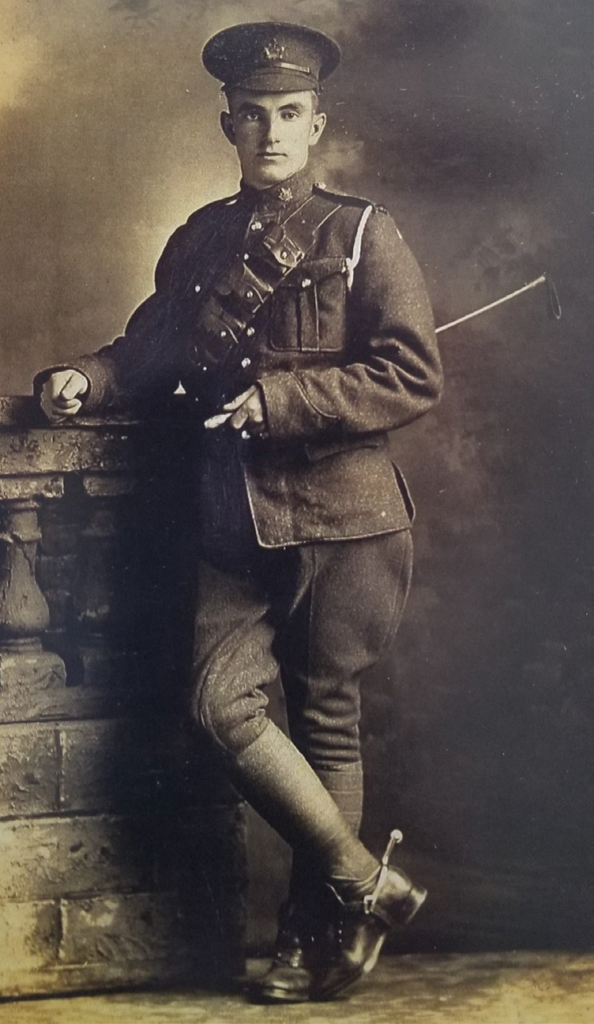
Figure 1. Private Leonard Bruce Tower (1893-1916)
In the fall of 2021, Ken Tower of Rockport was contacted by Jill Robinson of Halifax regarding a collection of letters that were in her possession. These World War I era papers were mostly written by Private (Pte.) Leonard Bruce Tower (13 March 1897-5 June 1916) (Figure 1) and had been held for many years by Jill’s grandfather Lt. Rev. Cuthbert Cooper Robinson (1893-1971) (Figure 2). Jill expressed that it was always the hope of her family to return the collection to the relatives of Pte. Tower.

Figure 2. Lt. Rev. Cuthbert Cooper Robinson (1893-1971)
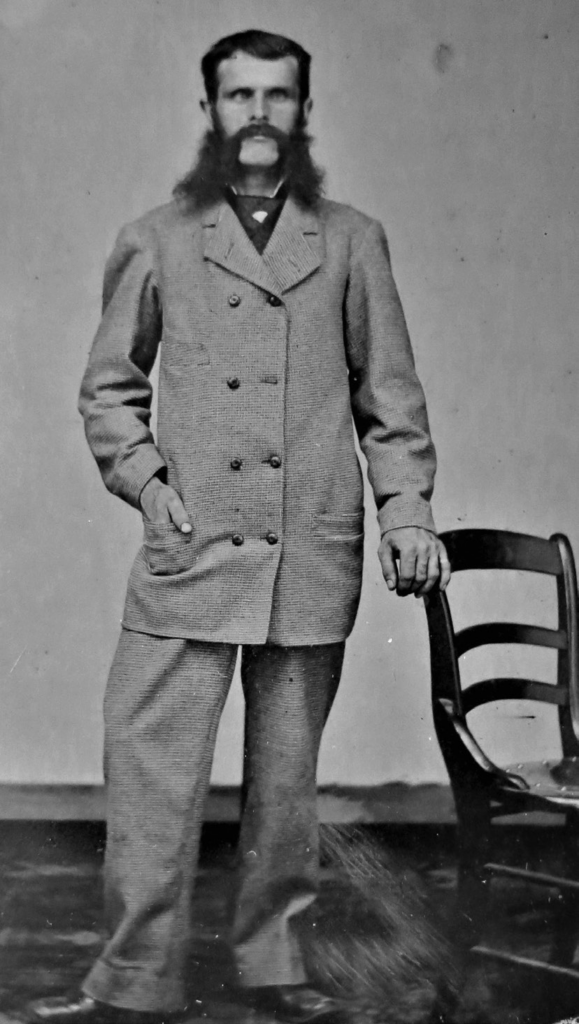
Leonard B. Tower, great uncle to Ken, was the youngest of six children of Captain Leonard C. Tower (1858-1933) and Eliza J. Wilbur (1855-1926) (Figure 3).

Figure 3. Captain Leonard C. Tower (1858-1933) of Rockport, and later Sackville, New Brunswick. (Courtesy Ken Tower collection.)
He spent his earliest childhood years at the family home near Wilbur’s Cove in Rockport, New Brunswick, prior to their move to Sackville in 1905 (Figure 4).

Figure 4. Home of Captain Leonard C. Tower (1858-1933) in Rockport, New Brunswick, prior to his move to Sackville in 1905.
Leonard was only about 8 years old when his family purchased the Egan house that overlooked the old bow of the Tantramar River which formed the Ram Pasture marsh with a view of Cumberland Basin and Westcock in the distance (Figure 5). In the 1911 census, Leonard was 14 years old with no occupation indicating that he likely was still in school. It is interesting to note that his father, a ship’s captain, was absent from home, being listed as “at Sea”.

Figure 5. The old Egan place in Sackville, overlooking the Ram Pasture, later the home of Captain Leonard C. Tower (1858-1933). Situated across the street from the Boultenhouse Heritage Centre. (Tantramar Heritage Trust, Mary Day collection, 2006.18.01)
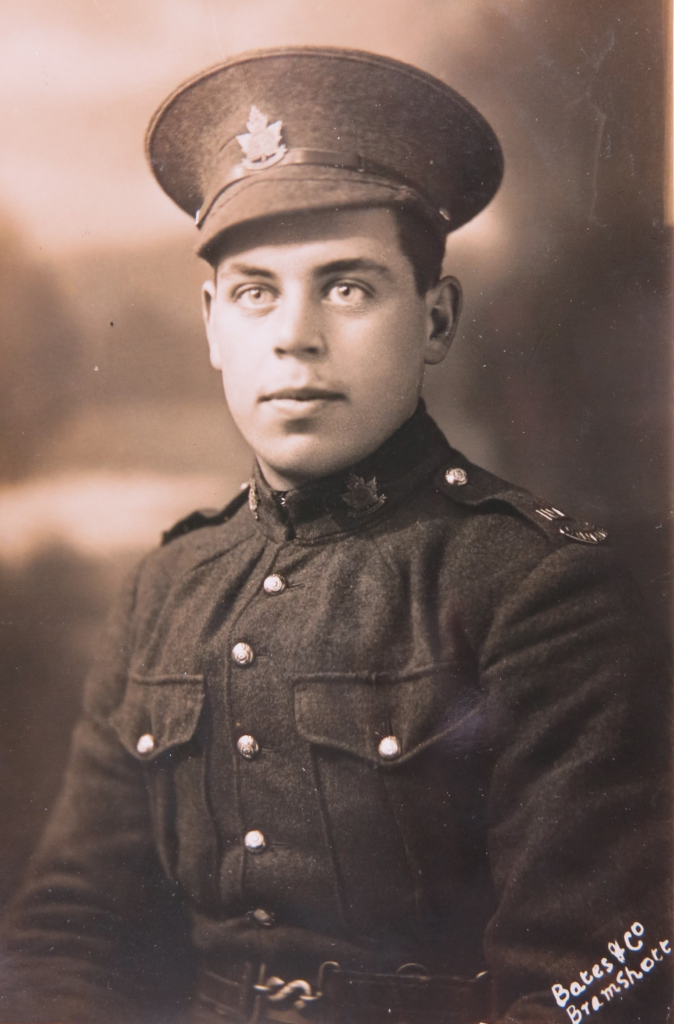
Britain (and thus Canada) entered World War 1 on the 4th August 1914. During the outset of the war, before the horrors of modern warfare were brought home, there was widespread public support. Leonard Tower, with many others, heeded the call and he enlisted at Sussex, New Brunswick, on the 18th June 1915, only a few months past his 18th birthday. He was assigned No. 445007 with the 55th Battalion (C Company) of the C. E. F. (Canadian Expeditionary Force). Leonard’s attestation papers describe him as being 5 ft. 9¾ in. tall, 159 lbs. and with a girth (when fully expanded) of 38 inches. He had a medium complexion, black hair, and blue eyes. Religious denomination was listed as Baptist. His “Terms of Service” with the Canadian Military were bluntly described as for the “Duration of War”.
Shortly after enlistment, Leonard would have been sent to the army training camp at Valcartier, Quebec. The first letter in the collection is dated 10 August 1915 (probably shortly after his arrival at Camp Valcartier), where he wrote: “I haven’t had to go out with the fire fighters though as they have been building a pontoon bridge across the river and I was one of the men that was picked out to do it. There was 30 of us all together. Harry Ison and I are the only ones out of the Sackville crowd in the engineers. We will finish it tomorrow I think.” (Pte. Tower to his mother, Valcartier, Quebec.)
A further three letters he sent from Valcartier highlighted the cold and damp weather, deplorable sleeping conditions as well his initiative to dig a significant drain around his tent. Some excerpts from these letters follow.
21 August 1915 – “Monday night it floated some of the fellows out and it only rained about half an hour all together. My tent was dry as could be. But it gets awfully damp on cold nights.” (Pte. Tower to his mother.)
30 September 1915 – “It has been so cold in the tents that we are glad to get under the blankets as soon as possible after supper. We have had some very cold weather here but warmer today. The days are getting short now. Dark at about half past six. It rained hard all day last Sunday we had quite a hard time to keep the water out of the tent, and we had a little snow the night before. We have heavy frosts nearly every night and the wind has been blowing a gale every day for nearly two weeks.” (Pte. Tower to his mother, Valcartier Camp.)
19 October 1915 – “We have had a very wet day here today and it is still looking bad but I hope it will be fine again as it makes the tents damp and the last little rain makes the ground very muddy for two or three days. The water will not soak into the ground at all.” … “It is warmer tonight than it usually is. The nights have been very cold but warm in the day time. We have lots of blankets but the dampness comes out of the ground just the same. We have four blankets and one rubber sheet apiece. There has been fellows going to the hospital every day with la-grippe or rheumatism.” … “It has started to rain again. But I guess it will only be a shower. There isn’t very much danger of my tent flooding as I dug the trench around it about three feet deep. Down where the sand is softer so the water will soak through.” (Pte. Tower to his mother, Valcartier Camp).
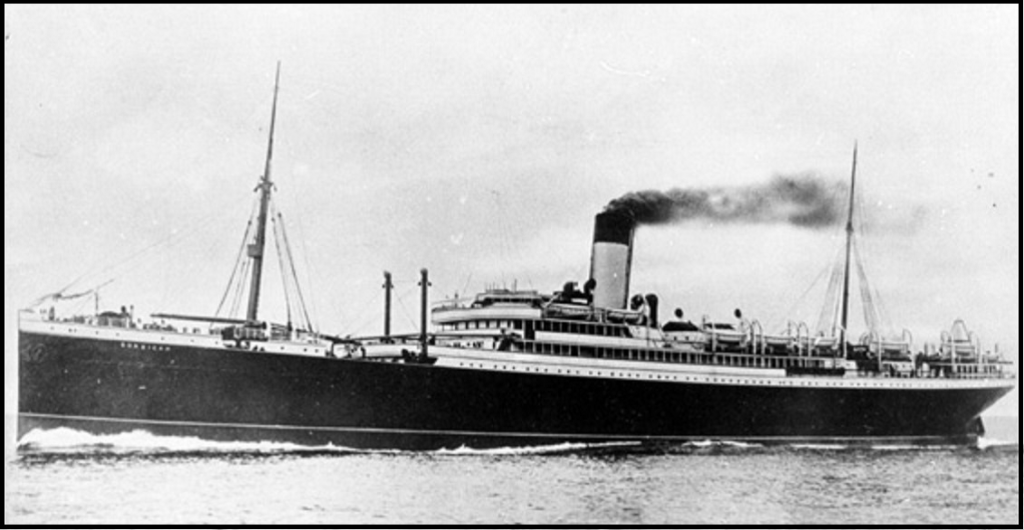
On the 30th October 1915, Pte. L. B. Tower departed Montreal with his unit on board the S. S. Corsican for England (Figure 6) and was stationed at Westenhanger, southeast of London. Five additional letters were sent from this training camp in England. They largely focused on camp activities with an interesting note of thanks (written 21 February, 1916) to his mother for supplying a box of treats (cake, doughnuts, chocolate and ginger snaps). Private Tower was transferred to the 13th Battalion Canadian Infantry on the 12th April, 1916, and he embarked for France three days later. The 13th Battalion (Royal Highlanders of Canada) was part of the 3rd Infantry Brigade of the 1st Canadian Division of the Canadian Expeditionary Force.

Figure 6. On the 30th October 1915, Pte. L.B. Tower departed Montreal with his unit on board the S.S. Corsican for England. https://mha.mun.ca/mha/pviewphoto/Record_ID/582
His final letter from England (dated 12 April, 1916) was to advise his family that he was about to leave for France and that he and 24 others were drawn for the 13th Battalion presently serving in France. Some salient topics of interest from these letters follow.
14 November 1915 – “Arrived here safely last Tuesday night. Had a good trip and like this place fine. I should have written sooner but I have been so busy since we landed that I could hardly find time to do anything. When we move around there is a lot of baggage to look after. We are not all squared away yet but I think we are going to drill tomorrow.
We had fine weather all the way across and just a smooth as a lake. We had two destroyers with us the last two days. We were landed at Plymouth and took about six hours to come here by train. We are only about 40 miles from London and there are a few little towns near the camp. We were nine days coming across. One of the Allan Line boats called the Corsican. Good accommodations and good feed. There was about 250 men aboard from the 9th Battalion New Foundland and a medical Corps.” (Pte. Tower to his mother, “United Army Board Camp Home, Bramshott, Hants.” [Hampshire, England])
17 November 1915 – “We are being fed fine here better than at any camp in Canada. I was weighed last night and weighed (168 lbs.) so I don’t think I am loosing very much. I have gained eight pounds since I left home.
We haven’t been paid since we left Canada. There is one month and a half pay coming to us. They are going to give us all a pass for six days so that we can see the place. They are keeping our pay back so we can see as much as possible. A soldier can travel much cheaper over here than a civilian. We only pay one fair where they would pay two.” (Pte. Tower to his mother, Bramshott Camps, England.)
4 February 1916 – “Well as there isn’t very much to do tonight I will try and write you a few lines to let you know I am still in good health. Hoping this will find you all the same. They have moved us out into the country and deeper into the mud. We cannot step off the side of the road at all or we will sink to our knees in mud and it is so dark at night that you can hardly see your hand in front of your face. They keep the windows all covered up on account of the Zepplins (sic). There was bombs dropped near here not long ago. They blew big holes in the ground but I guess there wasn’t any body hurt.” (Pte. Tower to his mother, Westenhanger, Kent [England].)
21 February 1916 – “Rec’d your most welcome letter last Friday night and the box arrived yesterday afternoon, but I was out town, and didn’t get in until about nine o’clock. I was delighted to find it was alright. The cake and doughnuts were certainly a treat. The chocolate were good and the ginger snaps were broken too. The “snaps” were broken up a little but all the rest was as good as ever. The frosting stayed on the cake alright. I was out trench digging all day today and it was just like a picnic to me. I had cake, doughnuts and chocolates for dinner.” (Pte. Tower to his mother, Westenhanger, Kent [England].)
20 March 1916 – “There was an air raid on Dover and Fokestone (sic) last night but very few persons killed. It was sea-planes this time they came in quite early flying very low. The people thought nothing of it as aero planes are so common there but they know as soon as the bombs began to drop. They shot one down. One bomb hit a motor-car only one man in it.” (Pte. Tower to his mother, Westenhanger.)
12 April 1916 – “Just a few lines to let you know that I am about to leave for France. Myself and 24 others in a draft for the 13th Battalion now in France.” (Pte. Tower to his mother, Westenhanger.)
While in France, Pte. Tower posted two letters home (one to his mother and another to his sister Ada). As the 13th Battalion (The Royal Highlanders of Canada) was a “kilted” regiment, the wearing of Highland regalia must have been a new experience to him. Of interest, he mentions the men getting a sunburn on their knees: 30 April 1916 – France – “Don’t laugh now, I am wearing a kilt. It was quite hard to get used to it, but it is fine now. Some of the boys have blistered knees from the heat of the sun but mine are all right so far.” (Pte. Tower to his mother, Y.M.C.A. – with the British Expeditionary Force.)
Leonard’s last letter was addressed to his sister Ada who was two years his senior. On the 12th December 1917, Ada was to marry Otto Albert Hatfield (1893-1987). As we shall see, this union may have significance to the whereabouts of the missing letters for over one hundred years. Leonard wrote: 27 May 1916 – “Dear sister:–Well so there is nothing to do this afternoon, guess I will try to write you a few lines to let you know I am in the best of health. Hopefully this few lines find you all the same at home. I got a letter from mother yesterday, the first I have got for about six weeks. I also received a letter from Edd he is also in Moncton now, and Avaird [Tower] is in Fredericton in a Siege Battery.” (Pte. Tower to his sister Ada, Westenhanger).
In this letter, Pte. Tower confirms his most recent military deployment with: “15th Plat. 4 Coy. 13th Batt., Royal Highlanders of Canada, 3rd Brigade 1st Division, France.”
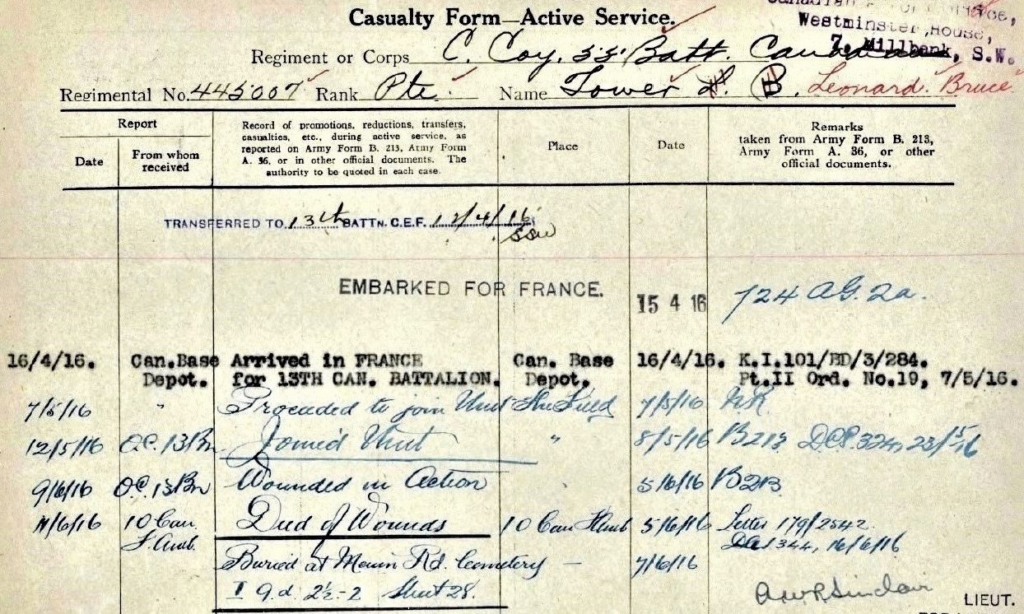
On the 7th May 1916, Leonard “Proceeded to join Unit [in] The Field”. This was confirmed on the 12th May. Less than a month later, on the 5th June 1916, Pte. Leonard Bruce Tower was mortally wounded and transported by the No. 10 Field Ambulance, presumably to an aid station or field hospital. Sadly, that same day he was reported to have “Died of wounds received in action”. On his casualty form, he was reported to have been “Buried at Menin Rd. Cemetery I 9d 2 ½ -2 Street 28”. At this point, it is hard to determine through the “fog of war” exactly what happened to Pte. Tower (see Fetherstonhaugh, 1925). Beginning on the 2nd June, 1916, the 13 Battalion was engaged in a broader conflict generally referred to as the “Battle of Mount Sorrel and Hill 62” (Figure 7). The Battalion’s War Diary describes the following conditions and respective Company placements, just east of Zillebeke, Belgium, on the 5th June (the day Leonard was killed):
“June 5th. Weather still wet. Cloudy and disagreeable. The dug-outs and trenches in a fearful state of mud. In the early morning the enemy started up a violent bombardment which lasted for about half an hour, nearly preventing a working party of No. 3 Coy from getting back from the front line to its own position.

Figure 7. Position of the 13th Battalion, just east of Zillebeke, Belgium, on the evening of June 3, 1916: No. 1 Company in the rear of Maple Copse, No. 2 Company moved to Zillebeke Village, No. 3 remained in reserve in the old positions and No. 4 moved to Valley Cottages. (Canadian War Museum, George Metcalf Archival Collection, DOCS MAPS 59-D30.F5)
Several bursts were also fired by the enemy apparently from a very rapid firing Machine-gun only one man was slightly wounded however.
During the day the Germans were very active all along the front line, apparently trying to pierce it. Several large shells were landed by the enemy, very close to the trench occupied by No. 3 Coy, one of which knocked in a fairly appreciable portion of one of the dug-outs, burying two or three men, except for slight wounds however they were not too much the worse.
During all the artillery fire from the enemy, the 13th Battalion were standing to, ready to counter attack at a moments notice.
A conference was held at Battalion H.Qs making all the necessary arrangement for an attack on the enemy’s position, the attack eventually being arranged to take place at 1.00 a.m. on Thursday the 8th June 1916.” (War Diary of the 13th Battalion, June [1916] pages 5 and 6, Archives Canada.)
There were 30 casualties listed in the War Diary for the 5th of June: 5 Killed, 22 Wounded, 2 Shell Shock and 1 Illness. Pte. L. B. Tower was initially reported as wounded but succumbed to his injuries that same day (Figure 8).

Figure 8. An extract from the World War I military record for Pte. Leonard Bruce Tower. Note the entry for 5 June 1916: “Died of Wounds.” (Library and Archives Canada, RG 150, Accession 1992-93/166, Box 9742-21.)
On 28 June 1916, Mrs. Tower received a letter signed by Major General Sam Hughes, Minister of Militia and Defence for Canada offering sincere sympathy and condolences over the death of their son. One can only imagine the grief felt by the family. Searching for answers, Pte. Tower’s sister Ada wrote to the department of defence to try and understand what happened. She received the following response.
17 August 1916. “Owing to the large number of casualties during the week of June 2nd to 6th & afterwards, we cannot find anyone who has any personal knowledge of how Pte. Tower met his death. Our records show he was brought into the Advanced Dressing Station on June 5th, about half a mile to the rear of the fighting line, very badly wounded, & died almost immediately on reaching there. He was buried in an official grave yard, an Army Chaplain conducting the Service. His personal effects including wrist watch, letters, &c were forwarded to the Canadian Base, France, & you will no doubt receive these in the near future.” Sgt. F Walters, No. 529667, No. 10 Canadian Field Ambulance, B. E. F., France to Miss A [Ada]. J. Tower.
As word of Private Tower’s passing spread throughout his circle of family and friends,
condolences to the family included a brief letter from Avaird Tower (then serving with the artillery) (Figure 9), dated 28 June 1916, to Leonard’s mother: “I want to extend and share with you, my sympathy, it sure was an awful blow to me to learn of Leonard’s death as Leonard and I until a year ago have been together and knew each other like brothers. We will all be proud of Leonard as a hero, I almost feel ashamed that I let Leonard set an example by enlisting but will do all I can to avenge. I will close for now, yours in health And in sorrow.”

Figure 9. Pte. Leonard B. Tower’s close friend, “Bombardier” Avaird Iva Tower (1895-1966) was awarded the “Military Medal for Bravery in the Field” during World War I. (Photograph courtesy Gary Tower.)
Avaird’s promise to Leonard’s mother, “will do all I can to avenge” was more than just idle words. Cpl. Avaird Ira Tower, Regimental No. 326931, was awarded the Military Medal for Bravery in the Field. His citation reads: “with determination and an extreme sense of judgement was recognized on many occasions for his fearless penetration of enemy strong-holds easing advancement forward for the men”. His eagerness of duty towards the safety of others was recognized by his C.O. and Avaird was promoted to Corporal. His fearless endeavors did not go unnoticed which lead to a recommendation for a Military Medal by Lt. B. J. Gossage, 14th Bde. C.F.A.”
The following letter, the most recent date in the collection, provides the best clue regarding the travels of the correspondence. On 6 July 1932, Leila (Copp) Tower, the second wife of Captain Leonard C. Tower, wrote the following note to Pte. Tower’s sister Ada Marie (Tower) Hatfield (1895-1967):
“Ada is there anything here of your Mother’s you want. I want you to come and get it. Your welcome to all her things as far as I am concerned for I expect to bring my own furniture bedding etc, and I have all I need so now is the time for you to say what you want. Trusting you will soon find time to come and see us.”
Captain Tower’s first wife, Eliza Wilbur, died in 1926 and he remarried, as his second wife, Leila Copp. Leila was clearly cleaning house and offered Ada any personal effects of her mother that were in the house. It is likely that Pte. Tower’s correspondence collection had been in the family home in Sackville and would have been a cherished possession of Eliza Tower. Ada likely took possession of the papers following her mother’s passing. One of Ada’s children was Rev. Leonard Fraser Hatfield (1919-2001); likely named in remembrance of her brother. Rev. L. F. Hatfield had a long and distinguished career, culminating in his appointment as Canon of All Saints Cathedral in 1969, elected the Suffragan Bishop of the Diocese of Nova Scotia in 1976 and in January 1980 was installed as Bishop of Nova Scotia. A working theory is that at some point Rev. Hatfield met, and possibly became acquainted with Lt. Rev. Cuthbert Cooper Robinson. Considering Lt. Robinson’s past World War 1 experience on the front with Princess Patricia’s Canadian Light Infantry (PPCLI), this interest may have resulted in the papers ending up with the Robinson family.
Late last year, during travel restrictions due to the Covid pandemic, the collection of papers officially changed hands, at the upper Missaguash River bridge at Mount Whatley (our own “Checkpoint Charlie” of Cold War fame), between Jill Robinson and Ken Tower (Figure 10). Thanks to the generosity of the Robinson family, and diligence of Jill Robinson, we have been offered a glimpse into the life of Leonard Bruce Tower and can honour a young man who gave the ultimate sacrifice for his country.

Figure 10. The official transfer of the Pte. L.B. Tower collection, at “Checkpoint Charlie” (Missaguash River) from Jill Robinson to Ken Tower, 1 November 2021 (Photograph Courtesy of Mel Chisholm.)
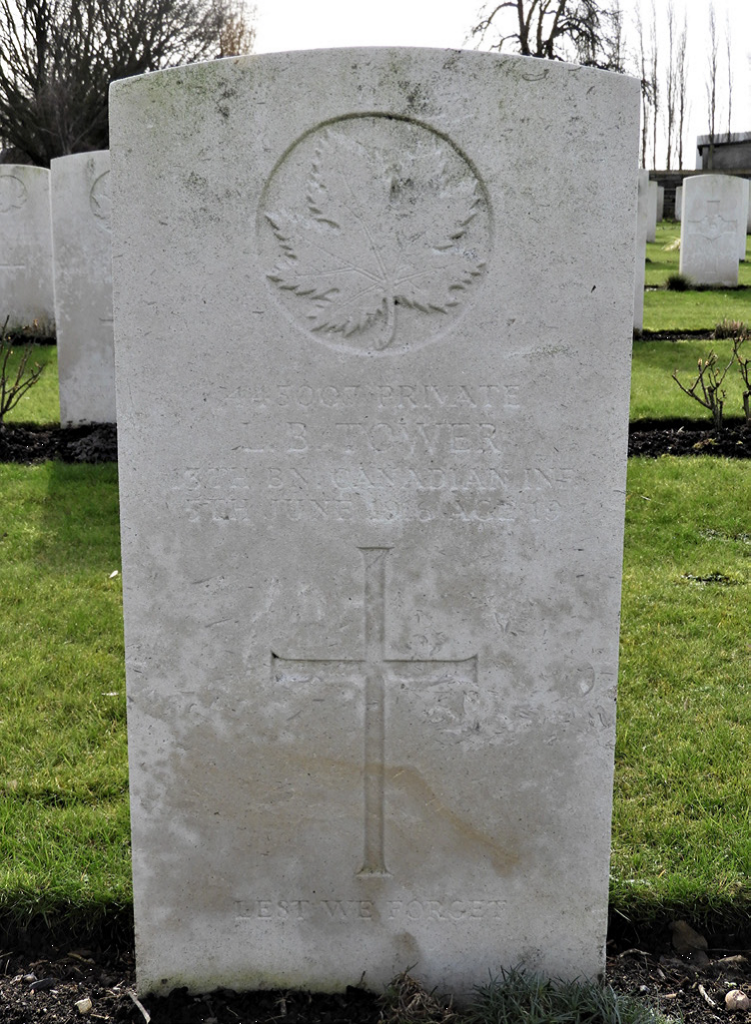
This collection of letters, mostly written in Leonard’s own hand, are an irreplaceable and tangible connection to this fallen soldier. His memorial stands at the Menin Road South Cemetery, Ypres, West Flanders, Belgium. (Figure 11).

Figure 11. Memorial for Pte. Leonard Bruce Tower (1893-1916), Menin Road South Cemetery, Ypres, West Flanders, Belgium. (Photograph courtesy Danielle Roubroeks.)
A full transcript of the Private Leonard Bruce Tower correspondence has been deposited with the Tantramar Heritage Trust.
REFERENCES
Canadian War Museum, George Metcalf Archival Collection. Control Number: 19870027-018 Call Number: DOCS MAPS 59-D30.F5
Fetherstonhaugh, R. C. 1925. The 13th Battalion Royal Highlanders of Canada 1914-1919. Published by The 13th Battalion, Royal Highlanders of Canada, 400 pages [see Chapter VIII, Page 97]
Library and Archives Canada, Personnel Records of the First World War. https://www.bac-lac.gc.ca/eng/discover/military-heritage/first-world-war/personnel-records/Pages/search.aspx
Memorial for Pte. Leonard Bruce Tower. https://www.findagrave.com/memorial/13807693/leonard-bruce-tower
The White Fence, issue #101
october 2022
Editorial
Dear Friends,
Today, as I write, it is the 30th of September. Tomorrow will be a centenary celebration. As Colin MacKinnon reminds us in this issue, tomorrow will be Sackville’s centenary celebration of the dedication ceremony of a memorial to the young boys who died in World War I. The text is short but it’s worth spending time on the two special photographs (postcards) attached to this historic newspaper article, bringing to us a former time back to life, one hundred years later. We also owe special thanks to Catherine George and Phyllis Stopps who provided Colin with the two postcards (Catherine) and historic details as well as a newspaper excerpt (Phyllis) which carry us back to that precise time. The exact centennial moment will have passed by the time you read this but I hope that you will all be touched, as I was, to “witness” the town’s citizens honouring those young men who died for us one hundred years ago.
But this is not Colin’s only contribution to this newsletter. You will note Colin’s assistance in the article by Paul Bogaard regarding a parcel of land on King Street. It’s a very interesting story. Forty-six years prior to the centenary celebration noted above, six acres of land on King Street owned by Humphrey Pickard were sold to Captain William Pringle, a parcel of land on which an interesting estate sale occurred in 1918. I say “interesting” especially because of all the names associated with those few acres over the succeeding years. As you will note, Paul’s research on this piece of land and the house built upon it is quite thorough!
Enjoy!
—Peter Hicklin

Captain William Pringle, 1841-1915. (Colin MacKinnon collection)
100th Anniversary
of Sackville’s War Memorial
by Colin M. MacKinnon
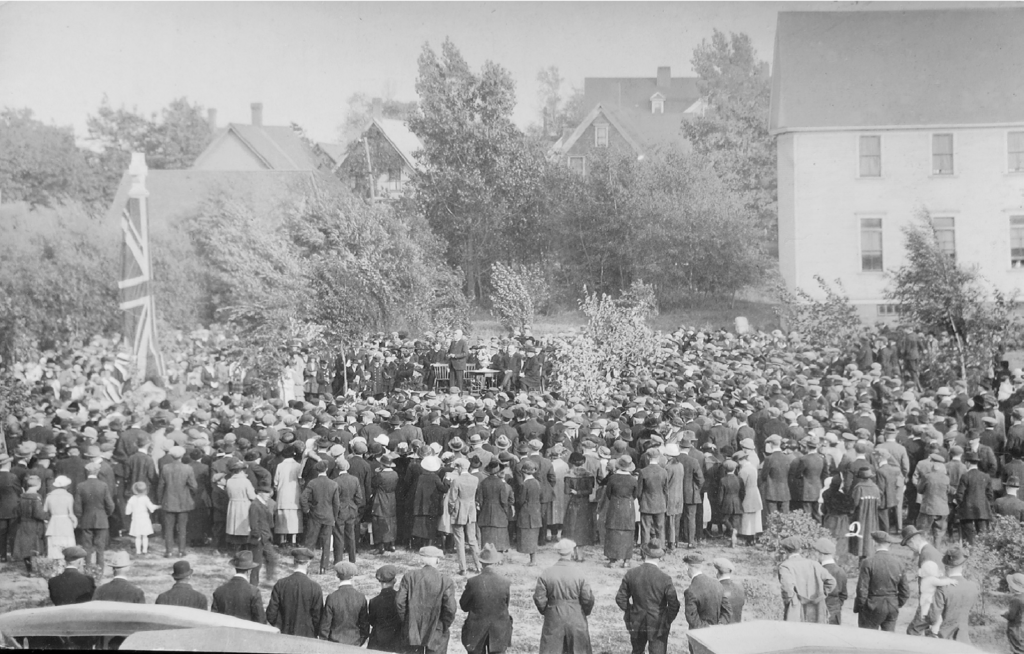
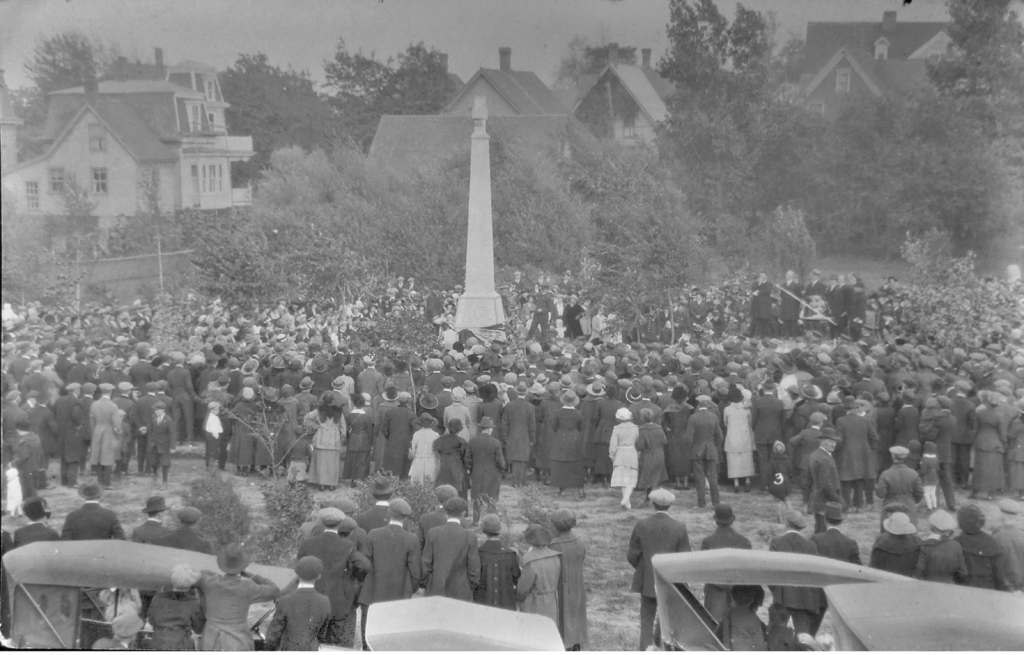
Recently, Catherine George showed me two important photographs (postcards, at right) of what appeared to be a ceremony at the Sackville Memorial Park. I assumed the images were of the cenotaph dedication that occurred shortly after World War 1 but I did not have an exact date. The pictures were worth sharing so I dug a little deeper. First, I sent copies to Bill Snowdon and Percy Best inquiring if they could tell me the approximate age of the vehicles present (not an easy task as most of the identifiable features of the cars are missing from the photographs). They suggested early 1920s as a date for the automobiles. This was followed up with an email to Phyllis Stopps whom I rely on not just for her research abilities but also a filing system that far exceeds mine. She quickly dropped off a file folder containing the history of the park as well as a short excerpt from the day of the dedication ceremony that occurred on the 1st October 1922; 100 years ago, this year!

Unveiling of the Soldier’s Memorial monument in Sackville Memorial Park at the corner of Bridge and Weldon Streets, Sunday, October 1, 1022.
An article from the Sackville Tribune provided the salient details of the event:
“The weather Sunday afternoon (1 Oct., 1922) was ideal for the unveiling of the monument erected (by Sackville’s Local Council of Women) in the Memorial Park in memory of the thirty-five Sackville boys.” [who died in World War 1].
“About a couple hours before the ceremony commenced thousands of people of all ages gathered in the vicinity of the park, all the main thoroughfare being lined with automobiles. The School children and cadet corps assembled in the Main Street Park and led by the Sackville Citizens’ Band paraded to the Memorial Park. It was truly an inspiring and touching sight.”

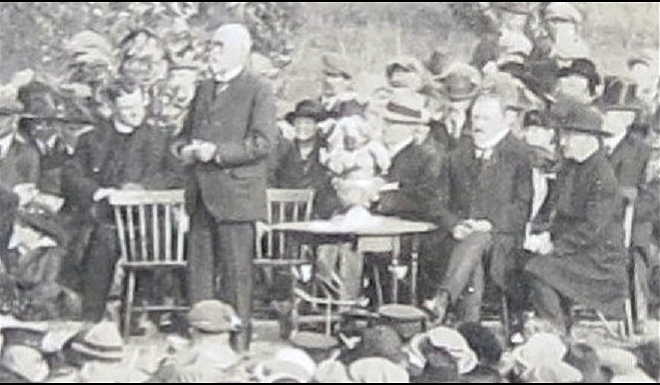
Dignitaries at the unveiling of Sackville’s Soldier’s Memorial monument (cenotaph), 1 October 1922. “On the platform, which had been erected for the occasion, were: Mayor A. Cameron, who presided, and others who took part in the ceremony, including Rev. Dr. Borden, President of Mt. Allison University; Rev. A. J. Vincent, pastor of Main Street Baptist Church; Rev. N. P. Landry, pastor of Holy Rosary Church (Middle Sackville); Rev. Dr. Wiggins, rector of St. Paul’s (Anglican) church; Rev. A. F. Fisher, pastor of the Presbyterian church; Rev. Dr. Philip, pastor of the Methodist Church; Col. F. B. Black and Hon. Josiah Wood” (Sackville Tribune 1 October, 1922).
https://tantramarheritage.ca/archive/historicsites/hs20_1910b.php
What’s in a Name?
Fawcett Avenue was named after Hugh Gallagher Fawcett (1844-1927) at the request of his daughter Annie who, with her husband William Knapp Best, lived on that street for many years. Most of the land along Main Street from the present Mount Allison University to the Trans-Canada Highway was once Fawcett land having been purchased by John Fawcett in the late 1770s. John was part of the Yorkshire Immigration to Chignecto. He and two brothers, Robert, William and families, emigrated from Hovingham, Yorkshire, in 1774 on board the brigantine Two Friends.
Hugh Gallagher Fawcett was descended from John, being the 3rd generation born in North America. He was the son of Robert and Jane (Trueman) Fawcett, thus descending from Yorkshire stock on both sides. He was a well-respected farmer and resided all his life in Sackville. Fawcett was a lifelong Liberal, a staunch Methodist, and attended the Mount Allison Academy when Dr. Humphrey Pickard was President (1862-1869).
Source: Smith, Allan D., Aboushagan to Zwicker – An Historical Guide to Sackville NB Street Nomenclature. Publication of the Tantramar Heritage Trust (2004).
Captain Pringle’s Victorian House
by Paul Bogaard

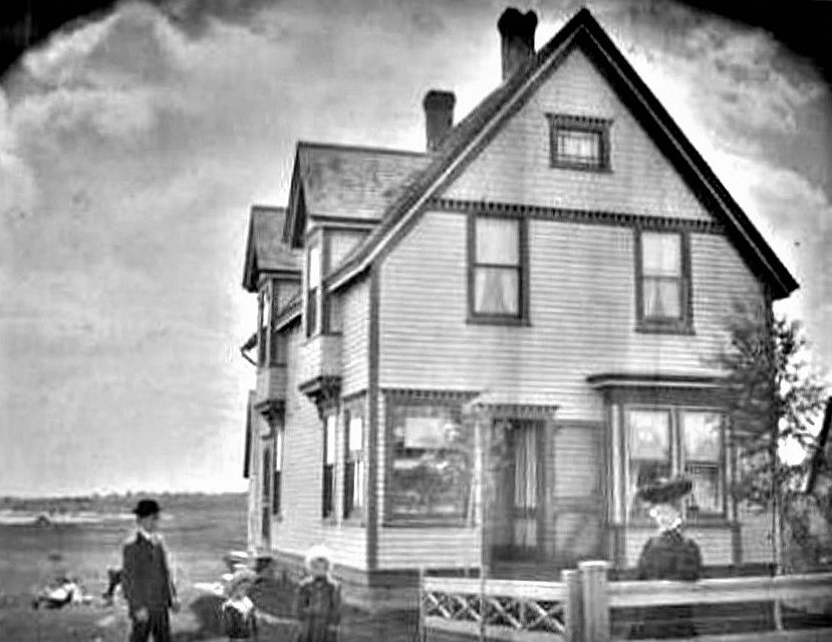
Fig. 1: The house at #52 King Street. The porch was likely added later (photo by the author).
This story began simply as a search into the background of an older house on King Street in Sackville. As so often happens, it also led to a number of interesting revelations, all intertwined, about Sackville’s 19th century past.
The Tantramar Heritage Trust was approached early this year by the new owners of #52 King Street inquiring about the age and any other information about their newly acquired house.1 It seemed to them, just from the way it sits on the rise of the hill, like it might be the original farmhouse in that area.
Since I had just given a talk on early houses in Sackville,2 the inquiry was passed along to me and, as soon as I took a look, I recalled many years ago buying a used piano from that very house. While part of this memory is coloured by the delight of our older daughter to have her own piano (if used), what I so vividly recall is the struggle to extract a heavy “upright,” hoping to leave the house intact and getting it home without injury to helpful friends! When I reached out to Colin MacKinnon who grew up on King Street, he recalled this house being known as the “Carson place.” It turns out that was the same period during which we hauled away the Carson’s heavy piano.
That was confirmed by a search of the Westmorland County Registry office records3 of deed transfers which capture not only the Carson family living there in the 1970s but at least twelve other owners in the past 100 years. This remarkable train of ownership began with an estate sale in 1918. But, before we pick up on that unexpected episode, I want to pause and consider the house itself.
Beginning at Main Street, King Street rises up for a half kilometer or so until it reaches a plateau created for this house. Throughout Sackville, the earliest house on a street was often placed at the top of a rise. The next thing that drew my attention was that this is a house constructed with a “central gable” – you can see it facing left on Fig. 1 – a key feature on many of Sackville’s “Victorian” houses. A word of explanation may help here.
Queen Victoria reigned over the British Empire from 1837 till 1901 and historians have called the architectural styles that arose during this period “Victorian.” This term is used for the styles of private homes as well as for fancier buildings, typically subdivided into a series of styles. These are first seen in Sackville about twenty years after Victoria began her reign with houses that feature more pointed windows and steeper roofs. With bay windows, gables, towers and brackets being added, builders increasingly arranged these elements into less symmetrical patterns, mixing a wider range of clapboard, shingles and stone. Names for this evolution of styles reflect influences such as Italianate (look for squared towers), Second Empire (look for Mansard roofs) and Queen Anne Revival (check out the house of Mount Allison’s President at #82 York Street). Whereas earlier more “classical” styles were used over many decades, each of these Victorian styles remained fashionable for only a decade or so, making it easier to assign them a rough date, at a glance.4
As these various Victorian styles can be readily noted from afar, my wife and I have driven up and down the streets of Sackville and counted. Of just over 2,600 houses in Sackville used as family residences5 at least 200 are Victorian in style – and that means, built in the second half of the 1800s.
We have also counted how many feature central gables and it turns that out over half of them do! In other words, there are as many Victorian-era houses in Sackville featuring central gables as all other Victorian styles added together.

Fig. 2: Older style on top with wider central gable, compared to later version on bottom with narrower central gable and steeper roof. The entrance could be placed either under central gable or at end of house and either could be oriented toward the street (both drawings by the author using SketchUp).
As the drawings above make clear, central gables are combined with entrances and often bay windows in various ways. They also differ as to how wide the gable is as it reaches down to the eave of the roof. As I pointed out to the new owners of #52 King Street, one can compare the gable on their house with that of the Colville house, easily seen from curbside at #76 York Street. The roofline of the Colville house is steeper and its central gable “sharper.” (Its central gable faces the street while its main entrance is on the end of the house, facing to the left, which is just the opposite of #52 King). Now look at the house at #77 York, directly opposite the Colville house. It has a central gable as well, with its main entrance centered underneath but facing to the right when viewed from York. This central gable is much wider at its base and the slope of that gable and all the rooflines of that house are less steep.

Fig. 3: Compare the Fleming 1864 house on the top (at #77 York) with the Colville 1880 house on the bottom (at #76 York) (both photos edited from those on the Tantramar Heritage Trust website).
The house with the wider central gable is known to have been built in 1864 and the Colville house in 1880. The general trend was for rooflines and associated gables to get steeper as the decades rolled on. The gable and rooflines on the house at #52 King Street is in between these two examples and was, I suggested, likely built at a time in between (i.e. the 1870s).

Fig. 4: A portion of the 1791 map drawn by S. Millidge for the new Loyalist government of N.B. The dark lines indicate one of the five large grants that later become the central area of Sackville. It passed through the Killam family, to the Atkinsons and to Crane & Allison. The right-hand arrow indicates the portion Allison provided for Mount Allison and the left-hand arrow indicates, roughly, where 6 acres were sold to Pickard and then on to Capt. Pringle. All of these property boundaries are drawn to a straight compass heading set by a surveyor. Whereas the crooked road labeled “from Westmoreland” (named for the parish bordering on Nova Scotia) follows an even earlier pathway connecting Acadian villages. Map held by the Mount Allison University Archives, 2004.15
With this hypothesis in mind, I set to searching the Registry records more carefully and was duly rewarded.6 One challenge was to bear in mind that street names have changed over the years. For example, the Registry records of property being sold bordering on King Street had in earlier deed transfers been described as bounded by “Foundry Road” – same street but with an earlier name – and even earlier transfers referred to this same boundary as “the road leading to Fairfield.” So, to pick up our story from above, it was a larger 6-acre property that was sold in 1918 and described as located inside the corner of Foundry Street and Kirk Street, earlier named Bowser Avenue for Richard Bowser whose farm had been located there (see Fig. 5). In the decades thereafter, lots were sold off until the original house that sat on 6 acres now remained standing on the smaller residential lot at 52 King Street.

Fig. 5: Portion of the Walling map of 1862 on the top showing Pringle family farm on the road to Fairfield. Bottom is a portion of Walling’s enlarged inset for Sackville, locating the 6-acre lot sold to Capt. Pringle in 1876. Note R. Bowser’s name on both versions, which helps tie the two maps together (from the Walling map held by the Tantramar Heritage Trust).
This same 6 acres had been purchased in 1876 by Capt. William Pringle. That was a bit of surprise because Pringle Street was supposed to have been named after Capt. Pringle but that street actually takes off from King Street just across the way. Capt. Pringle had been thought to live in a house at the top of the rise of Pringle Street7 but I soon discovered that Capt. Pringle had also purchased a 25 acre parcel on the north side of King Street directly across from the 6 acres just described. In fact, I learned from Colin MacKinnon that the Pringle farm on which William Pringle was born and raised was a few kilometers further out King Street, on what had been called the “road to Fairfield” (see Fig. 5). William grew up to become a Master Mariner and evidently, as soon as he had the means, he invested in properties along the road he had known all his life. But where had he lived?
It turns out the deed in 1918 that indicates the transfer of his 6-acre property was from his estate – he had passed away in 1915 – and it clearly states that this was “the homestead premises of the late Capt. Wm Pringle.” Not every deed states so clearly whose house stands on the property being transferred but this time I was lucky. It remains the case that Pringle Street was named after Capt. William and we have located several deeds transferring individual lots up and down that street from him; but it is also the case that his own “homestead” was just across the road at what is today #52 King Street.
It also proved interesting that when Capt. William bought his property in 1876, he purchased it from Humphrey Pickard. That name was a familiar one because Humphrey Pickard came to Sackville almost 40 years earlier to become the first President of Mount Allison – at that stage, still the Wesleyan Men’s Academy. What’s more, Pickard had purchased this 6-acre parcel from Crane & Allison in 1847 and this was the same Charles F. Allison who provided the land and finances that enabled the Methodists to launch their academy in Sackville and bring in Pickard to run it. Capt. Pringle’s 6 acres had been a portion of the much larger holding granted to Amasa Killam in the 1760s then sold to his son-in-law William Atkinson who, by 1831, had sold the portion that became Mount Allison to Crane & Allison.
Allison, it seems, had advised his friend and colleague, Humphrey Pickard, to invest in some land in this area. But we know that Allison himself lived where Convocation Hall now stands on York Street and further up the street Pickard had his home.8 These are all good reasons to assume that neither Allison nor Pickard had ever lived on this 6-acre parcel.
By the time William Pringle purchased this parcel in 1876, he is named in the deed as a “Master Mariner” and it was described as located south of the road to “Fair Field” and east of the private road leading down to Richard Bowser’s farm. The Walling map of 1862 that has proven so valuable in helping to locate early properties (each owner was named!) is too early to have named Capt. Pringle on his new place, but R. Bowser is clearly named as is the Pringle farm where Capt. William grew up, on the road out to “Fair Field.”
We also know that Capt. William was married in the early 1870s, that he purchased the land in 1876 and that the style of the house he built was from the 1870s (or so I had supposed). And sure enough, the deed that sells this same property 40 years later states that it was “the homestead premises of the late Capt. Pringle” – about as solid a case as a historian can build.
In summary, this has been one of those delightful occasions when one discovery leads to another: the same evidence that revealed when and by whom the house at #52 King Street was built also shed light on the story of how Pringle Street got its name. It gave a nice example of how street names evolve over time, linking this property back into the early grants of land within what was still Sackville Township and all while exploring a fine example of the most common of Victorian style houses in our town. So, when next out on the streets of Sackville, you should be able to spot the houses that were built with central gables, roughly 150 years ago, and consider how each example fits into the trend toward increasingly steeper roof lines.
1 My thanks to the Boxleitners for contacting the Tantramar Heritage Trust and for being content for me to feature their house in this article. My thanks also to Colin MacKinnon and Al Smith for information and encouragement.
2 This talk, “What happened to Sackville’s early houses?” was recorded and can be viewed here. Use the access code: C#6fDioU.
3 These can now be accessed online (by subscription) through Service New Brunswick’s “PLANET Access” or through Ancestry.com.
4 For a guide to architectural styles, I recommend Allen Penney’s Houses of Nova Scotia. Unfortunately, his date-ranges and the styles he emphasizes do not quite fit Sackville but it is filled with useful information. A broader background is provided by Ennals & Holdsworth’s Homeplace: The Making of the Canadian Dwelling over Three Centuries. (Peter Ennals taught for many years at Mount Allison.) For a local sampling, with photos and dates, see the Tantramar Heritage Trust’s website (search for “Historic Sites”). What one cannot see readily from the outside is that the shift from more classical styles to Victorian styles was made possible by technological advances in sawmills, factory made nails, and new construction techniques. The joining of timber frames that kept earlier styles simpler and rectangular in shape gave way to the taller and more irregular shapes and combinations nailed together from dimensioned lumber into distinctive Victorian styles.
5 See “Population and dwelling counts: Canada, provinces and territories, census divisions and census subdivisions (municipalities), New Brunswick”. Statistics Canada.
6 Key entries in the Westmorland Land Registry include: 1918 Book E9/p. 665 records sale of 6 acres from the Estate of Capt. Pringle, his “homestead premises.”
1876 Q3/114 records sale from H. Pickard to Capt. Pringle of same 6 acres.
1856 Deed #17643 records William Pringle Jr.’s purchase of 25 acres north of Foundry Rd.
1847 Y/539 records C.F. Allison’s sale of 6 acres to H. Pickard.
7 See Al Smith’s Aboushagan to Zwicker, Tantramar Heritage Trust, 2004, p. 57.
8 Pickard’s house was located right next to the handsome Queen Anne Revival house we mentioned earlier that now houses Mount Allison’s President.
ANNOUNCEMENTS
THT Releases New Book:
Foundries of Sackville NB – The Places, Products, Processes, and People
by Susan Amos
The Tantramar Heritage Trust is pleased to announce the launch of its 38th publication, Foundries of Sackville NB – The Places, Products, Processes, and People by Susan Amos. The book was launched on Saturday, September 17th at 2 p.m. at Sackville Town Hall to a large and appreciative crowd. Foundries of Sackville NB tells the story of a major industrial presence in the community of Sackville, New Brunswick, for over 150 years. This 200-page book is the only one ever written on one of Sackville’s major industries. The establishment of the foundries in the latter part of the 19th century marked a shift in the town from an agricultural and mercantile economy to one more industrialized in nature. Thousands of employees over eight generations made products such as wood stoves, furnaces and room heaters sold not only across Canada but also throughout the world. In the book’s pages, you will learn about the highlights of Sackville’s three foundries: Fawcett’s, Enterprise, and Enterprise Fawcett. What were their major milestones? What did the foundries make and how did they make them? What about the stories of the people who worked there? How did the foundries influence the community in which they built their success? And how can Sackville honour and celebrate this part of its heritage? At last the story of Sackville’s foundries is brought together in one place. With photos on almost every page and a simple writing style, the book is accessible to all.
Copies of the book cost $25 and are available at the Boultenhouse Heritage Centre and Tidewater Books in Sackville. It can also be ordered online through our website here.
Thank you to the Council of Archives New Brunswick
The Tantramar Heritage Trust wishes to thank the Council of Archives New Brunswick (CANB) for their support and generosity in once again awarding us funding through their annual grant programs. In May, we received a grant of $897.41 that allowed the Trust to purchase specialty archival supplies to properly re-house, care for, and handle the many archival papers, records, and photographs that have been donated to us by members of the community. This ensures their preservation for the Tantramar region’s historical record and, combined with our description, allows us to make these archival fonds accessible to the public. We couldn’t achieve this important part of our mission without the CANB’s assistance. We are extremely lucky to have such an important resource that also offers archival workshops, outreach, and assistance to New Brunswick historical repositories.
“A Taste of History” Fundraising Dinner Returns!
Like many organizations, we were forced to cancel events during the pandemic, including our annual fundraising dinner. But this year, it’s back! We’re pleased to let you know that our “Taste of History” Fall Fundraising Dinner will be held on Saturday, November 5, 2022, at St. Ann’s Church Hall in Westcock. The theme is Sackville’s Foundries. This year marks the 170th anniversary of the founding of the Fawcett Foundry and the 150th anniversary of the founding of the Enterprise Foundry.
The evening will include Al Smith’s very popular trivia contest (Enterprise vs. Fawcett, perhaps?) and scenes from an upcoming play about the foundries being presented by Live Bait Theatre in November and written by THT board member Susan Amos, author of the recently released book (see above) which has been selling rapidly. Copies will be available for purchase at the dinner. Catering will be provided by Laurie Ann Wesselby
THT Releases New Book: The Cumberland Basin Grindstone Industry A Compendium of Sources & Illustrations Compiled and Edited by Paul Bogaard
Primarily a reprinting of the undergraduate thesis written by James D. Snowdon in 1972, newly transcribed and brought up to date. This remains the best narrative yet written on the remarkable story of one of the earliest industries to arise in the Tantramar region. To this have been added illustrations, maps, interviews, and a number of reports and articles that provide both detail and context.
Copies of the book cost $29 and are available at the Boultenhouse Heritage Centre and Tidewater Books in Sackville.
Spiral bound, 248 pages, published 2022
How to order publications here
THT Releases New Book: Foundries of Sackville NB – The Places, Products, Processes, and People – by Susan Amos
The Tantramar Heritage Trust is pleased to announce the launch of its 38th publication, Foundries of Sackville NB – The Places, Products, Processes, and People by Susan Amos. The book was launched on Saturday, September 17th at 2 p.m. at Sackville Town Hall to a large and appreciative crowd.
Foundries of Sackville NB tells the story of a major industrial presence in the community of Sackville, New Brunswick, for over 150 years. This 200-page book is the only one ever written on one of Sackville’s major industries. The establishment of the foundries in the latter part of the 19th century marked a shift in the town from an agricultural and mercantile economy to one more industrialized in nature. Thousands of employees over eight generations made products such as wood stoves, furnaces and room heaters sold not only across Canada but also throughout the world. In the book’s pages, you will learn about the highlights of Sackville’s three foundries: Fawcett, Enterprise, and Enterprise Fawcett. What were their major milestones? What did the foundries make and how did they make them? What about the stories of the people who worked there? How did the foundries influence the community in which they built their success? And how can Sackville honour and celebrate this part of its heritage? At last the story of Sackville’s foundries is brought together in one place. With photos on almost every page and a simple writing style, the book is accessible to all.
Copies of the book cost $25 and are available at the Boultenhouse Heritage Centre and Tidewater Books in Sackville.
How to order publications here
The White Fence, issue #100
april 2022
Editorial
Dear Friends,
Well, here it is: issue number 100! It is a special issue for me, not only as editor since our very first newsletter, but one in which significant people of the Tantramar, forgotten over time, are represented. It has been a pleasure for me, via our contributing authors, to bring them to your attention. In Annika’s article on Florence Cook, she points out that many formidable women are forgotten in our history. There is much room in this newsletter to assist in correcting this situation, although some attempts have previously been made, most notably Angela Hersey’s “The Women of the Tantramar Region: A Historical Perspective” (The White Fence #37, December 2007) and Rhianna Edwards’ reminiscences of Charlotte Dixon Hart and Minnie Cogswell (The White Fence #74, 2016). In this issue, Annika’s article about Florence Cook is an attempt to further fill this void and I, for one, am more than happy to help her remedy this situation by ensuring space in this newsletter for future stories about the forgotten women in Tantramar history.
Then we have Richard Snowdon’s fascinating story about a “forgotten champion” – the boy from Middle Sackville who roller-skated to becoming World Champion in 1885. I suggest that you sit in a solid armchair when you read this story – you will need something to grab on to as you read!
We end this issue with Al Smith’s continuing fascination with place names in this part of the world. In this case, we learn of another “champion” for whom a Sackville Street was named.
There is one special volunteer whom we must all thank with great fervour: Leslie Van Patter. Formerly living in Sackville and now in exile in Toronto, Leslie arranges and formats the individual articles to make them fit into this package we call The White Fence. Thanks, Leslie, for your continuing and always enthusiastic support!
Read on, learn and may you enjoy to continue reading the next 100!
—Peter Hicklin
The Case of Florence Cook
Uncovering Local Women’s History
by Annika Williams
Women’s stories are often excluded from historical narratives and Sackville history is no different: how do we bring women’s histories to light? Sackville holds archival records and museum artifacts that can illuminate women’s stories. If researchers and historians prioritize women’s narratives by considering evidence of their contributions, then visitors and interested readers can learn about women’s history. As researchers, we must consider what and who we include and exclude when discussing women’s experiences, and it can never be assumed that all women had the same experiences and opportunities. I argue that taking a narrative approach and exploring women’s roles through individual biographical studies allow us to reveal women’s experiences while also bearing in mind that these experiences are filtered through the sociopolitical identity of the woman whose story is being told. In this article I focus on the life and work of Florence (Davis) Cook to draw attention to women’s roles in mid-twentieth century Sackville.

Florence Cook
Florence Cook (March 27, 1931 – January 25, 2018) grew up in Sackville where her family ran the Sackville Paper Box Company. The Davis family moved to Sackville in 1908 when her grandfather Azor Wentworth (A.W.) Davis was hired as foreman and eventually became owner of the new Sackville Paper Box Company. By the time Florence was born in 1931, the Company was booming. This success was further cemented with A.W. Davis’s 1937 patented berry box which became one of the best in the industry; the factory workers manufactured 1,000,000 box production runs.1 Florence worked at the Company from her grandfather’s death in 1944 until her father’s retirement and closure of the Company in 1962. In addition to her Company responsibilities, she was a Mount Allison Applied Arts alumna, member of the Sackville United Church and IODE Lord Sackville Chapter and active in the United Church Women’s group. In 1973 she married Harold ‘Hank’ Cook and in the following year they moved into the house he built for them on Main Street and in which they raised their daughter, Margaret. The family ran Cook’s Construction until Harold died in 1999; Florence passed away nearly two decades later in 2018.

A. W. Davis berry box (concept sketch and 1937 patent available in the THT Archives)

Interior of the Paper Box Factory, 1962

Azor Wentworth and Florence (Simonson) Davis, Florence Cook’s grandparents with their dog (191?). A.W. Davis was the first foreman of the Sackville Paper Box Company, who took over the company with his two sons in 1918.
The Paper Box Company was one of few local companies that employed a significant number of women throughout its 55 years of operation. A 1913 Sackville Board of Trade publication designed to provide an overview of Sackville businesses notes that the Company has “[a]bout a dozen hands employed and the output for the year 1912 was about $12,000. The majority of the [employees] are girls, who have steady work, good wages, at a clean, healthy trade.”2 The other businesses featured in this publication either refer to the number of men employed or advertise that they are looking to hire good men. When the Sackville Board of Trade writes about these companies with predominantly male employees, they often provide wage totals; yet there is no similar reference made to wages for the Sackville Paper Box Company. Women were not expected to work outside the home in the 1950s and though we do not have records of women’s wages at the Sackville Paper Box Company, it is probable that these women were paid less than the men. The gender pay gap is now recognized as something that needs to be addressed but at that time women were paid less in most workplaces.
Typically, labour intensive jobs such as operating machinery were thought of as ‘men’s work’ and yet that was not the case in this instance. While Florence was working at the factory, she and many other women were responsible for running the machines used to produce the boxes. Florence would drive shipments of boxes to companies in the Cap-Pelé and Shediac areas when they ran out over the weekends. At the time of the Company’s closure in 1962, it employed twenty-seven people of whom over half were women.

Women of the Sackville Paper Box Company (undated). Back Row L-R: Betty Sears, Margaret Wilkins, ? Tilley, Alice Bembridge, Beulah Delaney, Eva (Estabrooks) Bowser, Clara (Richard) Sterling. Front Row L-R: Edith Curtis, Lavinia (Richard) LeBlanc, Emerise (Richard) Wood, Helen Crossman, Muriel Berry.
While working at the Paper Box Company, Florence took night classes in Applied Arts at Mount Allison University. The Applied Arts program began as part of the Mount Allison Ladies College programming in 1906 and lasted until 1960. Though the Applied Arts stream began in 1906, art was first taught at Mount Allison in 1854 when the women’s branch of the Wesleyan Academy was opened; it was the Mount Allison Ladies College that grew Mount Allison’s reputation as an art and music school.3
Applied Arts study at Mount Allison engaged principles of design to create objects that were both functional and artistic. Mount Allison’s program grew to include courses in leather working, metal working, weaving, basketry, interior design, and embroidery, among other skills.4 Florence studied leather working and tin smithing and although Florence did not apply these skills professionally, she practiced them for many years, creating jewelry and everyday objects for her personal use.
Graduates of the Applied Arts program deployed their craft outside work, like Florence, or as part of their work in a variety of professions. Following the World Wars there was a huge need for occupational therapy and basketry was one of the most common forms. The Mount Allison Applied Arts department had a partnership with the University of Toronto’s Occupational Therapy department that allowed second year Applied Arts students to transfer into its Occupational Therapy department for their clinical experience training.5 The Applied Arts program was a critical part of Mount Allison University, especially for women, and the art created can still be found around Sackville today.6
After the Sackville Paper Box Company’s closure, Florence dedicated her time to the United Church Women. The UCW was formed in 1962 as the successor of the Women’s Missionary Group. She joined the Sackville branch in 1969 and was a member of Unit 2, a subdivision of the larger group, with roughly twenty members where she worked on fundraising. The UCW typically hosted dinners and social events as well as fundraisers to support various causes including a scholarship for graduating TRHS students, Christmas gifts for local families dealing with financial hardships, and church maintenance and business.
After Florence married Harold Cook in 1973, they started Cook’s Construction with Florence as the bookkeeper and secretary, but she continued to dedicate a great deal of time to the UCW. Florence was head of Unit 2 in 1988 and after that remained on the UCW executive in a variety of positions, staying on as leader of the Church in Society for three years from 1992-1995. Over the years Florence organized an annual book sale, clothing drive, and visits to the hospital and Drew Nursing Home.
The UCW were responsible for many outreach projects that benefited their church community and the Sackville community as a whole. One especially important project was a 1997 call for an examination of the role of women in the United Church. The Maritime conference of the UCW which was attended by representatives from Sackville, made a request to the General Council of the United Church that they launch an investigation into women’s roles. Presenters at the conference semi-jokingly offered ‘Unpaid Church Workers’ as an alternative interpretation of the UCW acronym, giving voice to unspoken assumptions that women should work for free.7 The UCW were working on many community and church projects, filling in the gaps where other groups did not have the time or numbers and yet, as women, unpaid labour was expected, necessitating the investigation.
Florence Cook’s story is one of many women’s stories that have gone untold. It highlights the Sackville Paper Box Company, the Mount Allison Applied Arts program, and the United Church Women, three organizations in which women played pivotal roles. The undervalued labour of women, paid and unpaid, has made a huge contribution to Sackville and to all neighboring communities. Bringing to light these untold stories begins to right the imbalance of inherited histories that prioritize men’s stories over those of women. It is important that we keep this imbalance in mind when studying history on all scales, global or local, and seek to correct it.
Works Cited
Much of the information about Florence Cook was generously provided by her daughter Margaret in an interview at the Boultonhouse Heritage Centre in December 2021. Also, I extend my sincere appreciation to Kathy Bouska, Karen Valanne, Dr. Linda Pearse, and the Mount Allison Experiential Learning Department for their assistance and support with this research.
Archival holdings for the United Church Women and Sackville Paper Box Company can be found at the Fundy St. Lawrence Dawning Waters Regional Council Archives and Regional Council 15 and MC-12 A.W. Davis Family fonds at the Tantramar Heritage Trust archives respectively.
Sackville Tribune. UCWs Request Task Force to Review Women’s Roles in the Church, May, 1997.
Smith, Al and Peter Hicklin. The Geographical, Educational and Industrial Center of the Maritime Provinces of Canada. The White Fence no. 25 (May 2004). https://tantramarheritage.ca/2004/05/
white-fence-25/
Tisdale, Jane, Rachel Thornton, Kealin Lamb, and Judith Friedland. All Things Useful and Artistic: Applied Arts at Mount Allison University 1906-1960. Sackville, NB: Owens Art Gallery (2015).
Ward, Jeff. Those Inventive Sackvillians! The White Fence, no. 57
(May 2012). https://doi.org/https://tantramarheritage.ca/2012/05/white-fence-56/.
Footnotes
1. Jeff Ward, “Those Inventive Sackvillians!,” The White Fence #57 (May 2012), https://doi.org/https://tantramarheritage.ca/2012/05/white-fence-56/.
2. Al Smith and Peter Hicklin, “The Geographical, Educational and Industrial Center of the Maritime Provinces of Canada”, The White Fence #25 (May 2004) https://tantramarheritage.ca/2004/05/white-fence-25/
3. Jane Tisdale, “All Things Useful and Artistic,” in All Things Useful and Artistic: Applied Arts at Mount Allison University 1906-1960 (Sackville, NB: Owens Art Gallery, 2015), 15–24.
4. Tisdale, ibid., page 15.
5. Judith Friedland, “The Melding of Work and the Mending of Spirit,” in All Things Useful and Artistic: Applied Arts at Mount Allison University 1906-1960 (Sackville, NB: Owens Art Gallery, 2015), 25–28.
6. Mount Allison Applied Arts graduates’ work is available to view at the Owens Art Gallery and the St. James Textile Museum.
7. “UCWs Request Task Force to Review Women’s Roles in the Church,” Sackville Tribune, May 1997.
The Forgotten Champion
by Richard Snowdon
What you are about to read here is a fascinating record of achievement by a young Middle Sackville lad who became a world champion in his chosen sport and then quickly faded from memory for all but his family. James Alexander Snowdon was born in 1861, the fifth of the nine children of Gideon Snowdon and Martha Ann Estabrooks who lived just a stones throw from Silver Lake. As a youngster, Alexander, as he was known by his family, spent the winters on Silver Lake and quickly became a proficient long-distance skater. In his early 20s Alexander moved to the Boston area perhaps to live with his sister and likely to seek employment there. With his skating background Alexander became familiar with the sport of roller-skating which was then becoming a popular social activity for the younger population of America and other parts of the world. Rinks, pavilions and stadiums were being erected in all of the larger cities to enable the skaters to enjoy their sport year round.
Early roller skates were a clumsy affair as they were strapped to the footwear of the skater with leather straps and were simply cumbersome. In 1863, inventor James Plimpton introduced a new rocker-style skate with a higher lace up top and the skates were securely fastened to the sole of the boot. Each wheel of the skate contained lubricated roller bearings and a swivel or rocker mechanism that enabled the skaters to lean into turns at full speed with all of the wheels still flat on the skating surface. Being blessed with long, strong legs and with his time on Silver Lake paying The Forgotten Champion off, Alexander became proficient at roller-skating and began to enter long distance races where he achieved success.

J.A. Snowden
He soon became recognized for his skill and qualified to enter a six-days race to be held in the original Madison Square Garden in New York. The promoters advertised the race as being a World Championship event. Long distance roller skate racing was not for the weak or faint of heart. The promoters specified the number of days the contestants must skate, which ranged from 24 hours to as long as six days. Such competitions were called go-as-you-please long distance roller skate racing. In the early years, the competitors would skate as long as physically and mentally possible before stopping for rest and food. The skaters were provided cots or bunks near the track for rest or sleep. Scorers kept a record of the laps completed by each skater that were then converted into miles and recorded on a large blackboard at frequent intervals to enable each skater and the audience to see the positioning of each skater in the race. Following the death of two skaters from exhaustion in an earlier race at MSG and, consequently, a public scolding of the sport, rules were written which specified how long the skaters were allowed to be on the track before they were mandated to stop and rest. Alexander became known as J A Snowden when competing and this name and spelling (Snowdon with an “e” and not an “o” – editor) stuck with him for the duration of his racing career. The race at MSG took place over six days in May 1885. Sports writers for the New York Times covered the race in detail and reported that JA had covered 1,166 miles over the six days while the race favourite, William Boyst of New Jersey covered 1,148 miles for second place. The Times went on to say that Snowden skated a final exhibition round at 10 pm wearing a blouse labeled “Champion Of The World”. They also made reference to JA receiving a bouquet of roses from a “Boston” girl now living in Harlem. For his efforts Alexander received a silver belt valued at $200 along with $200 from his skate manufacturer and a small sum from the gate receipts. Following the MSG race, Alexander returned home to see his family in Sackville. A quote from an undated article written by R Ernest Estabrooks titled “Early residents Of Middle Sackville” goes on to say of himself: “Although only a boy I had the pleasure of meeting him [Alexander] and handling the diamond belt”. In March of 1886 Alexander travelled to Minneapolis and St Paul, Minnesota, to defend his title in a 48 hour race in both cities. At the Washington Rink JA again defeated Wm Boyst and all other competitors. The photo shown on the next page was taken following this race. His World Championship belt is shown in a case on the floor and a broadside listing his world records is also there.
An additional photo exists showing Alexander in full skating gear with the belt around his waist following his final race in London in 1892. The next defense of his title that is recorded was held at the Mechanics Pavilion in San Francisco in 1891. The San Francisco Call reported that Snowden skated an excellent race and again broke his own world record for a 24-hours race. JA never left the track except for a short break and completed the full 24 hours without sleep. In 1891, the British, in an effort to support their Champion, organized a 50-mile sprint, perhaps thinking that JA would be at a disadvantage at such a short distance. The race was held in April and again JA emerged the winner, defeating Wm Curtis, the British champion, in a head-to-head race. JA was awarded 50 pounds first place prize. A year later the Chignecto Post reported on April 14, 1892, the results of a six-day World Championship race held at Central Hall, just outside London where Snowden the American Champion won the race skating 804 miles, sharing a purse of 875 pounds. Of the fifteen starters only seven finished the race. Some time following the Central Hall race, family lore says that Alexander left Boston by ship to defend his title in Rio de Janeiro, Brazil. Thereafter, nothing is known of Alexander’s life and history. Upon reading his mother’s obituary following her passing at age 94 in 1917 it states that Martha was survived by five of her children, one of which was Alex of Central America. Forward to May 1924 when Alexander’s sister, Frances Sears, passed away: her sibling survivors were listed as Arthur, Amos, and sister Mrs. John Tracy of Boston – no mention of Alexander. One can reasonably assume from this that the family had kept the thought of Alexander as being alive, if only for the emotional support of their mother. No doubt she lived in the hope that one day Alexander would come home. It was never to be… at the time of his disappearance Alexander held the world record times for all of the six races that were classified as long distance as well as for the 50-mile sprint.
As I read the details of the articles used in this writing I learned that all of the competitors in the races aforementioned travelled with “managers” who doubled as trainers, skate repairmen, physiotherapists, or whatever it took to ensure their man was able to focus on skating his best race. The question I kept coming back to was: how could a young man travelling with fellow skaters and support personnel just simply disappear without a trace or a public explanation? Rio, at that time was an absolutely lawless city ruled by gangs and other criminal element. A young man from Boston with some cash in his pocket and a silver belt with a few diamonds embedded in it would be a prime target for misfortune. There are answers to this mystery somewhere. Perhaps more newspaper research and attempting contact with the descendants of Alexander’s sister who lived in Dorchester, Massachussetts, might provide some missing details…. Stay tuned!
What’s in a Name?
by Al Smith
Plans are that “What’s In A Name” will become a regular short column in upcoming issues of The White Fence newsletter. It will focus on the historical background of Sackville street names and other local place names. Since 2022 is the 250th anniversary of the arrival of the first shipload of immigrants from Yorkshire, England, I will initially focus on streets named after some of those early settlers or their descendants.
Charles Street: Residents living on the street named it “Charles Street” in December 1886 in memory of the late Charles Dixon (1803-1864) as Dixon was initially responsible for establishing that street in Sackville. Charles Dixon was the eldest son of Edward and Mary (Smith) Dixon and a grandson of the original Yorkshire settlers Charles Dixon and Susannah (Coates) Dixon whose family arrived on our shores in May, 1772.

Charles Dixon (1803-1864)
Charles Dixon was a carpenter and became a very skilled tradesman. He married Sarah Boultenhouse (1808-1884) in 1827, a younger sister of Christopher Boultenhouse. The couple initially resided in Windsor, Nova Scotia, returning to Sackville in 1831. Dixon was an excellent builder and architect who constructed many homes in Sackville. In 1850, with his business partner Mariner Wood (1806-1875), he established a shipyard at the end of Landing Road. Over the next six years he constructed six large vessels culminating with the launch on September 18, 1856, of the largest ship ever built in Sackville, the 1468 ton Sarah Dixon. That ship was loaded with lumber and sailed to Liverpool, England, and unfortunately sold at a huge loss due to a downturn in the market for sailing ships. That event bankrupted Dixon and ended his shipbuilding days.
Charles Dixon was very active in the community being a magistrate, promoter of temperance and a local preacher in the Methodist Church.
Source: Smith, Allan D., Aboushagan to Zwicker – An Historical Guide to Sackville NB Street Nomenclature. Publication of the Tantramar Heritage Trust (2004).
ANNOUNCEMENTS
Tantramar Heritage Trust
Annual General Meeting
Saturday, May 28, 4 pm
Campbell Carriage Factory Museum
19 Church St., Sackville, NB
Guest speaker:
Rhianna Edwards, “What Arithmetic Copybooks Teach Us About Education in the Early to Mid 1800s.”
Thursday, June 2, 7 pm
Book Launch
Campbell Carriage Factory Museum
Launch of Ron Rudin’s book Against the Tides, a history of the 20 year (1949-1969) operations of the Maritime Marshlands Rehabilitation Administration (MMRA).
Sunday, June 19, 12-5 pm
Official Opening of Campbell Carriage Factory Museum for the summer. Entertainment, games, blacksmithing demonstrations, and the very popular annual Plant Sale.
Friday, July 1, 2-4 pm
Canada Day Social – Boultenhouse Heritage Centre. Join us for games, tours, music, and delicious homemade desserts.
July and August
Make It Workshops – Heritage-themed children’s workshops – details TBA.
July and August
Under the Sky Events – Community events at our museums – details TBA.
Friday, August 12 to Sunday, August 14
Yorkshire 250 Commemoration – Full schedule of events to come. Check our website or Facebook page for details.
Sunday, August 14, 12-5 pm
Heritage Field Day at the Campbell Carriage Factory Museum. Blacksmithing demonstrations, live music, dancing, snacks, artisan demonstrations, tours, and much more.
To keep up with what’s happening at our museums, follow us on Facebook or Instagram (tantramarheritagetrust) or Twitter (@TrustTantramar) or contact the office at tantramarheritage@gmail.com and ask to be put on our email list.
THT EXHIBITS WORK: CAN YOU HELP?
For our upcoming women’s history exhibit renewal, we’re looking for stories or first-hand accounts, artefacts, documents, and photographs relating to women’s work (both outside and inside the home); social involvement and volunteering and businesses that were run by or employed women. If you have anything to contribute, either as a donation or a loan, please contact Karen at tantramarheritage@gmail.com or (506) 536-2541.
The White Fence, issue #99
march 2022
Editorial
Dear Friends,
One common (and often difficult) aspect of reporting on history is to inform the readership of things and places that were once important but which are no longer with us, some having disappeared more recently than others. This is the focus of the present newsletter.
When I was a student at Mount Allison (1969-1973), Henderson’s was a regular stop. I got to know the employees over that time and was quite at home getting my medications, prescriptions, cigarettes (yes, I smoked at that time) and treats (chocolate bars, chewing gum etc.). But I cannot dismiss the Corner Drug Store that often provided other brands of the same products. We were very well provided for by two drug stores in those days. But Henderson’s was my regular stop. Al Smith took me back to that time, a time that will certainly mean much to many of you as well.
Then there are the many small hay barns on the High Marsh that dotted the landscape when I first drove into Sackville in September 1969. I remember being so impressed and enchanted by all the little “Marsh Barns” spread out over the full visible scope of the so-called “High Marsh.” This marsh complex was reclaimed from the sea many generations ago to create expansive, productive hayfields when horses reigned for work and travel (hence the need for hay barns). The High Marsh, with its many small hay barns, provided a unique landscape that, to me, made this area so very special. Read Al Smith’s informative update on one of the last of the remaining hay barns which now belongs to us all!
And then there are those rare properties of which many of us have heard but that remain in the distance of history, places that are no longer a part of our social fabric. Shipbuilding was a major industry in the Tantramar region in the 19th century. Christopher Boultenhouse was at the center of it. But that time of wooden sailing ships and the associated shipbuilding industry is no longer with us. Read about the Heritage Trust’s efforts to protect the site of Christopher Boutenhouse’s old shipyard.
You will note in this newsletter that all three articles were researched and written by our good friend and colleague, Al Smith. The Tantramar area and its history are very important to Al and no better local historian could comment on each of the three topics explored in this issue. Like me, get a cup of your favourite hot drink, sit in your most comfortable chair, read on and enjoy!
—Peter Hicklin
Sackville’s Historic Henderson Block
by Al Smith
Local historian and researcher Phyllis Stopps was contracted by the Town of Sackville in 2002-03 to prepare Inventory Datasheets on each heritage building in the Town’s central core. Information for this article draws heavily from Phyllis’ datasheet for the Copp-Fawcett Block.1
Built in 1900, the original owners were Arthur B. Copp and Henry R. Fawcett and the building was initially known as the Copp-Fawcett Block. The building was purchased in March, 1913, by R.G. Henderson, a druggist who founded Henderson’s Drug Store, a business that operated in that building for 80 years. Thus it became known as the Henderson Block.

Photo by the Clares (1968) from “This is Sackville” by W.W. Sears and D. McKay (Tribune Press Ltd.)
Land for the building was acquired from the estate of Henry B. Allison in 1893 who, at one time, owned the entire block of land between Main and Lorne Streets stretching from Allison Avenue to Bridge Street. The building style, brick trimmed with local stone, was fairly typical of the times and was undoubtedly styled to match the adjoining Copp Block that had been built three years earlier (1897). Those two blocks anchored the west corner of Bridge and Main Streets until the construction of the stone Royal Bank Building in 1909 (see photo above with the Royal Bank to the right of Henderson’s with the Rexall sign).
Arthur Bliss Copp (1870-1949) was a descendant of a Planter family from Stonington, Connecticut, who arrived in Nova Scotia in 1759.2 He was a local lawyer who had studied law under W.B. Chandler of Dorchester, attended law school at Harvard in 1892 and graduated from Dalhousie Law School in 1895. He practiced law his entire life but was also active in public life: M.L.A. (1901 to 1912); M.P. (1915 to 1925) for Westmorland, and served as Secretary of State of Canada (1921-1925) in the Mackenzie King government; he became a Senator in 1925, was Mayor of Sackville in 1931, and a founding member of the Sackville Curling Club.
Henry Ripley Fawcett (1846-1935) was a descendant of the Yorkshire family of John Fawcett and Jane Daniels who arrived in 1774 and settled on lands they purchased in Lower Sackville (current site of the Drew Nursing Home). At the age of 14, Henry went to sea for nine years as crew on vessels sailing the Atlantic Ocean and served in the American Civil War as a sailor in the Northern Navy. Eventually returning to Sackville, he went into business partnership with Capt. R.M. Dixon and was a promoter of The Old Colonial Foundry (Dominion, later Enterprise Foundry). He also served several roles in public life: appointed Magistrate for Westmorland County in 1884, was on the Board of Health, served as Clerk to the Commissioners of Marshes, Secretary-Treasurer of Public Schools, and Chairman of the Parish’s Assessors.3 Both Copp and Fawcett were lifelong Liberals so obviously had much in common. Interesting chaps these two gentlemen who established the Copp-Fawcett Block in 1900.
Initially, the Copp-Fawcett Block housed jeweler and optician C.G. Steadman and Co. on the first floor along with a drug store operated by Wallace R. Rodd. The second level was occupied by The Sackville Club and the third floor housed the Myrtle Lodge (Masonic Hall). R.G. Henderson took over ownership of the building in 1913 and the space formerly occupied by C.G. Steadman as a separate storefront was combined with the drug store space to create a combined Drug Store and Book Store. Henderson’s sister Mary Jane ran the Sackville Book Store.

Configuration of the storefront circa 19464

Configuration of Henderson Block, December 3, 2021. Al Smith photo

Henderson Block demolished, December 4, 2021. Al Smith photo
R.G. (Raphael Galbraith) Henderson (1888-1942) was the son of John Henderson (1836-1921), a Campbellton merchant whose family emigrated to northern NB from Scotland in 1842.5 R.G. Henderson came to Sackville in 1912 to take over the drug store business of W.R. Rodd. Unfortunately there was a fire in the building in October 1912 resulting in much water damage. Undeterred, he continued on and the following spring purchased the Block. The young druggist was just 24 when he settled in Sackville where he met Helen G. Ford (1895-1970) whom he married on January 21, 1920.
R.G. Henderson ran the drug store business until his death in 1942. During the remaining war years his wife Helen carried on the store operations with the help of pharmacist Everett Cooke. After the war, their sons James and John Henderson took over. Both sons had served overseas: James (1922-2003) with the Fleet Air Arm of the Royal Navy and John (1921-1970) with the R.C.A.F.6
The building housed the drug store until 1992 but closed when the new Jean Coutu pharmacy opened on Main Street. The Block was purchased by Duane and Susan Pauley (D&S Realty) and once again the storefront was divided into two businesses with the upper two stories accommodating apartments. The commercial storefronts have housed a number of businesses in the past 30 years including: A Touch of Class – Hair and Tanning Salon, Joey’s Pizza, Hometown Jewelry & Gifts, Downtown Diner and most recently Nabi Sushi restaurant.
Unfortunately once again fire struck on the evening of September 8, 2020, displacing nine people living in the apartments and forcing the closure of both businesses at the street level. The fire apparently originated in one of the apartments on the top floor causing extensive structural damage to the top two floors and back of the building with water damage throughout.7 While the historic street façade was still intact, the remainder of the building was apparently beyond repair and the owners had the building demolished on December 4, 2021.
It is indeed sad to see the loss of an historic building that has graced our downtown core for 121 years. At the time of writing it is not known what, if anything, will be built to replace Henderson Block. Hopefully whatever is being planned to fill the void left by the demolition will respect and enhance the historic appearance of the Town’s main business district.
Endnotes/Sources
1 Phyllis Stopps, Sackville Heritage Buildings – Inventory Datasheet. 2003. On file at the Alec R. Purdy Research Centre located in the Anderson House at the Boultenhouse Heritage Centre, Sackville, NB.
2 Ester Clark Wright, Planters and Pioneers to Nova Scotia 1749-1775. Lancelot Press (1978), page 81.
3 Kathryn Fawcett Lewis, The Fawcetts of Sackville – Volume III, 2000.
4 Photo from the booklet Sackville New Brunswick, Canada by Charles W. Moffatt (page 64) which shows the drugstore entrance to the left of centre and the bookstore/stationery shop to the right.
5 R.G. Henderson genealogy. Ancestry.ca files of Al Smith.
6 Charles W. Moffatt. Sackville New Brunswick, Canada (1946), page 65.
7 Gail Harding, CBC News web writer, posted September 9, 2020.
The Trust’s Tantramar Marsh Barn
by Al Smith

The Tantramar Heritage Trust’s Marsh Barn along the High Marsh Road. Al Smith photo, September 2016
Just a few decades ago, hundreds of grey, weathered hay barns dotted the Tantramar Marsh, iconic monuments of a bygone era. At one time, 21 Marsh Barns1 were located immediately along the High Marsh Road between Upper Sackville and the Carter Cross Road to Point de Bute. Only a single Marsh Barn occurs along that road today, a building that is owned, restored and maintained by the Tantramar Heritage Trust (THT). That barn, located on the north side of the High Marsh Road, is 3 km east of the Wheaton Covered Bridge.
From scanning 1950 era maps, there were 362 barns on the marshes between Sackville and Aulac2 but by 2010 only 12 remained. In the mid-1990s the Tantramar Tourism Association (TTA) became concerned over the rapid loss of those iconic Marsh Barns as they were considered to be a major tourism draw to the region. Consequently, in 1996, the TTA acquired a six-acre parcel of marshland and a barn on the High Marsh Road. The barn was repaired and rotated 90 degrees to face the road but, unfortunately, a few years later that barn was destroyed by a strong southwest gale.
With the demise of the TTA’s barn, the Trust’s Board discussed the feasibility of acquiring, repairing, and maintaining a marsh barn. In 2009, the Tantramar Tourism Association offered to donate their land parcel on the High Marsh Road to the Tantramar Heritage Trust3 which was coincident with the Scoggins family offering the Trust a marsh barn. The Scoggins barn was about a kilometer east of the TTA parcel and the family wanted it removed from their property located near the Sunken Island Bog. The Trust’s Board approved the acceptance of the offer of land transfer from the Tourism Association and began making arrangements to accept the donation of the barn along with determining the repair and relocation costs. The Trust’s Treasurer Paul Bogaard coordinated the project with assistance from retired engineer Daniel Lund, a long-time member of the Trust. The deed transferring the marshland parcel from TTA to THT was signed on January 25, 2012.
With land secured to accommodate the barn, the Trust contracted Roy Dixon of Point de Bute to repair and relocate the barn. Work got underway in May 2012 replacing the sills and some structural elements. Large skids were placed under the barn and it was moved to the Trust’s property in the summer of 2012 and set upon a firm shale rock base. Final repairs to the roof, doors and barn floor were made by the contractor.
Since that time, the barn has been checked periodically by Trust volunteers and repairs have been made on three occasions: to the doors, boards on the west end, and the eave fascia boards replaced on both ends. For the past two years the tall weeds and shrubs immediately around the barn have been mowed in late summer to improve the appearance of the property and to reduce the fire hazard. The remainder of the six-acre parcel continues to be cropped annually by a farm family in Jolicure.
The Trust has no plans to do anything further with the building with the possible exception of some day placing a small interpretative panel on it. So why is it important to preserve at least one of these rapidly disappearing farm structures? They are as much a part of the history of Tantramar as are the dykes that reclaimed the salt marshes for agriculture generations ago. Up to the latter half of the 20th century the barns served a pivotal role in the annual cycle of hay harvesting from the fertile dykelands. Back then most farmers would have had several marsh barns, designed and built specifically for bulk hay storage. For that purpose they are no longer required as modern agricultural practices have made them redundant. Left abandoned and not repaired, the unrelenting winds that sweep across the Tantramar quickly destroyed them, blowing down dozens each year.
Now mostly gone are the weathered grey structures that were more than just hay storage facilities. They were an integral part of the wide Tantramar Marsh landscape, a landscape that for centuries has inspired poets, artists, and photographers. Gone also are places of refuge for Red Foxes and high perching points for winter visitors such as Rough-legged Hawks and Snowy Owls. The drive across
the High Marsh Road today is very different than it was in the 1950s, but at least there is one of those iconic barns left to appreciate. May it help preserve memories of a bygone era when the Tantramar Marsh was widely known as “the world’s largest hayfield”.

Tantramar Heritage Trust’s Hay Barn located on the High Marsh Road. Al Smith photo, September 2016
Tantramar Barn
By Peter. E. Gunther4
A worshipping brown cow,
bends to her right fore knee
before a settling roll
onto the frozen ground.
She gives thanks for the small
barn’s protection
from the howling
horizontal hissing
blizzard of Tantramar.
Wet clad tempests
rant against gone
grey boards pounded
to ageing beams
by young Yorkshire settlers
or [possibly] even Gabriel
before his
expulsion.
Now the old barn
has one knee bent.
Its weather cock
plumage long since
stolen by some
unknown transient.
Its flesh ripped off
by other foreigners.
Only the skeleton remains
To sink into the mud
Endnotes
1 Calculated from a circa 1950 topographic map of the Tantramar Marsh.
2 Colin MacKinnon, “End of an Era, The Marsh Barns of the Tantramar,” The White Fence, newsletter of the Tantramar Heritage Trust, Issue # 11, Spring 2000.
3 Letter of March 31st, 2009, from Barry Dane, Chair of the Southeast Tourism Association (formerly Tantramar Tourisn Association) to THT President Paul Bogaard.
4 Poem by Peter E. Gunthner published in A Profile Of The Tantramar Marshes, Young Canada Works project, Summer 1978 (page 84).
The Christopher Boultenhouse Shipyard Property
by Al Smith
At the end of Sackville’s Landing Road, an access roadway leads off to the right and connects with the end of a dyke where, in 1856, Charles Dixon built and launched the ship Sarah Dixon. It was the largest vessel (1465 tons) ever built in Sackville. If one walks an additional 1600 feet westward along that dyke you reach the site of the old Christopher Boultenhouse Shipyard. Established in 1840, that shipyard was the largest of the three Sackville shipyards (Boultenhouse, Dixon and Purdy shipyards) and was the site where 45 vessels were constructed and launched over the period 1840-1875.1 Thankfully, a circa 1865 Intercolonial Railway survey (see image below) illustrated the configuration of the shipyard which was used as a basis for the shipyard model presently in the Marine Room at the Boultenhouse Heritage Centre in Sackville, NB.

Circa 1865 Intercolonial Railway Plan showing the configuration of the Christopher Boultenhouse Shipyard
Christopher Boultenhouse died in early December 1876 and the shipyard property was “sold under mortgage by the Provincial Building Society, Saint John on June 4, 1877”.2 The seafaring Anderson family likely acquired the property at that time; however, it is thought that no further vessels were ever built there.
The Boultenhouse shipyard property lay abandoned until March, 1909, when the Federal Government (Public Works) purchased a 5.8-acre portion of the property from Captain Thomas Reese Anderson for $800.00. The Federal Government purchased the site in order to construct the New Town Wharf completed in 1911.
However, the new wharf did not have rail access and was only used sparingly until about 1920 when the river channel silted in and consequently ended access to the former Port of Sackville. The site was declared unusable in 1923 and officially abandoned on May 20, 1938.

The Estate Plan of the Christopher Boultenhouse property (1877)

Public Works Canada Survey Plan of the property purchased for the New Town Wharf

The New Town Wharf, October 15, 1912, built on the site of the former Boultenhouse shipyard property
The property remained on the inventory of the Federal Government until July 5, 2004, when it was transferred over to the Town of Sackville. Shortly after the Trust purchased the Christopher Boultenhouse house in July, 2001, we discovered that the site of the old Boultenhouse shipyard, or a portion thereof, was still owned by the Federal Government and had been declared surplus. When we enquired about the property in January 2004 and expressed an interest in acquiring it, we were told that it would have to be transferred to the Town of Sackville first and then it was up to them how they wished to dispose of it. The Trust arranged for the Town to accept the transfer which was then deeded over to the Tantramar Heritage Trust on February 10, 2006, and registered (PID # 70237409) under the NB Land Titles Act on May 15, 2006.
At the time of the title transfer the Trust really had no immediate plans for any development on the site. However, it was anticipated that eventually a walking trail from the end of Landing Road might be developed along with some interpretative signage at the actual shipyard site. Remains of the 1911 New Town Wharf are still visible and the site is historically significant. Some future archeological investigation of the property may prove informative.

Service NB Plan showing location of the parcel.
Endnotes
1 Shipbuilding in Westmorland County, NB, THT Publication (2008).
2 Plan of the Estate of the late Christopher Boultenhouse, Registry Office, Moncton, NB
CORRESPONDENCE
Once we completed The White Fence #98 and were preparing the completion of #99, I, as editor, received the following letter from Mr. Kenneth Lund who noted an “omission” in Colin MacKinnon’s article about the Sackville Rifle Range in issue #98. I am sure that all members of the former Cadet Corp who may read this will appreciate the correction. I thanked Mr. Lund for this new addition to our knowledge of the Rifle Range and asked for his permission to add his letter to the present newsletter. He graciously consented and his letter is presented in full below:
The Editor
The White Fence
Tantramar Heritage Trust
Dear Peter,
I have read “History and Archeological Reconnaissance of the Sackville Rifle Range in Sackville, New Brunswick” in your latest edition and write to add a tiny footnote. Both the body of the article and Appendix 1 refer to users of the rifle range during the period 1939-1945. There is a minor omission.
During that period a Cadet Corp was established at the Central School on Allison Avenue. Those of us who joined had the luxury of being excused from our classes early in order to attend. We learned how to stand to attention, stand easy, dress to the right, and march as a unit across the school yard and through the town playground. As the weather got cold, we trained in the armouries and developed a game: blowing on the neck of the person in front of you until his neck grew so cold he broke rank and earned a stern reprimand from our training officer.
We also had target practice at the Sackville Rifle Range in the years 1943-5. I particularly remember the first time. We were given firm safety instructions about where we must stand and then lie down to fire and what line we must not under any circumstances pass. The air was full of excitement and tension as we adjusted the rifle to shoulder took aim and fired. We each fired five shots, pardon me, five rounds as the official language goes. We were all deeply disappointed. No-one hit the bull’s eye. In fact many of us didn’t even hit the target and certainly not consistently.
I looked at my target with disgust: nothing anywhere near the centre. However, two of us got commendations for grouping since all five of our shots had hit the target. Grouping indeed! We thought emphasis should be put on hitting the bull’s eye, not on consistency. None of us would-be sharp shooters was at all impressed.
— Kenneth Lund
ANNOUNCEMENTS
Tantramar Heritage Trust
Annual General Meeting
Saturday, May 28, 4 pm
Campbell Carriage Factory Museum
19 Church St., Sackville, NB
Guest speaker:
Rhianna Edwards, “What Arithmetic Copybooks Teach Us About Education in the Early to Mid 1800s.”
For further information, please contact Karen at the office at (506) 536-2541 or tantramarheritage@gmail.com